

Polish Prime Minister Donald Tusk has pledged to defend the rule of law as a confrontation over the country’s Constitutional Tribunal intensifies. The dispute has brought the government, President Karol Nawrocki and the opposition into direct conflict over the appointment of judges and the authority of the court.
The crisis has wider implications for European politics because Poland’s judicial system has been at the centre of a long-running dispute over democratic checks and balances, judicial independence and the country’s relationship with European Union institutions.
What happened in Poland?
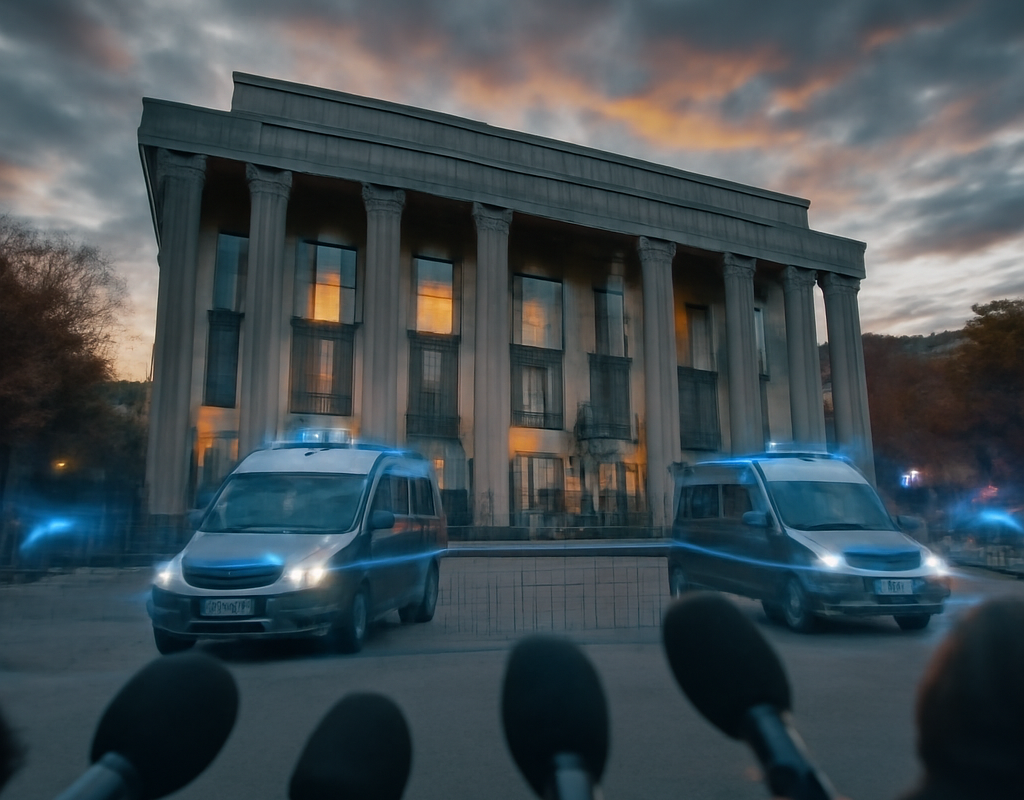
Tusk addressed the nation on Saturday evening, one day after Nawrocki attempted to enter the Constitutional Tribunal building during a deadlock over newly appointed judges. Police surrounded the building as the confrontation unfolded, with the incident broadcast live on Polish television.
The prime minister described the events as “scandalous incidents” and said that restoring calm could not involve accepting lawlessness or violence. He argued that a democratic state must be capable of enforcing justice while protecting the independence of the courts.
Tusk’s speech adopted a firm position rather than offering a compromise with the president. He said that certain principles, including respect for constitutional order, could not be negotiated away.
Why is the Constitutional Tribunal disputed?
The current confrontation has its roots in a political and legal conflict that began in 2015, when Civic Platform and Law and Justice, known as PiS, clashed over the selection of five Constitutional Tribunal judges.
That initial dispute developed into a broader argument about the composition of Poland’s highest constitutional court and the legitimacy of its rulings. During PiS-led governments, European institutions raised concerns about changes to the judiciary and the independence of judicial bodies. The current government says it is trying to reverse those changes and restore the rule of law.
Opposition figures, however, accuse Tusk’s government of attempting to seize control of the judiciary. The government rejects that accusation and says its actions are intended to correct earlier interference in the courts.
The dispute over the new judges
Tusk said the parliamentary majority had waited for the terms of judges appointed under the previous PiS-led government to expire before selecting replacements. According to his account, the Sejm, Poland’s lower house, elected new judges and the judges took their oaths of office.
President Nawrocki did not formally receive the oaths. Tribunal President Bogdan Święczkowski also refused to allow the newly elected judges to begin their duties. Tusk therefore described the judges as legally appointed and accused their opponents of obstructing the court’s work.
The competing interpretations leave the central legal question unresolved: whether the new judges can exercise their functions and who has the authority to determine the Tribunal’s valid composition.
Tusk warns against political pressure on courts
In his address, Tusk said that no politician, including the president, should enter a court or tribunal to instruct judges or intimidate them. His comments referred directly to Nawrocki’s visit to the Tribunal building after reportedly changing his travel plans while en route to Senegal.
The prime minister also criticised politicians and activists connected with PiS and the far-right Confederation party over their role in the confrontation. He said physical force, aggression and party interests could not decide who was right in a constitutional democracy.
At the same time, Tusk promised that the Tribunal would be able to operate independently of the executive. He said the government would provide the institution with the security and conditions needed to carry out its constitutional responsibilities.
Russia and the wider European dimension
Tusk warned that groups sympathetic to Russia could exploit Poland’s political divisions. He referred to Russian-linked bots operating online and said they were supporting opponents of Poland’s current constitutional order.
That warning reflects Poland’s broader security environment. The country has been one of the most prominent supporters of Ukraine in Europe and has repeatedly highlighted the risks of foreign interference and online disinformation. A prolonged constitutional crisis could therefore affect public trust and create additional opportunities for hostile influence.
The dispute also matters beyond Poland because the rule of law remains a central issue in the European Union. Questions about judicial independence can affect cooperation between national authorities, the application of EU law and confidence in the legal systems that underpin the single market.
What happens next?
Tusk’s speech did not produce an agreement with Nawrocki or set out a detailed mechanism for resolving the institutional deadlock. The immediate dispute over the judges and access to the Tribunal therefore remains active.
The next developments are likely to focus on:
- Whether the newly elected judges will be allowed to take up their duties.
- How the Constitutional Tribunal will continue to operate during the dispute.
- Whether the government and president can establish a constitutional process accepted by both sides.
- How Poland’s courts and European institutions assess the competing claims.
- Whether further confrontations develop around the Tribunal building or its decisions.
Because the conflict involves both national constitutional law and broader concerns about judicial independence, its consequences could extend into Poland’s relations with EU institutions.
Why the crisis matters for Europe
Poland’s constitutional dispute is not simply a disagreement between two political camps. It raises questions about how a member state resolves contested judicial appointments, how constitutional courts retain legitimacy and how institutions function when elected authorities disagree about the limits of their powers.
For other EU countries, the episode is a reminder that the rule of law depends not only on written constitutional provisions but also on whether institutions recognise each other’s authority. For people in Poland, the immediate concern is whether the Tribunal can continue to perform its role without political pressure or physical confrontation.
The crisis remains unresolved. Tusk has made clear that his government will not compromise on what it regards as the basic requirements of constitutional government, while the opposition and president continue to challenge the government’s approach. The next legal and political steps will determine whether the standoff is contained or becomes a deeper institutional crisis.