

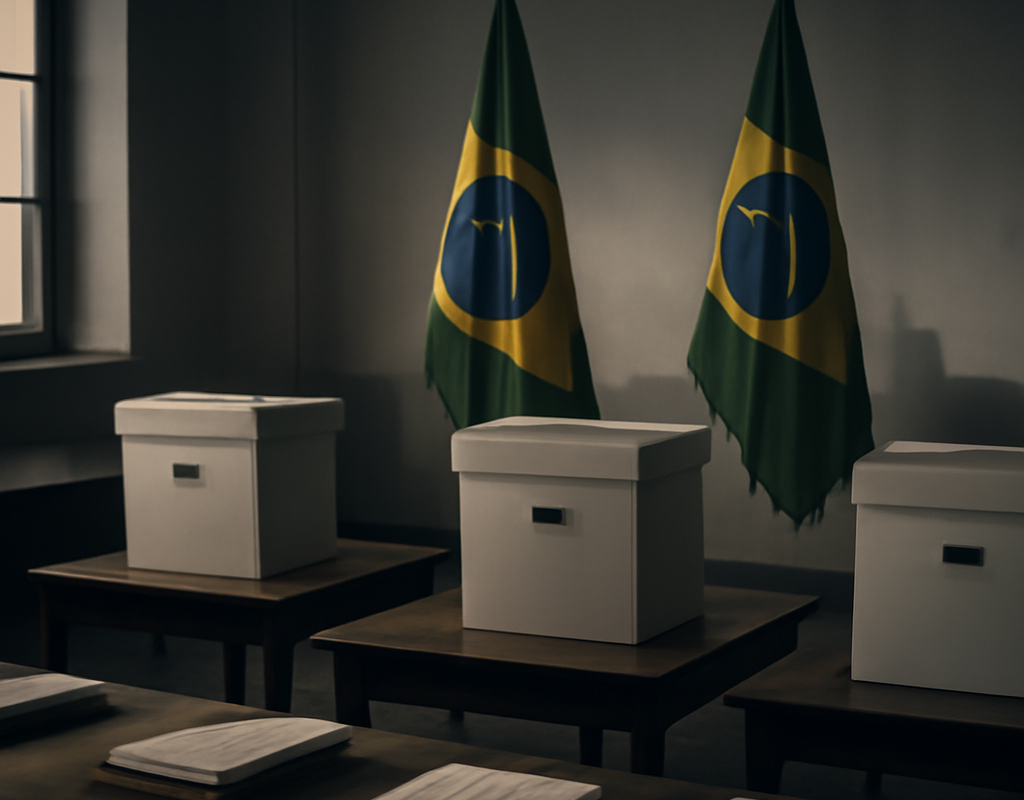
US President Donald Trump has questioned the credibility of Brazil’s election, saying the vote appeared “rigged” without presenting evidence. His comments came after left-wing President Luiz Inácio Lula da Silva defeated right-wing challenger Flávio Bolsonaro in the weekend poll.
The intervention has added an international dimension to Brazil’s post-election debate, as Bolsonaro initially refused to recognise the result before saying he would organise the opposition. Brazil’s electoral authorities and the final legal status of the result were not challenged with evidence in the comments reported.
What Trump said about the Brazilian vote
Speaking to reporters on Monday, Trump said the election “looked terrible” and compared it to what he called another rigged election. Asked whether he supported either candidate, he said he had not taken sides and argued that elections should be indisputable.
Trump did not identify specific irregularities, provide documentation or cite an official investigation to support the claim. The remarks therefore amount to a political allegation rather than a substantiated finding about the conduct of the election.
Bolsonaro initially rejected Lula’s victory
Flávio Bolsonaro, the son of former Brazilian President Jair Bolsonaro, initially said it was impossible to recognise Lula’s victory and suggested that the election should have been annulled. He later said he would organise the opposition, signalling a shift from outright rejection of the result towards a political response.
In a video shared on social media, Bolsonaro also said he had been prevented from leaving Brazil and had received notice to surrender his passports. The report did not provide further details about the legal basis or authority behind those measures.
A contested political transition
The statements place Brazil’s opposition movement at the centre of the country’s post-election politics. A refusal by a defeated candidate to accept an outcome can create uncertainty, particularly when claims about electoral integrity are made without supporting evidence.
For voters and international observers, the distinction between a verified electoral irregularity and an unsubstantiated political claim is important. Any formal challenge would need to proceed through Brazil’s constitutional and electoral institutions rather than through statements by foreign politicians.
Trump’s wider South American political message
Trump’s comments follow a broader effort by his administration to highlight right-wing victories across South America. He said the region had moved from leaning strongly to the left towards the right and claimed that every candidate he endorsed had won.
Earlier this year, Trump welcomed Flávio Bolsonaro to the White House and described him as a smart young man who loved Brazil. That relationship helps explain the political significance of Trump’s reaction, although it does not establish evidence of wrongdoing in Brazil’s election.
Why the comments matter internationally
The dispute is primarily a Brazilian political issue, but Trump’s intervention may influence how the result is discussed abroad. Statements from a sitting US president can shape diplomatic perceptions, encourage supporters of a defeated candidate and affect relations between governments.
For European governments and institutions, the episode is also relevant to wider discussions about democratic resilience, election misinformation and the recognition of constitutional results. It is not an EU decision, European Parliament vote or European Commission action, and there is no indication in the available report of a formal European response.
- What happened: Trump questioned the Brazilian election’s credibility.
- Evidence offered: No evidence was provided in the reported remarks.
- Brazil’s result: Lula da Silva defeated Flávio Bolsonaro.
- Political response: Bolsonaro initially rejected the result and later said he would organise the opposition.
- International context: Trump has promoted a wider narrative of right-wing electoral gains in South America.
What happens next in Brazil?
The next stage will depend on Brazil’s domestic political and legal institutions. Opposition leaders may organise against Lula’s government, while any formal allegations concerning the vote would require evidence and review through the country’s established electoral processes.
Trump’s statement does not itself alter the Brazilian result. Until an authorised institution finds otherwise, claims that an election was rigged should be treated as unverified.
Conclusion
The latest development is that Trump has questioned Brazil’s election result without providing evidence, while Flávio Bolsonaro has moved from rejecting Lula’s victory to preparing an opposition campaign. The comments underline how Brazil’s political transition is attracting international attention, but they do not constitute proof that the election was manipulated.