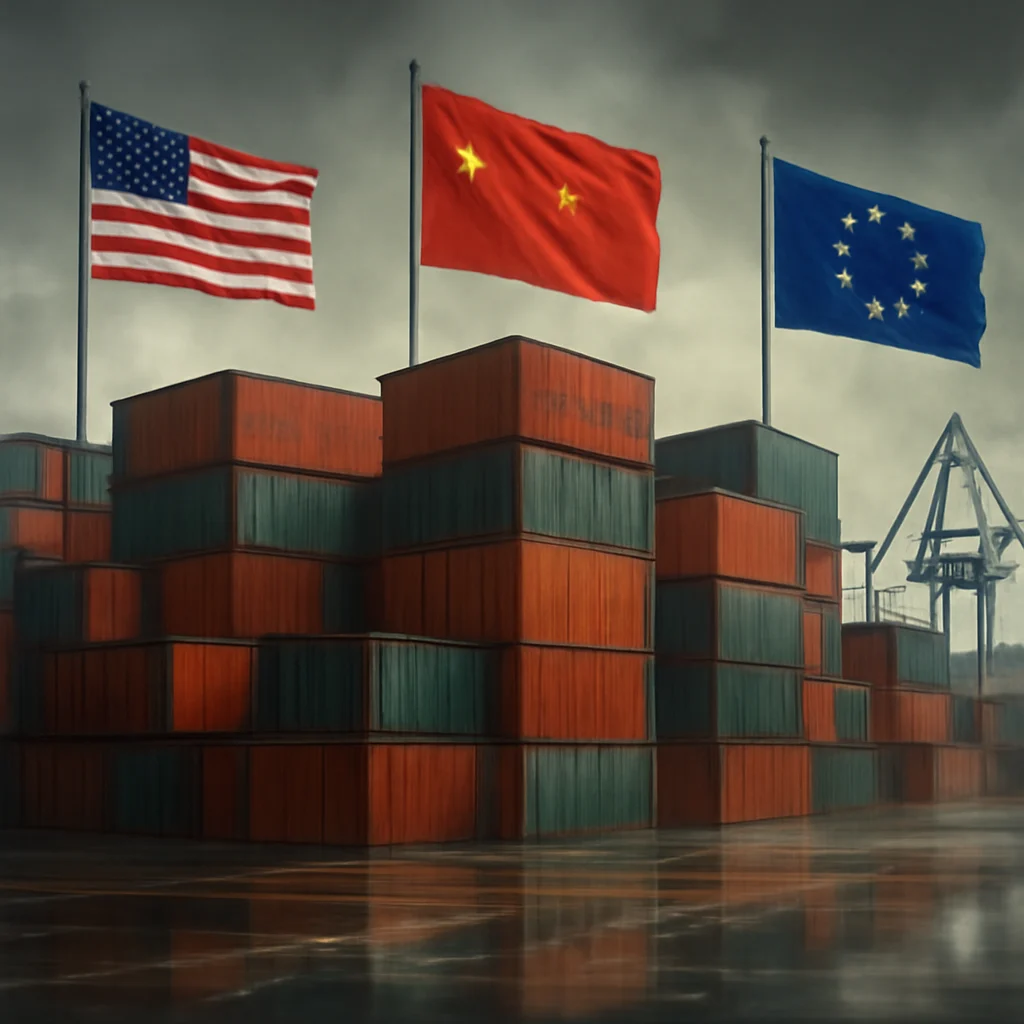
The latest Ireland breaking news from Washington is a fresh round of US import tariffs targeting China, the European Union and 12 other trading partners. The duties are not expected to take effect until next year, but the announcement has already raised concerns about prices, trade tensions and the outlook for the global economy.
Trump tariffs target major trading partners
President Donald Trump’s administration says the new measures are intended to challenge what it considers unfair trade practices and protect American manufacturing. The proposed tariffs cover China, the EU, Singapore, Switzerland, Indonesia, Malaysia, Cambodia, Thailand, South Korea, Vietnam, Taiwan, Bangladesh, Japan and India.
China faces the highest proposed rate, reaching up to 40% in some circumstances. Vietnam could face duties of as much as 35%, while other countries are subject to rates of 20% or 25%. The final impact will vary because some countries are covered by separate agreements or caps on tariffs previously negotiated with the United States.
Tariffs are taxes applied to imported goods. They are generally paid by businesses bringing products into the country, although companies may later pass those additional costs on to wholesalers, retailers and consumers.
Why has the US announced new tariffs?
The announcement follows a White House investigation into the trade practices of other countries, launched in March. It also comes after the US Supreme Court ruled that Trump’s earlier “Liberation Day” tariffs were illegal.
US Trade Representative Jamieson Greer said the new measures would “level the playing field for American workers” and support a more sustainable global economy. He accused trading partners of using industrial policies that suppress wages, favour domestic manufacturing and distort international trade.
Trump has consistently argued that tariffs will encourage companies to manufacture more goods in the United States, support American jobs and reduce the country’s trade deficit. That deficit reflects the difference between the value of goods imported by the US and the value of goods it exports.
When will the tariffs begin?
The new duties are not due to take effect until next year. That gives governments, companies and trade officials time to assess the proposed rates, seek exemptions or negotiate changes.
The effective increase may also be smaller than the headline figures suggest. Some of the measures will replace tariffs announced earlier in the year, while certain categories of goods are not covered by the new duties.
Economists warn of higher prices
Economists have warned that tariffs can increase inflation when importers pass higher costs through supply chains. The effect may be felt in the prices of consumer goods, industrial materials and components sourced from affected countries.
Stephen Brown, chief North America economist at Capital Economics, said the announcement was less alarming than it initially appeared because the new duties would largely replace measures announced during the summer. He said the additional burden was likely to be relatively small, although prices could still receive a marginal boost.
The wider economic risks include:
- Higher costs for US businesses that rely on imported products or parts.
- More expensive goods for consumers if companies pass on tariff charges.
- Reduced international trade if governments respond with their own duties.
- Greater uncertainty for manufacturers planning investment and supply chains.
China and EU react to the announcement
The measures are likely to add to tensions between the US and China, the world’s two largest economies. Both countries remain involved in disputes over trade, technology and artificial intelligence, while a wider tariff confrontation is currently paused.
That pause is due to expire on 10 January. Although Trump met Chinese President Xi Jinping last week, the two governments did not announce an extension of their trade-war truce.
The European Commission rejected the proposed tariffs and said it would examine the reasons given by Washington. It also noted that tariffs on the EU are limited to the 15% level previously agreed.
What happens next?
The announcement does not represent an immediate change to the prices of imported goods. The measures still need to move through the US process before taking effect, and affected governments may challenge the decision or seek further negotiations.
For businesses, the key issues will be the final tariff schedules, which products are exempt and whether the US reaches additional agreements with individual trading partners. Markets will also be watching for possible retaliation from China or other affected economies.
The central question is whether the policy delivers the manufacturing gains promised by the Trump administration without creating a larger inflationary shock. Until the final measures are implemented, the scale of the economic impact remains uncertain.
The new Trump tariffs are a significant development in global trade, but their full effect will depend on the final rates, exemptions and response from trading partners.