

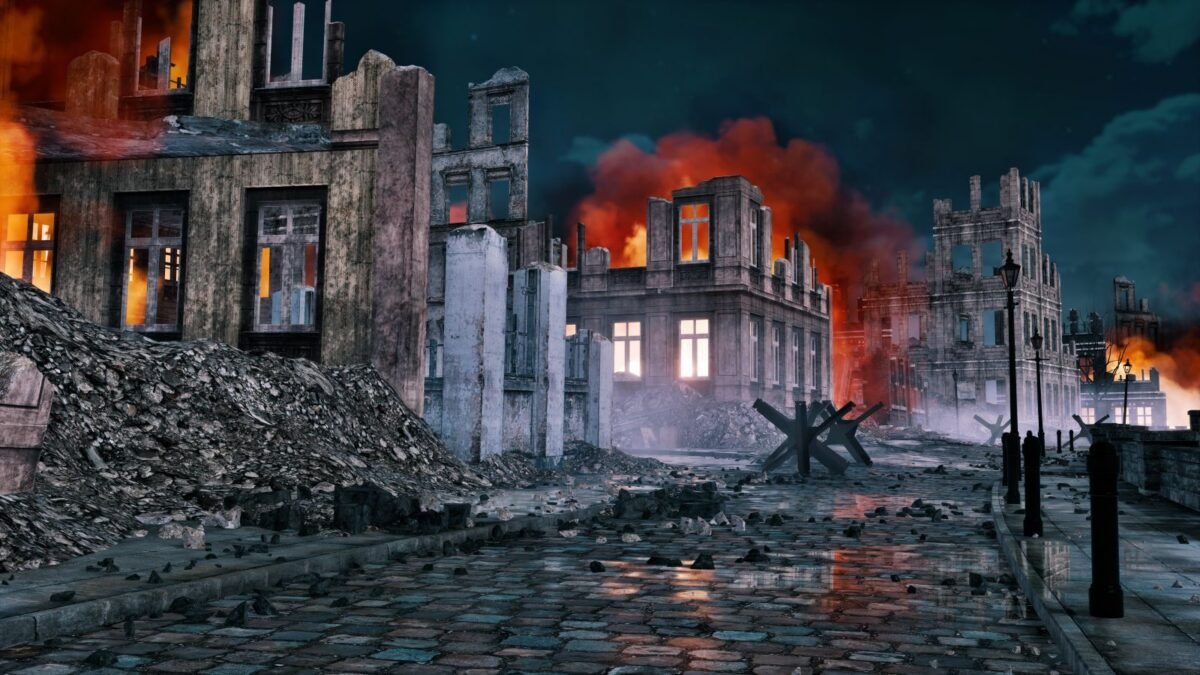
World War II reshaped entire nations, but nowhere was its destruction more visible than in the cities caught beneath bombs, firestorms, sieges and retreating armies. This list of the top 10 cities devastated by World War II explores places that lost homes, historic districts, transport networks and cultural landmarks—yet, in many cases, rebuilt themselves after 1945.
Top 10 Cities Devastated by World War II
Each city below experienced destruction in a different way. Some were targeted because of their ports or industries, while others endured prolonged urban battles or deliberate scorched-earth tactics.
10. Southampton, England
Southampton was a major port and industrial centre, and its Supermarine works produced Spitfire aircraft. During 57 German air raids, around 2,300 bombs and more than 30,000 incendiary devices damaged or destroyed approximately 45,000 buildings. The city’s High Street and surrounding districts were particularly badly affected during the Southampton Blitz.
9. Rotterdam, Netherlands
On May 14, 1940, German bombing and the fires that followed destroyed much of Rotterdam’s historic centre. Around 25,000 homes and 11,000 other buildings were lost, leaving approximately 80,000 people homeless. A later American raid in 1943 caused further civilian casualties after residential areas were mistakenly hit near a shipyard.
8. Rovaniemi, Finland
Rovaniemi suffered destruction during the Lapland War, when retreating German forces burned buildings and infrastructure. In October 1944, about 90% of the town’s buildings were destroyed after residents had been evacuated. Its postwar reconstruction later became a defining part of the city’s modern identity.
7. Dresden, Germany
Allied raids between February 13 and 15, 1945, devastated Dresden’s historic centre. Explosive and incendiary bombs caused fires that destroyed homes, churches and cultural landmarks. Later estimates place the death toll as high as 25,000, while the military necessity and scale of the bombing remain subjects of historical debate.
6. Budapest, Hungary
The siege of Budapest lasted from late December 1944 until February 13, 1945. Street fighting, bombardment and earlier air raids damaged or destroyed about 80% of the city’s buildings. German forces also demolished the bridges across the Danube during their withdrawal, adding to the city’s enormous reconstruction challenge.
Read more: Explore more long-form history and culture coverage through Irish history and travel stories from Daily Digest Ireland.
5. Hamburg, Germany
Operation Gomorrah struck Hamburg between July 24 and August 3, 1943. Night-time RAF raids and daytime U.S. bombing created a devastating firestorm, especially on July 27–28. An estimated 35,000 to 40,000 people died, while large residential districts were destroyed despite the city’s continuing industrial importance.
4. Milan, Italy
Milan endured repeated Allied attacks, including severe bombing in August 1943. The Santa Maria delle Grazie complex was badly damaged, and sections of the church and refectory collapsed. Leonardo da Vinci’s The Last Supper survived, partly because protective measures had been installed before the raids.
3. Kofu, Japan
On the night of July 6–7, 1945, 131 American B-29 bombers attacked Kofu. Fires spread across roughly 74% of the city’s urban area, damaging 18,094 homes. A later prefectural survey recorded 1,127 deaths and 1,239 injuries, illustrating how bombing devastated cities far from the main front lines.
2. Manila, Philippines
The Battle of Manila, fought from February 3 to March 3, 1945, became one of the war’s most destructive urban battles. Japanese forces defended the capital street by street, while bombardment and fighting destroyed much of the city. An estimated 100,000 civilians died, alongside widespread atrocities committed during the battle.
Explore more: Discover European heritage destinations and historical travel ideas from Media Digest Ireland, plus luxury cultural experiences and historic places to visit in Europe.
1. Warsaw, Poland
Warsaw suffered under German occupation, but its destruction intensified after the Warsaw Uprising began in August 1944. Following the uprising’s defeat, German forces systematically demolished much of the city. More than 85% of the historic centre was destroyed, including churches, palaces and the Old Town market square. After the war, residents carried out an extraordinary five-year reconstruction, restoring the historic district based on its former appearance.
Why These Cities Still Matter
These cities are more than entries in a historical list. Their rebuilt streets, memorials, museums and preserved ruins reveal how civilians experienced total war and how societies recover after catastrophe. Some, such as Warsaw and Rovaniemi, reconstructed much of what was lost; others preserve damaged landmarks as reminders of the cost of military decisions.
Frequently Asked Questions
Which city was most extensively destroyed?
Warsaw experienced some of the most extensive destruction, with more than 85% of its historic centre demolished by the end of the war.
Which city suffered the largest civilian death toll on this list?
Manila’s battle caused an estimated 100,000 noncombatant deaths, making it one of the war’s deadliest urban battles.
Were these cities rebuilt after World War II?
Yes. All ten cities recovered to varying degrees, with reconstruction ranging from restoring historic buildings to creating entirely modern urban districts.
Article/Image Courtesy: Listverse
Article/Image Courtesy: Listverse
Conclusion
This top 10 cities devastated by World War II list shows how bombing, siege and deliberate destruction transformed urban history. Their survival is a reminder that rebuilding is not only about replacing buildings—it is also about preserving memory, culture and identity for future generations.