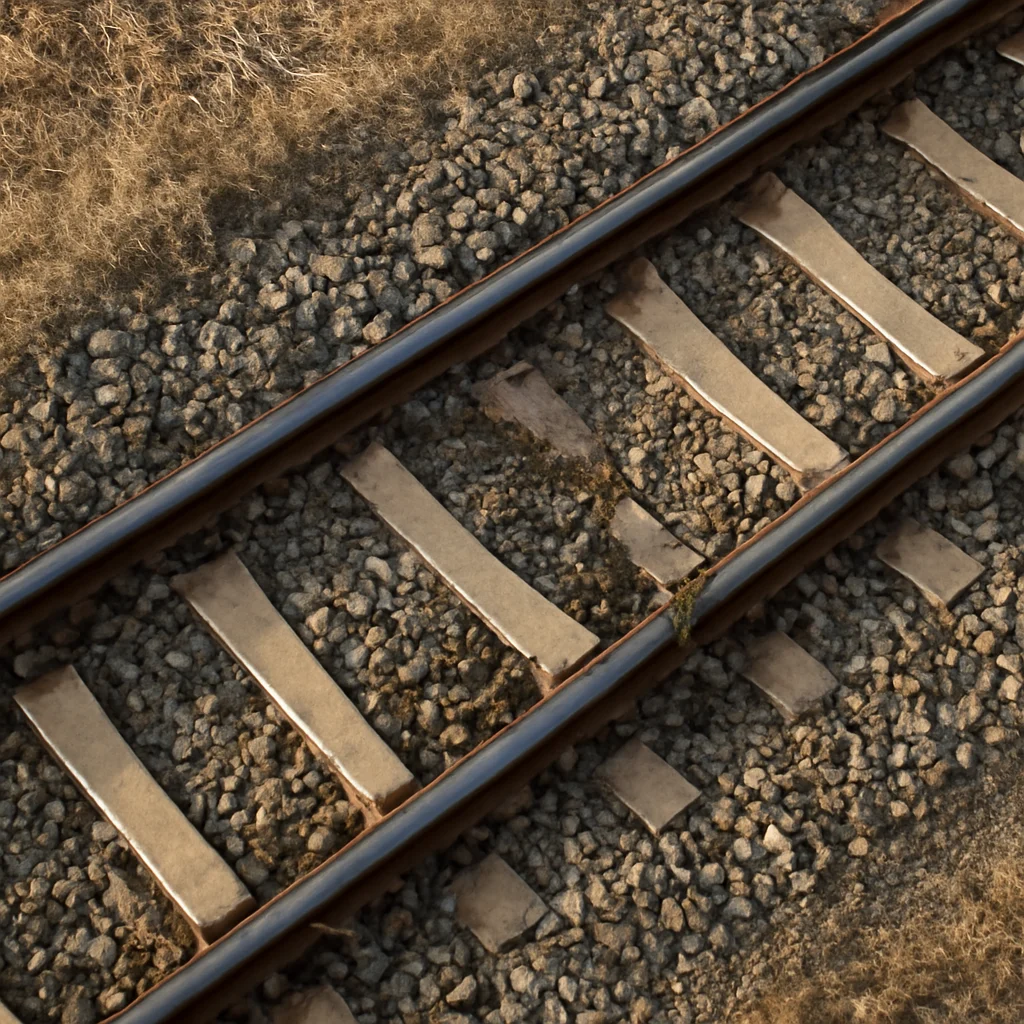
A preliminary investigation into the deadly Spanish train crash in Adamuz, Córdoba, has identified a poorly executed rail weld and ground subsidence as the most likely contributing factors. The findings remain provisional, with laboratory tests on track materials still outstanding.
The accident on 18 January killed 46 people and injured more than 150 others when an Iryo train derailed and collided with a Renfe Alvia. Ten months later, court-appointed engineers are continuing to examine how a rail fracture developed and whether earlier warnings were properly acted upon.
Spanish train crash investigation identifies possible rail failure
A preliminary expert report dated 20 November says a 6.4-millimetre track irregularity detected in October 2025 may have played a role in the derailment. The defect was found several months before the crash, but investigators say they have not found evidence that the recommended monitoring or maintenance work was completed.
The irregularity did not require trains to slow down, according to the report. However, it should have prompted closer observation of the track and possible maintenance intervention. Investigators are now examining whether the missed follow-up allowed the problem to worsen over time.
How the suspected “seesaw effect” may have weakened the rail
The engineers believe subsidence beneath one rail could have placed additional loads on the opposite rail as trains repeatedly passed over the section. They describe this process as a “seesaw effect”. Over time, the repeated stress may have weakened the weld until it fractured.
The weld joined a rail manufactured in 1989 with another rail installed during upgrade work on the Madrid-Seville high-speed line in 2025. The two sections had different material properties and levels of hardness, although the report says this type of joint is permitted under Adif’s technical standards.
Investigators have also identified inconsistencies in the welding documentation. They are assessing whether the quality-control inspections carried out during the upgrade were adequate and whether the records accurately reflect the work completed.
Key tests could change the preliminary findings
The report does not establish a final cause or assign responsibility. The three engineers involved in the investigation explicitly warn that further testing could alter their conclusions.
Authorities are still waiting for analysis of materials recovered from the crash site, including:
- Rail sections and the failed weld;
- Track ballast;
- Concrete sleepers; and
- Other components from the damaged track.
These tests are expected to help determine how the fracture began and whether the defect resulted from welding quality, ground movement, repeated operational stress, or a combination of factors.
Laboratory capacity creates another delay
Montoro examining magistrate Cristina Pastor has asked Córdoba’s Judicial Police to identify alternative laboratories. The Centre for Public Works Studies and Experimentation, known as CEDEX, said it lacked the means to perform some of the required tests on the concrete sleepers.
The search for suitable testing facilities has prolonged an investigation that is already approaching its first anniversary. Until the material evidence is fully examined, it will remain unclear whether the accident resulted from an isolated infrastructure failure or shortcomings in inspection, maintenance and construction controls.
What the findings mean for rail safety
The preliminary conclusions place attention on the interaction between track maintenance and construction quality. A defect that does not immediately require a speed restriction may still demand careful monitoring, particularly on a high-speed route carrying frequent passenger services.
The investigation is also examining the risks associated with joining older rail material to newly installed sections. While the type of weld was reportedly covered by existing technical rules, differences in hardness and other properties may be relevant to understanding how the joint behaved under repeated loading.
For passengers, the central issue is not simply whether a weld failed, but whether warning signs were recorded, communicated and addressed. The outstanding tests and examination of maintenance records will be important in answering that question.
Spanish train crash probe remains unfinished
The expert report offers the clearest explanation so far for the Adamuz disaster, but it is not a final ruling. Investigators must still complete the laboratory work, reconcile the welding records and establish whether the earlier track irregularity was adequately managed.
The Spanish train crash investigation will therefore continue to focus on both the physical failure and the chain of decisions that preceded it. A definitive account of the tragedy will depend on the remaining evidence and on any conclusions reached by the court.