EU news took a significant turn on 25 November 2026 as Hungarian Prime Minister Péter Magyar and Ukrainian President Volodymyr Zelenskyy met in Uzhhorod, western Ukraine. The leaders said their talks marked a new chapter in Ukraine-Hungary relations after years of political tension and disagreement.
The meeting in Ukraine’s Transcarpathia region was held under tight security and focused on rebuilding good-neighbourly relations, humanitarian assistance and Ukraine’s path towards European Union membership.
Ukraine-Hungary relations reset after years of hostility
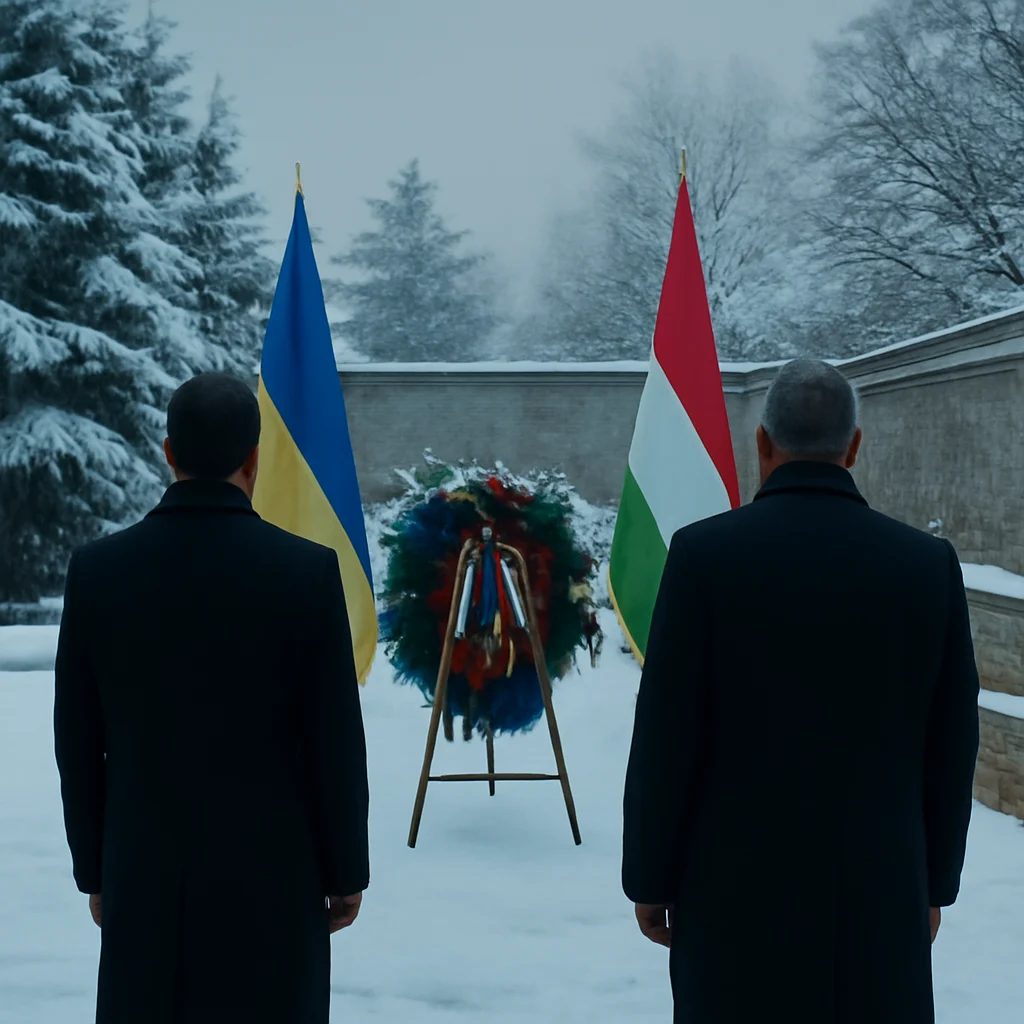
Magyar and Zelenskyy began the day by laying wreaths at a military cemetery in Uzhhorod. Zelenskyy said 316 soldiers killed since Russia’s full-scale invasion began in 2022 were buried there.
The ceremony provided a solemn backdrop to talks intended to signal a political reset. Both leaders said relations between Budapest and Kyiv were being restored, following years in which Hungary’s previous government frequently clashed with Ukraine and criticised its leadership.
Magyar told Hungary’s parliament before the visit that his government supported both the Hungarian minority in Transcarpathia and Ukrainians defending their country, despite opposition from Moscow. His remarks contrasted with the hostile rhetoric directed at Ukraine during the election campaign led by his predecessor, Viktor Orbán.
Hungary provides winter assistance
The Hungarian delegation arrived with medical and energy-related aid valued at 1 billion forints. The support included:
- Patient-monitoring equipment
- Medicines
- Generators and other energy equipment
The supplies are intended to help Ukraine manage difficult winter conditions. Magyar also stressed that Hungary had not supplied weapons to Ukraine. Zelenskyy thanked the delegation for the assistance before the leaders continued discussions at the Old Continent hotel in Uzhhorod.
Hungary no longer blocks Ukraine’s EU accession talks
The most important development in this latest Europe news is Hungary’s reported decision to withdraw objections to the final two groups of negotiating chapters in Ukraine’s EU accession process. The move means Ukraine and Moldova can begin talks across all areas of membership negotiations, including sensitive subjects such as agriculture and the environment.
Opening negotiating clusters is an important milestone, but it does not mean that membership is imminent. Candidate countries must align their laws, institutions and practices with EU requirements. Member states can also intervene at multiple stages, meaning that progress can still be delayed or blocked.
Hungary had previously held up the opening of negotiating clusters for Ukraine, with the same position also affecting Moldova because the two countries’ membership processes remain linked. The change under Magyar therefore removes a significant obstacle in the EU enlargement process.
Agriculture remains a difficult issue
Ukraine’s agricultural sector is likely to remain one of the most sensitive areas in the negotiations. The European Commission has proposed restrictions on access for certain Ukrainian agricultural products to EU funding and the European market, amid pressure from countries including Poland and France.
Ukrainian Prime Minister Serhii Koretskyi said Kyiv could not accept its farmers being permanently excluded from the European market. He argued that any restrictions should be temporary and proportionate.
The disagreement reflects a wider challenge for EU enlargement: supporting Ukraine’s economic integration while addressing concerns among farmers and governments in existing member states. Agriculture, trade access and regulatory alignment will all require detailed negotiations.
What the political shift means for EU support for Ukraine
Hungary’s change in position follows a series of steps towards improved relations with Kyiv. The first negotiating cluster was opened in June, followed by a second in July and two more in October. Last month, Hungary and Ukraine also reached an agreement concerning the rights of the ethnic Hungarian minority in western Ukraine. Ukraine’s parliament subsequently adopted the agreement.
The leaders had already encountered one another at EU and NATO gatherings, but their first bilateral meeting took place on the sidelines of the European Council summit in Brussels on 16 October. The Uzhhorod meeting represents a further move from institutional contact towards direct cooperation.
For Ukraine, the end of Hungary’s objections strengthens political backing for its EU accession bid. For Budapest, the meeting presents an opportunity to establish a different relationship with its neighbour while maintaining its stated focus on the Hungarian community in Transcarpathia.
Why this matters for European politics
This development is relevant to EU politics because Ukraine’s accession process depends not only on reforms in Kyiv but also on continued agreement among all member states. Hungary’s earlier veto demonstrated how one government could slow progress. Its new approach removes that immediate barrier, although future disagreements remain possible.
The talks also connect Ukraine’s EU membership ambitions with broader European security and humanitarian concerns. Cooperation on winter energy supplies, minority rights and economic integration will be closely watched as the war continues.
For readers following European news today, the central message is clear: the meeting does not complete Ukraine’s accession journey, but it marks a meaningful diplomatic change between Kyiv and Budapest and gives the enlargement process additional momentum.
Conclusion
The latest EU news from Uzhhorod points to a new phase in Ukraine-Hungary relations. Péter Magyar and Volodymyr Zelenskyy presented cooperation, humanitarian aid and support for Ukraine’s EU path as the basis for rebuilding trust. Major disputes over agriculture, minority rights and accession reforms remain, but Hungary’s decision to stop blocking the final negotiating clusters removes a major obstacle and strengthens Ukraine’s position in European politics.