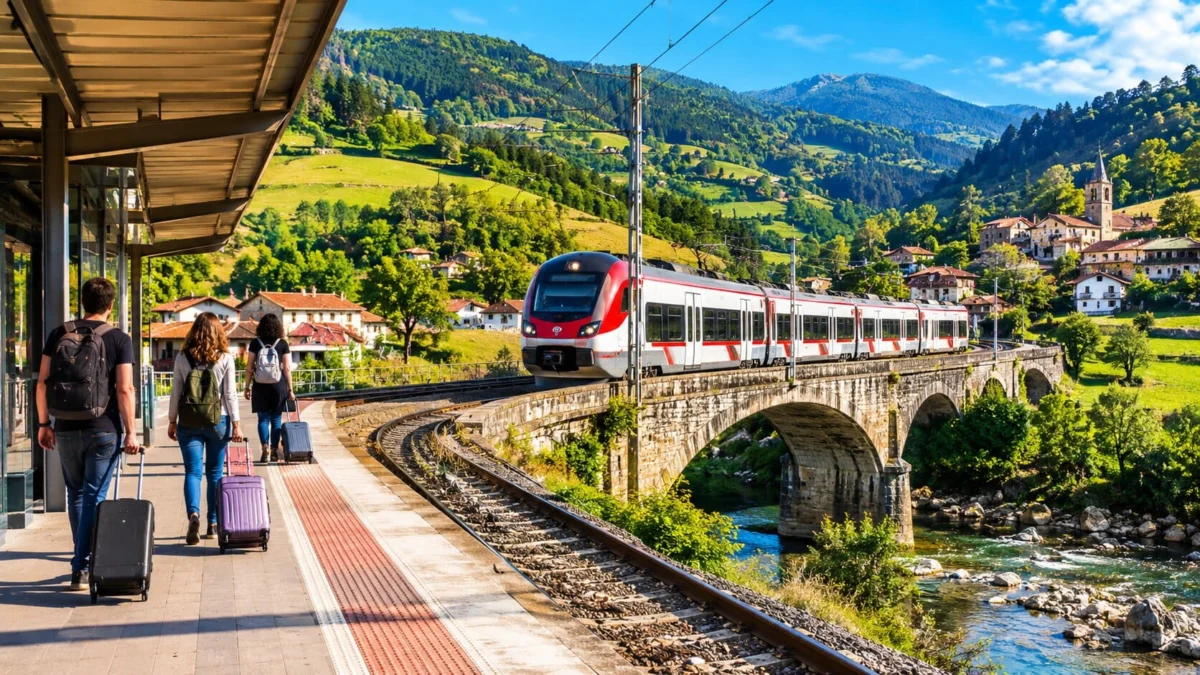
Travellers exploring the Basque Country will have more public transport options from 26 November 2026, when Renfe restores additional commuter railway frequencies along the Irun–Brinkola corridor. The service recovery will improve journey planning between Irun, San Sebastián and inland communities across Gipuzkoa after temporary timetable changes linked to infrastructure works.
This Europe travel news update is particularly useful for visitors who want to explore beyond San Sebastián without hiring a car. The restored timetable does not create a new railway route, but it brings the established Cercanías service closer to normal operations.
What is changing on the Gipuzkoa railway line?
Renfe announced on 23 November that additional frequencies would return along the Irun–Brinkola route from 26 November. The operator has coordinated the gradual restoration with Adif, Spain’s railway infrastructure manager, as work progressed and operational capacity became available.
The announcement follows a period in which passengers faced modified services and replacement transport arrangements. The restoration is therefore a return of regular railway connectivity rather than a network expansion or a new international rail link.
- Operator: Renfe
- Infrastructure manager: Adif
- Route: Irun–Brinkola
- Province: Gipuzkoa, in the Basque Country
- Additional frequencies begin: 26 November 2026
- Exact number of extra trains: Not disclosed
Why the restoration matters for Basque Country travel
More frequent trains can give residents and tourists greater flexibility when arranging regional journeys. Travellers staying in San Sebastián may find it easier to plan day trips to towns and attractions elsewhere in Gipuzkoa, while visitors arriving through Irun can access inland destinations using public transport.
The corridor links a mix of coastal, urban, rural and cultural experiences. Depending on the timetable and individual station stops, visitors may consider destinations including Hernani, Andoain, Tolosa, Ordizia, Beasain, Zumarraga, Legazpi and Brinkola.
San Sebastián remains a major draw for its coastline, historic areas and Basque cuisine. However, the restored railway service could make it more practical for visitors to build multi-stop itineraries rather than limiting their holiday to one city.
Destinations along the corridor
- Irun: Border heritage and cultural attractions
- San Sebastián: Coastal scenery, historic streets and gastronomy
- Hernani: Traditional architecture and cider culture
- Tolosa: Historic streets and traditional markets
- Ordizia: Food markets and regional produce
- Beasain: Heritage attractions including the Igartza complex
- Legazpi and Brinkola: Industrial heritage and rural landscapes
How temporary railway restrictions affected passengers
An earlier Renfe notice, published on 23 September, outlined temporary operating arrangements connected with the infrastructure works. From Monday to Thursday, trains could operate between Irun and Brinkola during limited hours, from 4.30am to 5.30pm. Outside those hours, passengers used combined transport arrangements, including road transfers between Irun and Hernani.
That alternative transport plan ended on 31 October. The additional services planned for 26 November represent the next stage in returning to normal railway operations.
What visitors should check before travelling
Although the restoration should provide more choices, individual journeys will still depend on the published timetable, stopping patterns and onward connections. Travellers should check Renfe’s official passenger information before setting out.
Important checks include:
- Departure and arrival times for the chosen station
- Whether the service stops at the intended destination
- Ticketing requirements and available fares
- Return train times for day trips from San Sebastián
- Connections with other rail, bus or international services
Irun’s position near the French border may make it useful for wider regional itineraries, but the restored Irun–Brinkola service does not introduce a new cross-border railway connection. Passengers continuing towards France should confirm separate schedules, tickets and connection times.
A practical alternative to car travel
The return of regular frequencies gives visitors another option besides car hire or private transfers. Regional trains can be useful for independent travellers who prefer not to drive on unfamiliar roads, particularly when planning short excursions from accommodation in San Sebastián or elsewhere in Gipuzkoa.
Improved rail access may also support broader tourism across smaller communities. However, Renfe and Adif have not published forecasts for additional visitor numbers, tourism spending or emissions reductions resulting from this specific timetable restoration.
Key takeaway for travellers
This Europe travel news development restores greater flexibility on an established Gipuzkoa railway corridor from 26 November 2026. Visitors should treat it as a service recovery—not a new route—and consult Renfe’s latest timetable before booking excursions. For travellers seeking European travel updates and public transport options in northern Spain, the change could make it easier to combine San Sebastián with the wider Basque Country.