

Climate change should be treated as a global health emergency, according to the authors of the latest Lancet Countdown report, who warn that climate-related health risks are increasing faster than current responses can address them.
The report’s authors are calling on the World Health Organization (WHO) and the United Nations to formally recognise the escalating health threat. They argue that emergency status could help move climate action beyond slow, voluntary commitments towards coordinated measures focused on prevention, surveillance and accountability.
Why climate change is being framed as a health emergency
The Lancet Countdown report says climate change has developed into an intensifying chronic global health emergency since the Paris Agreement entered into force in 2016. Its indicators show that several threats have not only grown but accelerated compared with the previous decade.
Among the areas highlighted are:
- Increasing exposure to dangerous heat
- More frequent drought conditions
- Greater risks from extreme precipitation
- Expanding climatic suitability for diseases such as dengue
- More severe health consequences from wildfires and extreme weather
The authors say the scale of these changes shows that existing adaptation and prevention measures are not sufficient to protect populations, particularly people who are older, medically vulnerable or living in areas with limited resources.
What a formal declaration could change
A global health emergency declaration would not, by itself, replace climate treaties or national climate plans. However, the report’s authors argue that it could create a stronger framework for coordinated action by governments and international organisations.
They say emergency recognition could support:
- Stronger health surveillance and early-warning systems
- Faster mobilisation of financial and technical resources
- Preventive public-health measures before extreme events occur
- More clearly defined accountability mechanisms
- Closer coordination between climate, health and emergency-response agencies
The proposal is a recommendation from the report’s authors, not a decision already adopted by the WHO or the United Nations. Any formal declaration would require action by the relevant international institutions.
Heat is already affecting mortality
The report points to rising temperatures as one of the clearest pathways linking climate change to health outcomes. It says the past 11 years have been the hottest on record and that annual heat-related deaths have increased by nearly 36% over recent decades.
In 2023, heat was linked to approximately 710,000 deaths globally, according to the report. More than 70% were attributed to human-caused climate change. Heat can worsen cardiovascular and respiratory conditions, increase pressure on health services and create particular risks for older people, infants and those working outdoors.
As populations grow and age, the number of people exposed to dangerous conditions is also increasing. The report says this is adding urgency to the challenge of adapting homes, workplaces, health systems and cities to more frequent heat extremes.
Diseases, wildfires and extreme weather
Higher temperatures and changing rainfall patterns can also affect the spread of infectious diseases. The report identifies dengue and Zika among the vector-borne diseases whose transmission conditions may become more favourable in some regions as the climate changes.
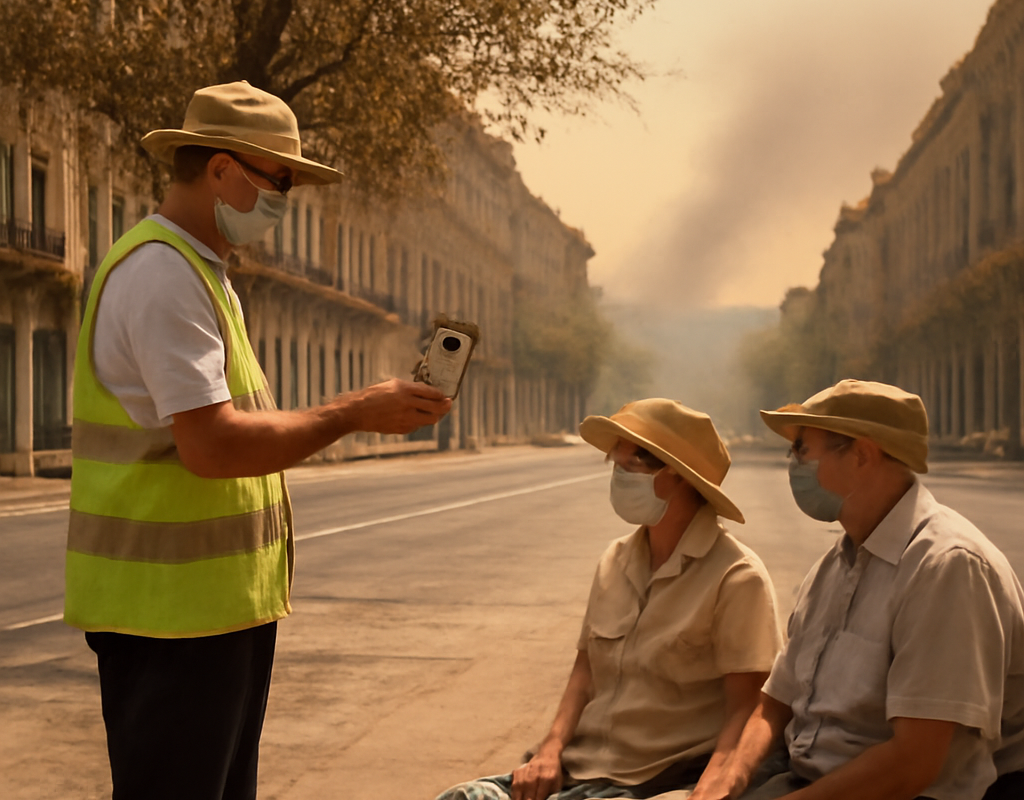
Extreme rainfall, drought and wildfires create additional risks. Flooding can damage health infrastructure and contaminate water supplies, while drought can affect food security and increase pressure on communities. Smoke from wildfires can worsen respiratory illness and expose people far beyond the immediate fire zone.
These effects are not distributed evenly. Communities with fewer resources often have less access to cooling, healthcare, clean water, emergency services and resilient infrastructure. That makes climate adaptation a public-health and social-equity issue as well as an environmental one.
Measures proposed by the report
Alongside its call for a formal emergency declaration, the report’s authors urge governments to adopt stronger mitigation policies. Their recommendations include an immediate global ban on new fossil-fuel exploration and exploitation, phasing out coal-fired power generation by 2035 and moving towards predominantly plant-based diets.
These are recommendations contained in the report rather than globally agreed rules. Implementing them would require decisions by national governments and, in some areas, international cooperation. They would also have implications for energy systems, agriculture, transport, public spending and household consumption.
What the findings mean for Europe and Ireland
The findings are relevant to European health policy because heatwaves, floods, drought, wildfire smoke and changing disease patterns can place pressure on national health services across the continent. EU member states would remain responsible for their own health systems, but European cooperation can support early-warning systems, research, civil protection and climate adaptation.
For Ireland, the report’s implications include the need to prepare health services for periods of extreme heat, flooding and disruption caused by severe weather. Ireland’s exposure differs from that of southern European countries, but climate-related risks can still affect vulnerable people, infrastructure, agriculture and public services.
What happens next?
The immediate next step is political and institutional consideration of the report’s recommendation. The WHO and United Nations have not been reported as having formally declared climate change a global health emergency in response to this publication.
Governments and public-health authorities can nevertheless act on the evidence through heat-health plans, disease surveillance, resilient infrastructure, emergency preparedness and emissions reduction. The report’s central message is that climate policy and health policy can no longer be treated as separate areas.
Conclusion
The Lancet Countdown’s call to recognise climate change as a global health emergency reflects the growing evidence that heat, extreme weather, infectious disease risks and wildfire exposure are already affecting lives. The proposal is not yet a binding international decision, but it adds pressure on the WHO, the United Nations and national governments to strengthen prevention, adaptation and emissions cuts. For Europe and Ireland, the clearest takeaway is that climate action is also an investment in public-health protection.