




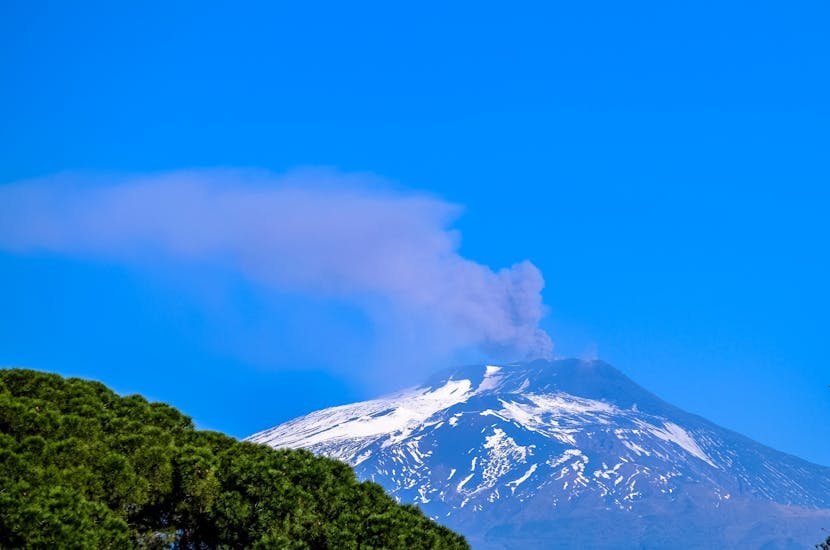
Italy travel disruptions are back in focus after Mount Etna sent fresh ash clouds over eastern Sicily, briefly disrupting operations at Catania–Fontanarossa Airport and forcing airlines and passengers into rapid schedule changes. The latest volcanic activity is a reminder that even a moderate Etna eruption can ripple across Sicily’s busiest air gateway within hours.
According to official volcanic monitoring updates, ash emissions began early on 5 July from the upper eastern flank of Etna’s Voragine crater area. The activity intensified soon after, producing an ash plume that rose roughly 1.5 kilometres above the summit before winds pushed it toward the south and south-southeast. That movement placed pressure on airspace used by flights operating in and out of Catania, one of the island’s most important airports for both international arrivals and domestic travel.
Italy Travel Disruptions After Mount Etna Eruption
The current round of Italy travel disruptions did not require lava reaching populated areas to cause concern. Volcanic ash alone is enough to affect airport operations because it poses a serious risk to aircraft engines, navigation systems, cockpit visibility and runway safety.
As the plume spread across parts of eastern Sicily’s airspace, airport operations were interrupted and some air sectors were temporarily restricted. Catania Airport later confirmed that services were being progressively restored as conditions improved, but travellers were still urged to check directly with their airline before heading to the terminal.
For many passengers, the real problem was not just whether the airport was technically open. It was the uncertainty created by delays, diversions, aircraft repositioning and rebooking pressure across already busy summer schedules.
What happened at Catania Airport
- Volcanic ash emissions were detected in the early morning.
- The eruption intensified within about an hour.
- The ash cloud drifted south and south-southeast due to wind direction.
- Flight operations were interrupted and some airspace sectors were affected.
- Later updates indicated gradual restoration of take-offs and landings.
That sequence explains why Italy travel disruptions can escalate very quickly in Sicily, especially when Mount Etna remains active during the peak tourist season.
Read more: best Ireland travel news updates for Irish holidaymakers | long stay Ireland tourism and aviation coverage
Why Volcanic Ash Forces Aviation Restrictions
Volcanic ash is far more dangerous to aviation than many travellers realise. Unlike ordinary dust, ash particles can melt inside jet engines, stick to critical components and interfere with cooling systems and sensors. In dense concentrations, ash can also reduce visibility and damage aircraft surfaces.
That is why regulators and airport operators respond cautiously. When ash drifts into controlled airspace or approaches flight paths, safety teams must assess whether planes can operate without unacceptable risk. In this case, the ash plume from Etna prompted close monitoring from volcanic and aviation authorities, including ongoing advisories from the Toulouse Volcanic Ash Advisory Centre.
Recent advisories indicated elevated concern, first with a red aviation code and later with an orange status as the plume remained visible but conditions appeared to ease somewhat. This did not mean the threat had fully passed. It simply suggested a lower, though still active, level of operational concern.
Why Etna is so sensitive for air travel
Mount Etna is one of Europe’s most active volcanoes, and its location makes it especially important for aviation planning. Catania Airport sits close enough to the volcano that summit activity alone can disrupt approaches, departures and surrounding airspace.
Even when nearby communities face little direct danger, the airport can still be affected because:
- Wind direction can send ash straight toward flight corridors.
- Aircraft cannot safely operate through contaminated airspace.
- Airport infrastructure and ground operations may be impacted by ash fall.
- Airlines often need extra time to reposition planes and crews after disruption.
How Sicily Travellers Are Being Affected
These Italy travel disruptions are particularly significant because Catania serves as a major entry point for visitors heading to eastern Sicily, including Catania city, Taormina, Siracusa and nearby coastal resorts. Any operational slowdown at the airport can trigger a chain reaction across hotels, transfers, tours, cruises and regional train links.
Passengers may face:
- Delayed or cancelled departures
- Diversions to other Sicilian airports
- Longer wait times for baggage and ground transport
- Last-minute airline notifications or schedule changes
- Pressure on accommodation due to overnight disruptions
Travellers already on the island may also need to extend hotel stays or adjust onward transport plans. For those due to fly soon, flexibility is essential.
Explore more: luxury Ireland travel inspiration and premium holiday trends | Ireland airport updates and destination planning guides
Mount Etna’s Ongoing Activity Explained
Scientific monitoring indicates this was a renewed summit phase rather than a wider flank emergency. Volcanologists reported activity from the Voragine crater area, where Strombolian activity had already been observed in recent days. A previous lava flow that began in late June had weakened and ended before this latest ash event, although smaller lava movement was also documented in the days leading up to the eruption.
The combination of ash emissions, tremor signals and changing wind conditions is what matters most for aviation. For now, authorities continue to monitor the volcano through seismic data, visual observations and ash dispersion modelling.
Why tourism in Sicily remains highly exposed
Etna is both a natural hazard and one of Sicily’s greatest tourism icons. Its UNESCO recognition and dramatic landscape attract visitors from around the world. But the same volcanic activity that makes Etna so compelling also creates recurring Italy travel disruptions whenever ash affects major transport links.
That makes real-time communication especially important during busy holiday periods, when thousands of travellers may be relying on tightly scheduled flight connections.
What Travellers Should Do Now
If you are flying to or from Catania, the safest approach is to monitor official updates constantly and avoid assuming normal operations have fully resumed.
Practical steps for passengers
- Check your airline app, email or SMS alerts before leaving for the airport.
- Confirm whether your flight is operating from Catania or another airport.
- Allow extra time for road or rail travel if diversions occur.
- Keep medication, chargers, travel documents and spare clothing in cabin baggage.
- Contact hotels, transfer companies or tour operators if delays affect your plans.
The outlook depends on volcanic intensity, ash height and wind direction. Recovery has already started, but further changes remain possible if Etna’s activity strengthens again or the plume shifts back toward critical airspace.
For now, the message is straightforward: Italy travel disruptions linked to Mount Etna are easing, but they are not something passengers should ignore. Anyone travelling through Sicily should stay alert, check flight status repeatedly and prepare for short-notice changes until the volcanic ash risk fully clears.