

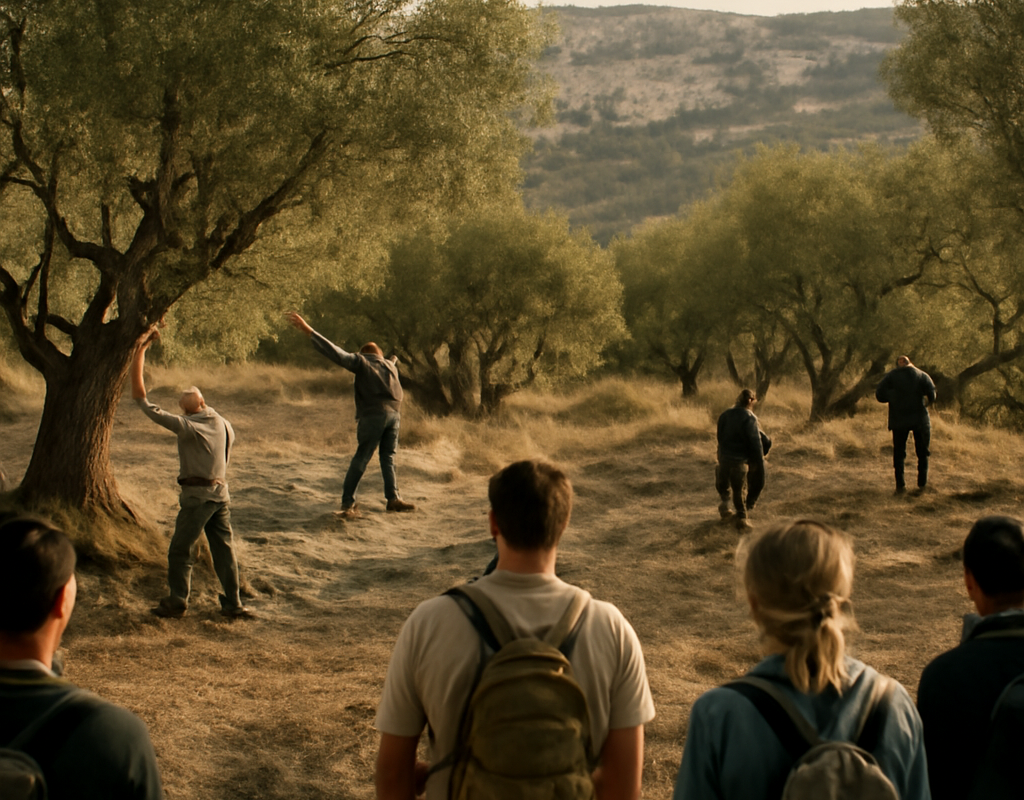
Italy’s Foreign Ministry is seeking urgent information from Israeli authorities after four Italian women were detained while accompanying Palestinian farmers during the olive harvest in the occupied West Bank. The incident comes amid heightened violence involving Israeli settlers, Palestinian villagers and international volunteers in the area.
The women were stopped on Thursday in al-Bweib, a village south of Hebron, according to Italy’s Foreign Ministry. Italian diplomatic officials said they had confirmed that the four nationals were being held at a police station, but the ministry did not provide further details about possible charges or how long the detention would last.
Italy requests clarification from Israeli authorities
The Italian Embassy in Tel Aviv and the Consulate General of Italy in Jerusalem contacted Israeli authorities after learning of the detentions. Rome said it was seeking clarification about the circumstances of the incident and the condition of the Italian citizens.
The case has drawn attention in Europe because it involves foreign nationals working alongside Palestinian olive farmers in a tense and contested area. International volunteers have accompanied farmers during the harvest in previous years, particularly in locations where Palestinian residents report intimidation and attacks.
Italy’s Foreign Ministry confirmed that the group detained on Thursday included four Italian citizens. At the time of publication, no further official information had been provided about their identity, legal status or whether they had been released.
Detentions follow wider operation involving international volunteers
The incident followed a larger operation the previous day, when Israeli forces stopped and detained around 90 international volunteers in the West Bank. Among those detained was Brad Lander, a Democratic candidate for the United States Congress, who was later released along with other activists, subject to restrictions on their movements.
Two other Italian nationals, Manuel and Alberto Tartarotti, were also detained during the earlier incident and later expelled from Israel, according to the report. Their case prompted additional concern in Italy as officials sought information about the treatment of Italian citizens involved in the activities.
The detentions have raised questions about access to Palestinian agricultural land and the procedures required for harvesting near Israeli communities. The Israeli military said the farmers and volunteers had not obtained prior approval and described the uncoordinated harvest near an Israeli community as a security risk.
What the Israeli military said
The Israeli military also said that the arrival of dozens of activists appeared intended to provoke confrontation and disrupted the harvesting process. Those statements represent the military’s explanation for the detentions; the source material does not include a response from the detained women or the Palestinian farmers.
The legal and administrative basis for the individual detentions remained unclear. It was also not immediately stated whether the women faced formal allegations, whether they would be deported or whether they would be released after questioning.
Olive harvest takes place amid rising settler violence
The annual olive harvest is economically and culturally important for Palestinian communities across the West Bank. This year’s harvest has taken place against a backdrop of violence and disputes over access to farmland, according to local and international reporting cited in the source material.
Palestinian villagers have accused Israeli settlers of attacking communities and attempting to take olives or otherwise interfere with the harvest. Israeli authorities, meanwhile, have cited security concerns around unauthorised or uncoordinated activity close to Israeli communities.
In recent weeks, attacks attributed to extremist settler groups have intensified. The reported incidents include the wounding of a Wall Street Journal photojournalist and an assault involving several European diplomatic vehicles.
These developments have increased concern among European governments and diplomats operating in the West Bank. They also place greater scrutiny on how Israeli authorities manage access, policing and protection for Palestinian farmers and foreign observers during the harvest season.
Why the incident matters for European governments
The detention of Italian citizens creates a direct diplomatic issue between Rome and Israel. Italy must now establish the women’s location, welfare and legal status while seeking information about the reasons for their detention.
For European governments, the episode also highlights broader concerns about the safety of citizens, diplomats, journalists and humanitarian or monitoring groups working in the occupied West Bank. Any confirmed mistreatment or unlawful detention could prompt further diplomatic action, although no such finding had been reported at the time of publication.
- Italy has requested clarification through its embassy and consulate.
- Israeli authorities confirmed that the four women were being held at a police station.
- The Israeli military said the harvest was not coordinated in advance and posed a security risk.
- The detentions occurred amid reports of increased settler violence and disputes over Palestinian access to farmland.
What happens next?
The immediate next step is for Italian diplomats to obtain more information about the women’s condition, the basis for their detention and any possible proceedings against them. Their release, transfer, expulsion or continued detention would determine whether the incident develops into a wider diplomatic dispute.
Further information may also emerge from Israeli authorities, the Italian government, the detainees’ legal representatives or organisations supporting the Palestinian farmers. Until those details are confirmed, the precise circumstances of the detention remain unresolved.
Conclusion
Italy’s request for answers follows the detention of four Italian women accompanying Palestinian olive farmers in al-Bweib, amid a wider crackdown on international volunteers and rising violence in the West Bank. The case is now being handled through diplomatic channels, with the women’s legal status and eventual release expected to be the central issues in the next phase.