

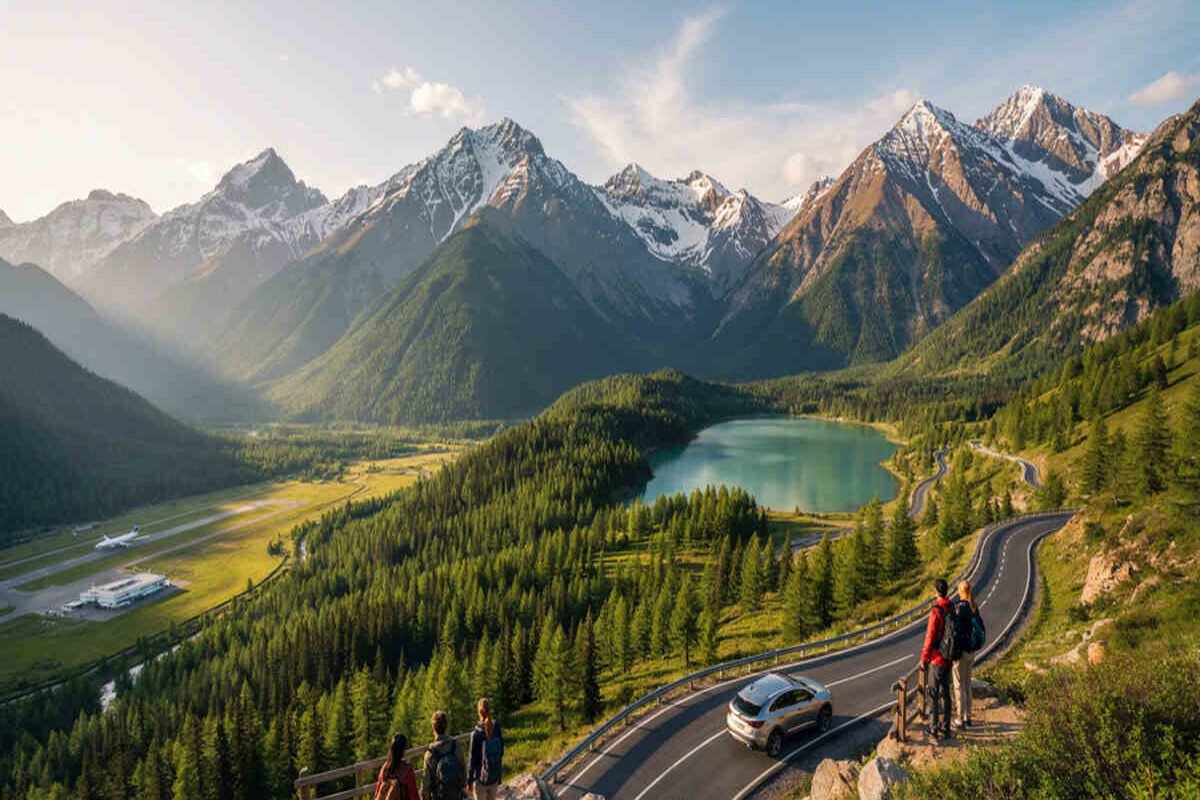
East Kazakhstan is opening up its remote Altai landscapes
East Kazakhstan is investing in roads, trekking routes and aviation infrastructure to make its mountain destinations easier to reach. The region recorded approximately 446,000 visitors in 2025, including around 26,000 who travelled to Katon-Karagai National Park, and further development is focused on adventure, nature and cultural tourism.
The latest projects are centred on the Altai Mountains, where travellers can find snow-covered peaks, forests, alpine lakes, rivers, traditional villages and historic sites. However, distances are considerable and some attractions remain accessible only by specialist vehicles or with experienced local guides.
Upgraded road improves access to Rakhmanov Springs
On 4 October 2026, authorities opened a renovated 13-kilometre section of the Oskemen–Altai–Ulken Naryn–Katon-Karagai–Rakhmanov Springs highway. The mountain section had previously taken drivers between two and a half and three hours to cross because of difficult, unpaved conditions.
The improved road is designed to make the journey more manageable, with better driving conditions and designated viewpoints along the route. It could help tourism operators create shorter itineraries to Rakhmanov Springs, although weather, terrain and seasonal access will remain important considerations.
Rakhmanov Springs combines wellness and wilderness
Rakhmanov Springs lies among the Altai Mountains near Rakhmanov Lake. The destination is known for naturally occurring radon-containing thermal waters, as well as waterfalls, forest scenery and mountain trails.
Visitors considering the thermal facilities should check whether they are operating before travelling and seek appropriate medical advice. The presence of radon means that bathing should not be treated as suitable for everyone.
New Altai Trails route offers shorter trekking options
Katon-Karagai National Park introduced the Altai Trails route in September 2026. The route starts near Rakhmanov Springs and continues through the Sarsembay tract towards the foothills of Mount Belukha, the highest peak in the Altai range at approximately 4,506 metres.
The trail gives visitors another way to explore the area, particularly where difficult terrain or border-area restrictions affect established routes. Programmes lasting three to five days can include rivers, waterfalls, lakes and rural attractions without requiring the more demanding commitment of a major mountaineering expedition.
Mount Belukha itself remains a destination for experienced trekkers and climbers. Reaching its foothills overland may take eight to ten days and can involve horseback travel through isolated terrain. Helicopter sightseeing may be available in some circumstances, but flights depend on weather and local availability.
Nature, history and family activities broaden the region’s appeal
East Kazakhstan is not limited to high-altitude adventures. Near Berel, the Berel burial mounds provide insight into ancient nomadic societies. Archaeological excavations have uncovered horse remains, textiles, wooden artefacts and ceremonial objects more than 2,000 years old. The Berel State Historical and Cultural Museum Reserve presents this heritage alongside local experiences involving apiaries and maral deer farms.
Lake Markakol offers a contrasting experience. Located at about 1,447 metres above sea level between the Kurchum and Azutau ranges, the freshwater lake stretches for almost 38 kilometres. Its forests, protected habitats and mountain setting are suited to photography and nature-focused travel, although access is remote and seasonal road conditions should be checked.
The historic Old Austrian Road provides another specialised itinerary. Built by Austro-Hungarian prisoners of war in the early twentieth century, the route is now associated with off-road travel and rugged mountain scenery. Operators generally recommend around five days, with the most suitable period usually running from mid-June to late August, subject to conditions.
For a gentler holiday, Bukhtarma Reservoir offers boating, fishing, beach activities and lakeside accommodation during the warmer months. The area may suit families and travellers combining water-based recreation with mountain sightseeing.
Winter tourism adds a year-round dimension
East Kazakhstan is also developing experiences beyond the summer trekking season. Ridder, near the West Altai State Nature Reserve, offers skiing, freeriding and snowmobiling. Facilities near Oskemen, including Altai Alps and Nurtau, provide additional winter recreation.
Autumn brings a separate appeal, with colourful forests attracting photographers in September. Winter visitors should prepare for severe cold, snow-covered roads and rapidly changing conditions, particularly when travelling beyond established resorts.
Katon-Karagai airport is planned for completion by the end of 2026
A new airport project in Katon-Karagai District is scheduled for completion by the end of 2026. Plans include a 2,200-metre runway and a passenger terminal designed to handle up to 150 passengers per hour.
The airport could eventually improve connections between Kazakhstan’s major cities and remote Altai destinations. However, no scheduled commercial passenger flights have been announced yet. Travellers should therefore rely only on confirmed transport services and arrange ground transfers separately.
Practical advice for planning an Altai trip
Remote travel in East Kazakhstan requires more preparation than a conventional city break. Before booking, visitors should:
- Confirm road access, accommodation and tour availability for the intended season.
- Use experienced guides and suitable vehicles for mountain or off-road routes.
- Check whether border-area registration or permits are required.
- Carry appropriate clothing, food, fuel and navigation equipment where services are limited.
- Expect unreliable mobile coverage in remote areas.
- Check medical suitability before using thermal-water facilities.
- Support operators that follow protected-area and conservation requirements.
Indicative costs vary widely, from approximately US$45–65 for some one-day excursions to around US$110–220 per person per day for organised multi-day packages. Premium private experiences, including helicopter-based trips, can cost US$1,100–2,200 or more. These figures are not guaranteed prices and should be confirmed directly with providers.
What the development means for travellers
The upgraded Rakhmanov Springs road provides the most immediate access improvement, while the Altai Trails route expands the range of trekking experiences available in Katon-Karagai National Park. The planned airport may bring a larger change, but its effect will depend on airlines launching confirmed commercial services and on the availability of onward transport.
East Kazakhstan’s tourism growth will also depend on protecting fragile alpine environments. Better access can support local accommodation, guiding, food and transport businesses, but responsible visitor management will be essential as more people discover the region.
Conclusion
East Kazakhstan is building the foundations for a more accessible Altai tourism economy through a renovated mountain highway, new trekking opportunities and the planned Katon-Karagai airport. Travellers should treat the airport as a future project rather than an active flight option, verify seasonal conditions and use confirmed local services when planning a journey to this remote part of Kazakhstan.