


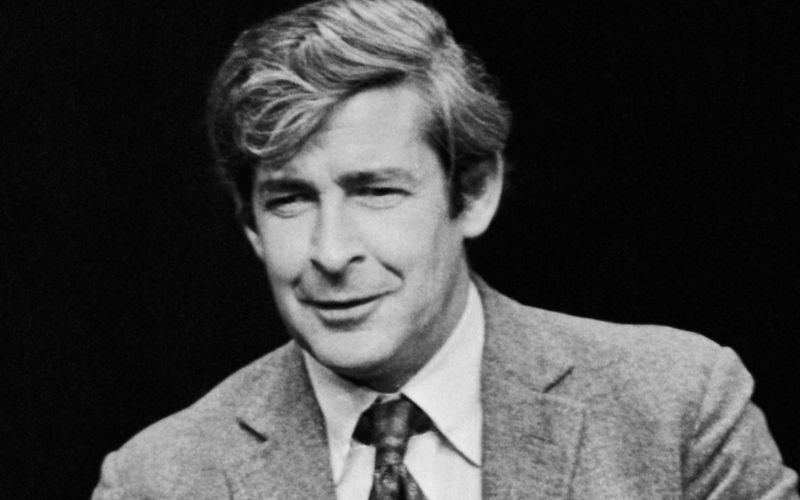
Irish News often revisits the cultural figures who continue to define Ireland’s global reputation, and few comedians deserve that attention more than Dave Allen. Decades after his rise to fame, the Dublin-born performer remains a benchmark for sharp observation, fearless satire, and the kind of storytelling that can make everyday life sound hilariously absurd.
Born in Tallaght, Dublin, on July 6, 1937, Allen became one of the most recognizable Irish comedians of the 1960s and 1970s. A former journalist who evolved into a major television personality, he built his reputation on dry delivery, carefully timed pauses, and a stage presence that was instantly memorable: seated on a high stool, drink in hand, and ready to dismantle social conventions with a raised eyebrow. He died in 2005, but his material still circulates widely because it captures something timeless about Irish humor, family life, religion, and human contradiction.
Irish News looks back at Dave Allen’s lasting appeal
What made Allen stand out was not just that he was funny. It was that he could take familiar experiences and reveal the underlying absurdity in them. His comedy often targeted:
- Family tensions and generational change
- Irish customs and social habits
- Religion and religious authority
- Politics and public hypocrisy
- The strange logic people use in everyday conversations
He was frequently seen as controversial in the UK because he did not hesitate to question institutions many others treated with caution. Yet his tone was rarely angry for its own sake. Instead, Allen’s wit was polished, mischievous, and deeply observant, which is why his jokes continue to resonate with modern audiences reading Irish News and revisiting classic Irish entertainment.
The Dave Allen jokes that still define Irish comedy
Family life and the father-daughter dynamic
One of Allen’s best-known routines centers on the discomfort of a father trying to remain modern and open-minded when his daughter brings home a boyfriend. The brilliance of the bit lies in how quickly polite liberalism collapses into territorial outrage. Allen turns a domestic situation into a comic battlefield, exposing jealousy, hypocrisy, and the silent horror of realizing the guest has effectively moved in.
It works because the setup is universal, but the emotional detail is distinctly Irish in rhythm and attitude. Allen knew how to stretch a simple household moment until it became a full social satire.
The famous Irish art of giving directions
Few routines capture Irish storytelling better than Allen’s take on asking for directions. In his version, directions are never straightforward. They arrive wrapped in detours, unnecessary landmarks, ignored turns, and a kind of conversational authority that values the telling more than the destination.
His joke about being told to ignore a long list of right turns before finally taking a left remains one of the funniest commentaries on Irish conversation. It is not really about navigation at all. It is about personality, performance, and the idea that the person giving directions owns the story. For readers of Irish News, this remains one of the clearest examples of how Allen transformed a familiar national stereotype into something sharper and smarter.
Death, wakes, and Irish ritual
Allen also excelled at finding humor in subjects many cultures treat with complete solemnity. His observations about the Irish wake are a perfect example. Rather than focusing on grief alone, he highlights the communal, social side of the tradition: the gathering, the food, the drink, and the almost celebratory sense of farewell.
His punchline that the real tragedy of dying in Ireland is missing your own wake captures his style perfectly. It is irreverent, affectionate, and rooted in a real understanding of Irish customs.
Irish News and the fearless edge of Allen’s satire
Religion as a comedy target
Allen was perhaps most famous for his willingness to satirize religion. His routine about a child’s first day at school and a bewildering explanation of God is one of his sharpest pieces. By filtering theology through the literal questions of a young child, he reveals how confusing, intimidating, and contradictory religious instruction can sound.
This was central to Allen’s appeal: he did not merely mock belief. He exposed the strange language and fear-based authority that often surrounded it. That approach made him both admired and criticized, but it also cemented his place in comedy history.
Turning facts into punchlines
Another hallmark of Allen’s humor was his ability to begin with a factual-sounding observation and twist it into something bizarrely funny. His material about human skin and household dust is a classic case. He starts with a pseudo-scientific explanation, then lands on a line that makes everyday cleaning suddenly seem grotesque and hilarious.
The same structure appears in his routine about going grey, where he turns biological trivia into an outrageous visual joke. Allen understood that comedy often works best when it begins with calm reason and ends in total absurdity.
The demon drink and Irish wit
His joke about a drunk, a nun, and a whiskey served in a paper cup is another enduring favorite. It combines religion, drink, and social embarrassment in a way that feels unmistakably Irish. More importantly, it shows Allen’s gift for the reveal: the final line flips the scene and suggests this is not the first time the situation has happened.
That economy of storytelling helped make his material so memorable. He knew exactly when to pause, when to escalate, and when to deliver the final sting.
Why Dave Allen still matters
For anyone exploring Irish News through the lens of culture, Dave Allen remains essential. He was more than a stand-up comic. He was a social observer who understood that humor could challenge authority, expose hypocrisy, and preserve the quirks of Irish life at the same time.
His comedy endures because it still feels modern: skeptical, intelligent, and unafraid. Whether he was joking about directions, wakes, family life, ageing, or religion, Allen made ordinary experiences unforgettable. The clearest takeaway for readers of Irish News is simple: great Irish comedy does not just get laughs, it reveals truth hidden inside everyday conversation.