

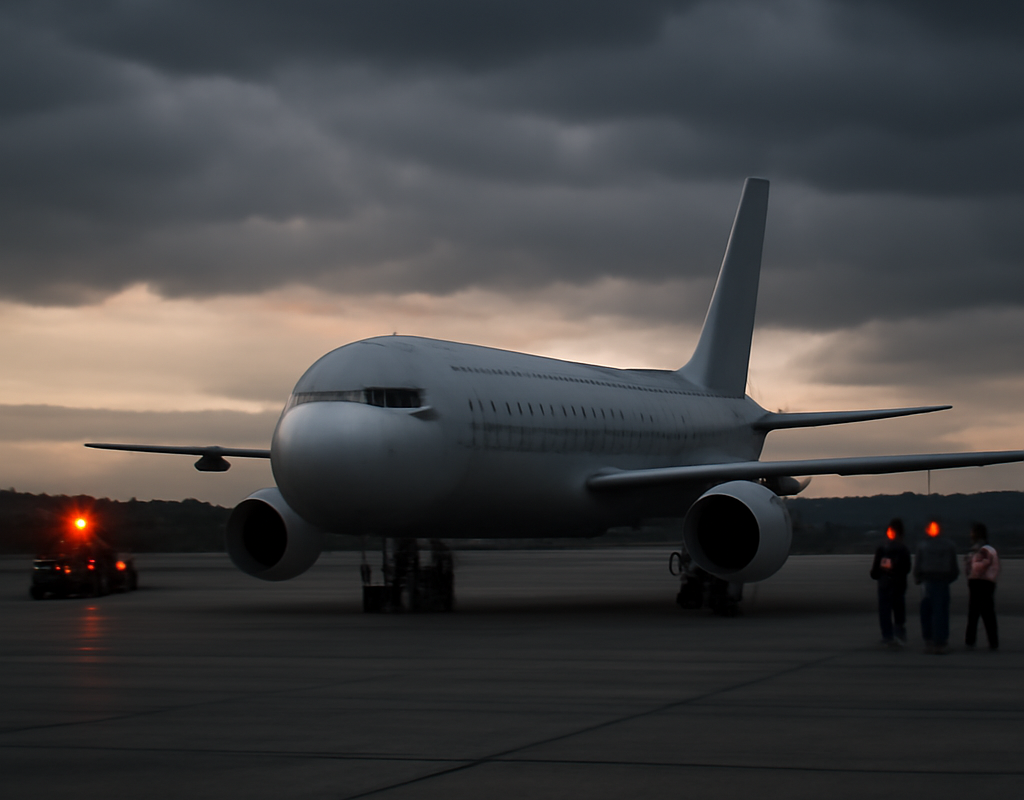
Ireland breaking news is dominated by a major aviation security incident after an Aer Lingus flight travelling from Dublin to Rome was diverted to a French military air base following a reported bomb threat. The aircraft landed safely, while passengers were later expected to continue their journey to Italy after security checks were completed.
The incident formed part of a wider wave of threats affecting at least 21 aircraft and several airports across Europe. Flights and airports in Austria, Belgium, Bulgaria, the Czech Republic, France, Italy, Poland and Romania were affected, although no explosives were discovered during searches reported so far.
Ireland breaking news: Aer Lingus flight diverted to France
The Aer Lingus service from Dublin to Rome was about an hour into its journey when the crew informed passengers there was a problem. Passenger Emily Noble said travellers were initially told about a technical issue before the pilot later referred to a security concern as the aircraft prepared to land in Normandy.
The plane touched down at Évreux-Fauville air base, where police and military personnel carried out inspections. Sniffer dogs were also used during the operation. Passengers reportedly remained on board for around two-and-a-half hours before arrangements were made to transport them to a Paris-area airport and continue the trip to Rome.
Aer Lingus said the aircraft had diverted safely and that it was working to re-accommodate customers to their final destination as quickly as possible.
Latest Irish news as European flights face disruption
The incident is among a series of aviation alerts reported across Europe this week. Italian authorities said threats involving two inbound flights to Rome had been sent by email. A group using the name “Fighters of the Male State” claimed responsibility in messages reported by Italian media, although investigators have not established whether the group was genuinely involved.
Authorities have not confirmed that the incidents are connected. Security specialists have warned that similar threats may result from coordination, imitation or opportunistic disruption. Regardless of their origin, aviation procedures require each warning to be assessed seriously.
Flights and airports affected
- Two Finnair flights from Helsinki were checked; one was escorted by Italian fighter jets before landing in Rome.
- Wizz Air services departing Milan were diverted or inspected after arriving in other European cities.
- LOT flights from Warsaw to Brussels and Paris underwent checks, with no hazardous items found.
- Several Ryanair flights arriving in Bulgaria were escorted by military aircraft.
- EasyJet flights from Newcastle and Glasgow were met by police in Prague.
- Threats affecting flights at Madrid airport were ruled out after inspections.
- An Air Serbia service to Bucharest landed safely and was assessed as facing an unfounded threat.
What the threats mean for Dublin passengers
For travellers monitoring Dublin news today, the Aer Lingus diversion may raise concerns about future flights between Ireland and continental Europe. A diversion does not automatically mean explosives were found; it indicates that authorities considered the warning serious enough to activate established emergency procedures.
Passengers travelling from Dublin should check airline notifications and airport updates before leaving for the airport. Flight schedules can change when aircraft, crews or airport facilities are subject to additional screening. Travellers should also allow extra time for security procedures and avoid relying solely on social media reports.
Why bomb hoaxes are treated as real threats
Aviation security experts said airlines and authorities must respond to every credible warning, even when many threats ultimately prove false. Diverting an aircraft can create significant disruption, but failing to investigate a genuine warning could put passengers and crew at risk.
Experts also warned that repeated hoaxes could create complacency or be used to distract authorities from a separate operation. The incidents reported this week are not sufficient to establish whether they represent a coordinated campaign, but the number of affected flights has prompted heightened attention from airport and national security agencies.
The UK described the latest warnings as malicious hoaxes. Heathrow said a threat received at the airport was assessed as not credible and that there was no risk to passengers, staff or aircraft. Birmingham Airport also said emergency procedures were initiated with relevant partners after receiving a warning.
What passengers should do next
- Check the airline’s official website or app before travelling.
- Arrive early in case additional screening is introduced.
- Follow instructions from airport staff and emergency services.
- Do not share unverified claims about threats or aircraft movements.
- Contact the airline directly about rebooking, connections or delayed baggage.
Conclusion: security remains the priority
The Aer Lingus diversion is a significant development in Ireland breaking news, but the aircraft landed safely and searches reported across the affected routes found no explosives. The wider investigation will determine whether the warnings were connected or part of a copycat pattern. For now, passengers should rely on official airline and airport updates, while authorities continue to treat every aviation security warning with appropriate caution.