

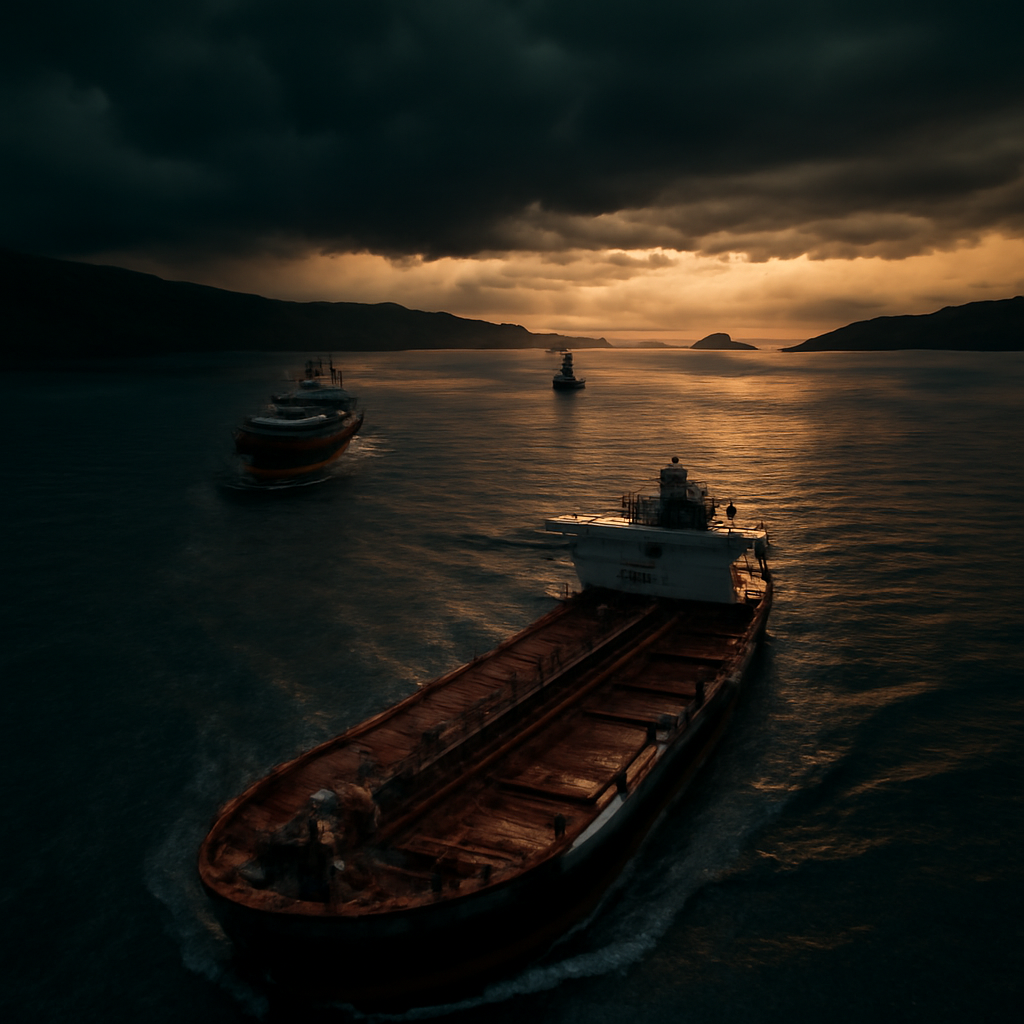
The Iran Strait Crisis has deepened after US President Donald Trump rejected Tehran’s proposal to reopen the Strait of Hormuz to commercial shipping. Iran says only a negotiated settlement can end the conflict, while Washington argues that the offer does not go far enough.
The dispute is being closely watched around the world because the strategic waterway normally carries about one-fifth of global oil and gas supplies. Its effective closure since the war began in February has contributed to higher energy prices and growing concerns about the wider economic impact.
Iran Strait Crisis: Trump rejects reopening proposal
Trump told reporters that Iran’s offer was unacceptable. According to the proposal, commercial shipping could resume through the strait within seven days, but the US president said Tehran was making the offer from a position of weakness.
Iranian Foreign Minister Abbas Araghchi acknowledged the rejection in a Telegram post but said Tehran was waiting for a definitive official response from Washington. He also argued that the conditions for reopening the waterway matched those contained in a memorandum of understanding signed by the two countries in June.
Iran says it raised the possibility of reopening the strait and ending hostilities during discussions held alongside the United Nations General Assembly in New York. The negotiations have so far failed to produce an agreement.
Why the Strait of Hormuz matters
The waterway is one of the world’s most important energy routes. Any prolonged disruption can affect oil markets, shipping insurance, fuel costs and inflation far beyond the Middle East.
- Around one-fifth of the world’s usual oil and gas flows pass through the strait.
- Disruption can increase global crude prices and transport costs.
- Higher energy prices can add pressure to household bills and businesses.
- International mediators are seeking guarantees for safe navigation.
The crisis is therefore being followed as a major international story, with governments monitoring energy supplies and commercial shipping routes. For audiences searching for Ireland breaking news and the latest Irish news, the impact on fuel prices and household finances remains a key concern.
Iran demands trust before further negotiations
Iranian President Masoud Pezeshkian said distrust created by the conflict must be addressed before talks can succeed. He said Iran was open to implementing the June memorandum in stages, but insisted that the United States must demonstrate it does not intend to overthrow the Iranian government.
Pezeshkian accused Washington of undermining the memorandum when it restarted its bombing campaign. His comments underline the central obstacle facing negotiators: both sides remain deeply concerned that any concession could be used against them.
Iran’s foreign minister also criticised what he described as contradictory statements from Trump. Tehran is now waiting for mediators to clarify the US position before deciding how to respond.
Oman continues mediation efforts
Oman, which has acted as an intermediary between Washington and Tehran, has urged all parties to maintain open dialogue. Oman’s foreign minister told the UN General Debate that governments should support efforts to protect navigation in the strategic waterway.
The role of mediators could become increasingly important if direct negotiations remain stalled. Oman has previously provided a channel for communication between the two countries, allowing messages to be exchanged despite the absence of diplomatic trust.
US sanctions add pressure on Tehran
The Trump administration has described its economic campaign against Iran as “Operation Economic Outcast”. US officials say sanctions are intended to pressure Tehran into stopping attacks on vessels and accepting a broader settlement.
Treasury Secretary Scott Bessent said several countries had restricted flights operated by Iranian airlines and that some banks in Turkey and the United Arab Emirates had halted transactions involving Iran. US ambassador to Nato Matthew Whitaker also backed Trump’s decision, describing Iran’s offer as insufficient.
However, economists question whether the sanctions will achieve their intended result. Their effectiveness may depend on how Iran’s largest trading partners respond, particularly China, which has continued buying Iranian oil despite earlier US restrictions.
Read more: Ireland and global developments
For more coverage connected to international affairs, energy markets and public policy, read the latest stories on Ireland breaking news and national current affairs at DailyDigest.ie.
Global energy risks and household costs
The confrontation has consequences beyond diplomacy. Sustained disruption in the Strait of Hormuz could intensify pressure on fuel markets and contribute to higher transport and production costs. In Ireland, readers following electricity prices Ireland, the cost of living Ireland and wider economic developments will be watching for signs of further volatility.
Energy prices are influenced by several factors, including supply expectations, shipping risks, sanctions and market confidence. Even before physical shortages occur, concerns about future deliveries can push prices higher.
The crisis may also affect governments’ economic planning. Policymakers could face renewed pressure to protect households, support vulnerable businesses and reduce dependence on unstable international supply chains.
What happens next in the Iran Strait Crisis?
The immediate focus is on whether mediators can deliver a clear US response and whether Tehran will make further concessions. A temporary reopening of the strait would not necessarily end the conflict, but it could create space for wider negotiations.
Key developments to watch include:
- Whether the United States provides a formal response to Iran’s proposal.
- Whether Oman can restart structured discussions between both sides.
- How China and other Iranian trading partners respond to sanctions.
- Whether commercial shipping companies resume normal operations.
- How global oil, gas and fuel prices react to developments.
Explore more: Irish news and international affairs
Explore more analysis of world events, business pressures and public-interest stories through latest Irish news and international news coverage at MediaDigest.ie, and browse lifestyle and global affairs features at Ireland news, culture and world developments on LuxeDigest.org.
Frequently asked questions
Why is the Strait of Hormuz important?
The Strait of Hormuz is a vital maritime route for global oil and gas shipments. Disruption can affect energy prices, shipping costs and inflation internationally.
What does Iran want?
Iran says it wants a negotiated settlement, the implementation of the June memorandum in stages and assurances that the United States does not intend to overthrow its government.
Why did Trump reject Iran’s proposal?
Trump said the offer was unacceptable and argued that Iran’s conditions amounted to an insufficient deal. US officials have described the proposal as incomplete.
Could the crisis affect Ireland?
Yes. A prolonged energy disruption could contribute to higher fuel, transport and electricity costs, adding pressure to households and businesses in Ireland.
Conclusion
The Iran Strait Crisis remains unresolved, with Tehran calling for negotiations and Washington rejecting what it considers an inadequate proposal. The next stage will depend on mediation, sanctions policy and the willingness of both governments to rebuild trust. Until then, the Strait of Hormuz will remain a critical flashpoint for international security and global energy markets.