

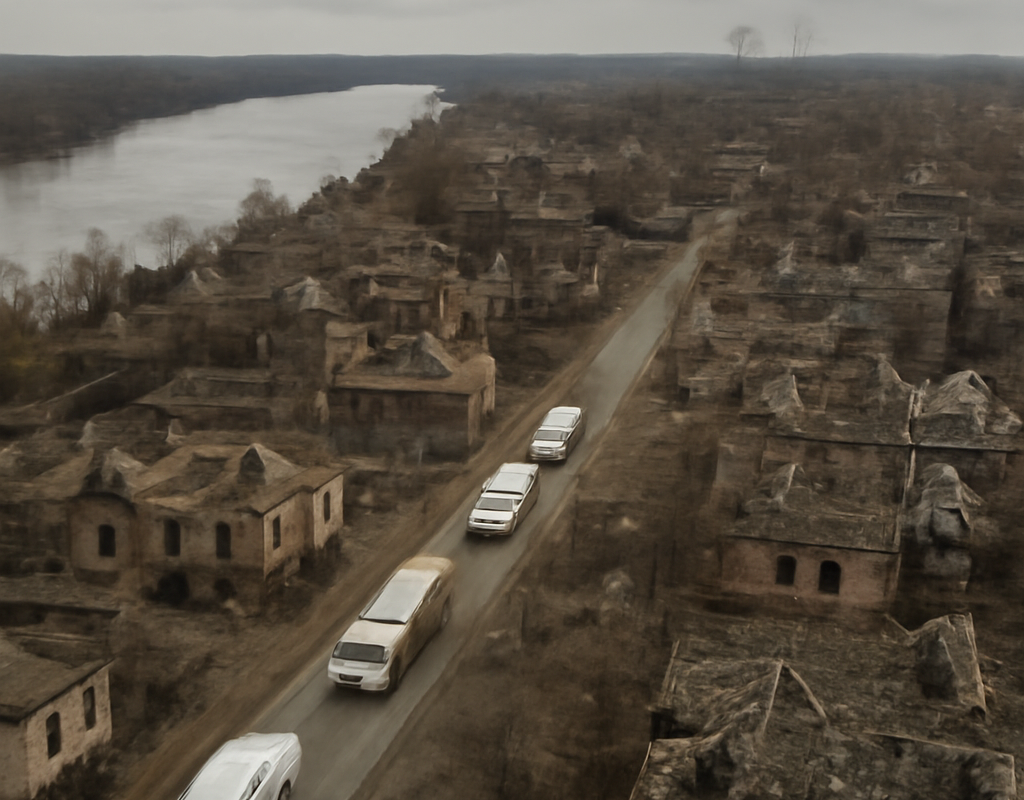
A fragile truce has begun in the Russian-occupied Ukrainian city of Oleshky, where civilians have endured years without reliable food, water, electricity or medical care. The limited ceasefire is intended to create a window for humanitarian aid deliveries and a planned evacuation, but residents remain fearful that fighting could resume.
The development is a major story in Ireland breaking news coverage of the war in Ukraine, with international attention focused on whether the operation can safely reach people trapped behind front lines. Officials from Ukraine and Russia say the ceasefire is currently being observed, although communication with Oleshky remains difficult and independent verification is limited.
Oleshky truce opens a narrow humanitarian window
Oleshky lies in the Kherson region, separated from Ukrainian-held positions by the Dnipro River and surrounded on the other side by Russian forces. The city was captured during the opening phase of Russia’s full-scale invasion in February 2022.
Before the war, Oleshky had about 24,000 residents. Ukrainian estimates indicate that roughly 1,700 people remain in the city, while as many as 6,000 people, including around 200 children, are still in the wider surrounding area.
The current truce is expected to remain in place until late on 1 November, according to a Ukrainian parliamentary official. Its stated purpose is to allow:
- Humanitarian supplies to enter the city
- Medical assistance for vulnerable residents
- Routes to be inspected and cleared of mines
- Civilians to leave through an organised evacuation
Russia’s defence ministry said engineering teams were examining access roads and removing explosive devices and booby traps. Ukrainian authorities, however, have urged residents and the public not to share unverified information about evacuation routes, convoy movements or timings.
Residents face hunger, landmines and collapsing services
People inside Oleshky have described extreme hardship. No shops are operating, while electricity, gas and running water have reportedly been unavailable for around three years. Some residents have resorted to cooking garden weeds because food supplies have become so scarce.
Medical care is also severely restricted. Reports indicate that only one hospital is partly functioning, opening on limited days and carrying out urgent procedures, including amputations. One resident said she was injured by a landmine and had undergone two operations, raising concerns that wounded people may be unable to join the evacuation.
Leaving the city is dangerous. Roads and riverbanks are reportedly mined, bridges have been destroyed and drones pose an additional threat. A former resident described walking approximately 24km through minefields to reach safety, at times having to remain silent and pass within metres of explosives.
These conditions make the humanitarian operation exceptionally complex. Even if routes are cleared, residents fear they may be forced towards Russia rather than Ukrainian-controlled territory.
Fears over detention and the truce holding
Many civilians are hopeful that they will finally be able to leave, but uncertainty surrounds the evacuation process. Questions remain about registration, family reunification, pets and what will happen to homes and property left behind.
Some residents also fear that Russian forces could inspect phones and online activity, looking for evidence of support for Ukraine. Others worry that shooting could restart during the evacuation and that responsibility would then be disputed.
Ukrainian officials have said the operation must proceed safely and without unnecessary publicity. The country’s human rights commissioner travelled to the area to help coordinate the mission, with mediation involving representatives from the United States and both sides of the conflict.
Why independent confirmation is difficult
Communications in Oleshky are patchy, and residents may be reluctant to speak openly because of fears of reprisals. This makes it challenging to establish whether supplies are arriving, whether routes are genuinely safe and whether all sides are respecting the ceasefire.
The Kremlin previously acknowledged that Oleshky faced a critical shortage of food and medicine but blamed Kyiv for the situation. Ukrainian officials have rejected that framing and warned that any evacuation arrangement must allow civilians to reach safety in Ukraine where possible.
Read more: Latest Irish news and Ireland breaking news updates covering major developments affecting people across the country.
Fighting continues beyond Oleshky
The truce is limited to the humanitarian situation in and around Oleshky and does not represent an end to the wider war. Strikes have continued elsewhere, including attacks affecting Kyiv, where a university and a bridge were reportedly hit, causing deaths and injuries.
A separate Ukrainian drone strike in Russia’s Bryansk region also reportedly killed one person and injured six others. These incidents underline the fragility of the ceasefire and the broader security risks facing civilians across the region.
For residents of Oleshky, the immediate priority is survival: food, medicine, safe passage and reliable information. The planned evacuation could offer a lifeline, but mined roads, destroyed infrastructure and mutual mistrust mean that even a temporary pause in fighting carries considerable danger.
Explore more: Top Ireland news stories and live updates, including international affairs, public safety and breaking developments.
For further lifestyle and global current affairs coverage, visit international news and analysis from Luxe Digest.
What happens next?
The success of the Oleshky operation will depend on whether the ceasefire continues, whether mine-clearing work is effective and whether civilians can choose a genuinely safe destination. Humanitarian agencies and officials will also need to address medical emergencies, family separation and the needs of people who cannot travel easily.
For now, the truce offers a narrow opportunity rather than a guarantee. The clearest takeaway is that Oleshky’s residents need immediate, monitored humanitarian access and a safe evacuation route—not merely an announcement of a ceasefire.