


Ireland can feel timeless and transformed at once. That tension is at the heart of Irish Around World: a country that has changed dramatically in living standards, opportunity, and outlook, while still holding onto the warmth, wit, and welcome that people associate with irish culture and craic.
Looking back to the early 1950s, the gap between Ireland’s image and everyday reality was striking. Visitors were invited to admire scenic beauty, hospitality, and a relaxing holiday atmosphere. Yet for many families at home, life was far harder. Employment was limited, emigration was common, and basic household comforts such as indoor plumbing, piped water, and electricity were still missing in a large share of homes. If you’ve ever wondered what is the craic behind modern Ireland’s confidence, it starts with understanding just how much the country had to overcome.
From hardship to openness: the making of modern Irish Around World
In the decades after independence, Ireland remained heavily agricultural and economically dependent on Britain. Protectionist policies aimed to build self-sufficiency, and some manufacturing did grow, from textiles to food processing and assembly plants. But for ordinary people, progress was slow. Jobs did not expand enough, incomes lagged behind other countries, and many young Irish people felt they had little choice but to leave.
The turning point came when Irish policymakers embraced a more outward-looking model. Instead of relying on tariffs and a small domestic market, Ireland shifted toward:
- Free trade and export-led growth
- Foreign direct investment
- Greater access to European markets
- Long-term investment in education
Joining the European Economic Community in 1973 helped remake the economy. Exports expanded massively, dependence on a single market declined, and new industries created more skilled work. Over time, that changed everyday life as much as any statistic ever could.
Why the shift mattered
The effects were profound. Employment rose strongly from the 1980s onward, third-level education became far more common, and real incomes improved substantially. Ireland also moved from being a nation defined by departure to one shaped by arrival, with people from around the world choosing to live and work there. That story resonates deeply with the global irish community, irish diaspora history, and anyone interested in tracing irish ancestry or trying to find my irish roots.
Read more: places to visit in ireland | living in ireland guide
What stayed the same in Irish Around World
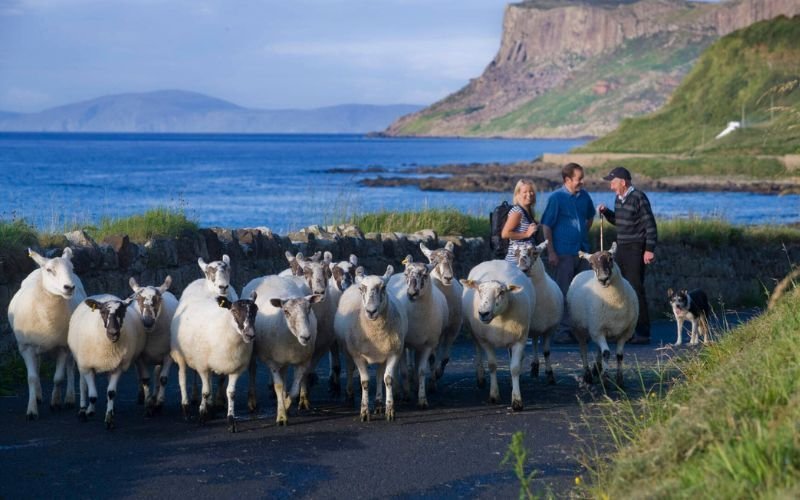
For all the economic change, some of the country’s core appeal has remained remarkably consistent. The landscapes that once drew admiring travel writers still inspire today’s ireland travel bucket list. Coastal roads, green valleys, and market towns continue to shape irish road trips, while local hospitality remains central to the visitor experience.
That continuity also lives in culture. Whether it is traditional irish music sessions, irish sayings and phrases, or a night of easygoing banter in the best pubs in Dublin, there is still a strong thread connecting old and new Ireland. Modern irish entertainment news may spotlight top irish actors, new irish movies, and best irish tv shows, but the same country also keeps alive storytelling, music, and community rituals that define irish traditions kept alive.
The cultural confidence of a new era
Today’s Ireland is more global, more educated, and more diverse, yet it has not lost its sense of self. You can see that in:
- The strength of local communities
- The popularity of irish festivals and events
- The endurance of traditional irish food and irish family traditions
- The worldwide appeal of irish musicians and irish comedy shows
This mix of heritage and reinvention helps explain why irish culture abroad remains so powerful, from irish pubs around the world to celebrations that celebrate Saint Patricks Day globally.
Explore more: wild atlantic way tips | irish road trip itinerary
Lessons from Ireland’s transformation
Ireland’s rise did not happen by accident. Four themes stand out: stable democracy, openness to the world, serious investment in education, and strong social trust. Together, they helped create a country with higher living standards, broader opportunity, and a stronger international profile.
That matters not only for residents, but also for the wider Irish Around World audience following ireland news today, irish current affairs, and the evolution of modern irish culture. It also helps explain why so many visitors now come for more than scenery alone. They come for heritage, creativity, nightlife, food, sport, and connection.
For travelers planning things to do in ireland tonight, for descendants exploring irish heritage worldwide, and for readers interested in the best craic in ireland, the real story is this: Ireland modernized without becoming unrecognizable.
Read more: best craic in ireland | ireland nightlife guide
Conclusion
The most compelling thing about Irish Around World is not simply that Ireland became wealthier. It is that the country combined economic progress with a living sense of place, personality, and community. Modern Ireland is more open, more confident, and more connected than the nation of the 1950s, yet the welcome, humor, and cultural richness that people cherish are still there. That is the real takeaway: Ireland changed profoundly, but it kept its soul.