


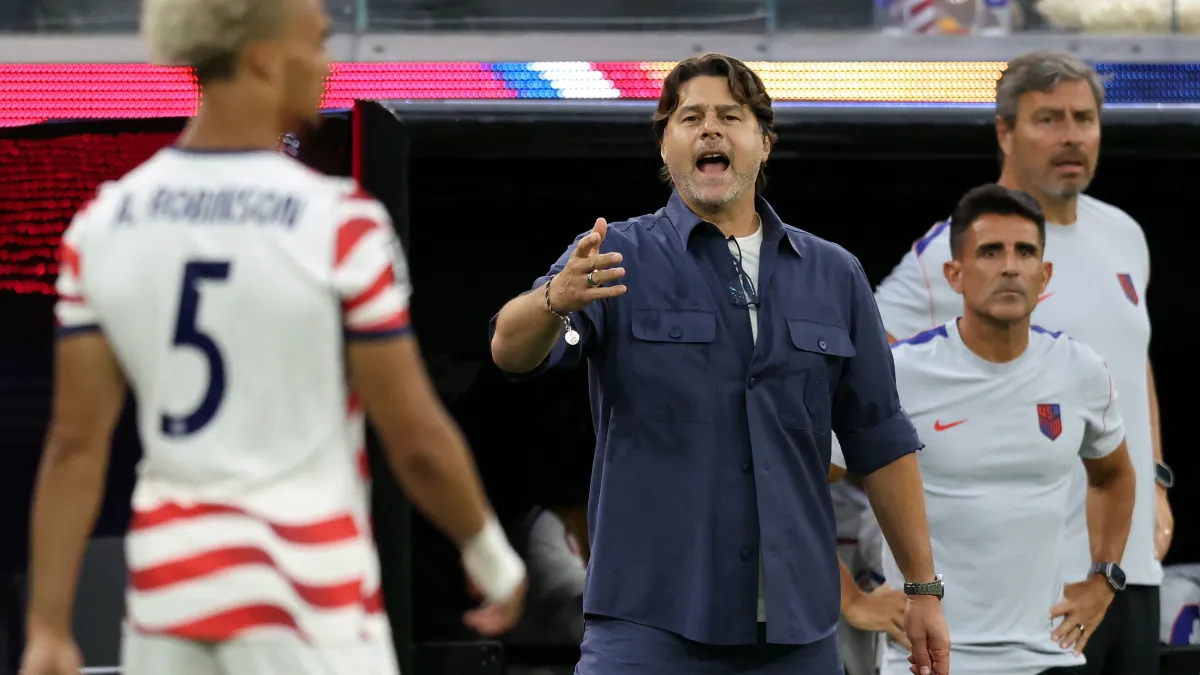
Mauricio Pochettino has moved quickly to lower the temperature around Folarin Balogun’s restored availability, insisting the United States should not be cast as villains on the eve of a huge knockout clash. As debate grows around the striker’s return, the bigger story for many supporters tracking the World Cup 2026 conversation is how FIFA applies discipline under pressure and what that could mean for tournament fairness.
Speaking before the United States’ Round of 16 meeting with Belgium, Pochettino welcomed the ruling that allowed Balogun to return after his one-match ban was converted into a probationary sanction. The decision drew a furious reaction from Belgium, but the USMNT manager argued the case was neither unusual nor uniquely favorable to his team.
Pochettino says the United States is not being treated differently in World Cup 2026 era debates
Pochettino’s main point was clear: FIFA has handled comparable cases this way before. He pushed back against the idea that the USMNT had received extraordinary assistance, suggesting critics were ignoring the sport’s long history of disciplinary flexibility at major tournaments.
From his perspective, the original red card itself was already a harsh blow. Balogun was sent off in the win over Bosnia and Herzegovina after a VAR review highlighted contact on Tarik Muharemovic. Pochettino believes the dismissal was excessive and said his side had already suffered enough by playing a man down for an extended spell.
- He described the original call as unfair.
- He said FIFA’s latest move helped correct a damaging decision.
- He praised U.S. Soccer officials for handling the matter effectively.
That stance will interest fans following the FIFA World Cup 2026 build-up, especially as questions around officiating, video review and player suspensions continue to shape elite football.
Why the Balogun ruling matters beyond one knockout game
The controversy is larger than one player or one match. Pochettino suggested the case exposes a wider issue in how VAR is used. In his view, the technology is not the problem; the interpretation of incidents is. Slow-motion replay, he implied, can distort the reality of physical contact and lead officials toward severe punishments that may not reflect the full speed of play.
That is a significant talking point as anticipation builds for the World Cup 2026 schedule, World Cup 2026 fixtures and the eventual World Cup 2026 knockout stage. Tournament football leaves little room for recovery, and one disputed call can change a nation’s path.
Read more: explore wider sports coverage and tournament analysis
Balogun boost gives USMNT timely lift before Belgium showdown
For the Americans, Balogun’s return is a major competitive boost. The striker’s movement, direct running and finishing ability give the USMNT an added edge against a Belgium side expected to punish any weakness. Pochettino said his focus remained firmly on preparation, not politics, as he worked through the best tactical options available.
This is where the USA World Cup 2026 narrative becomes relevant. Every major decision around squad management, discipline and performance feeds into how the national team is judged ahead of future milestones, including the Football World Cup 2026 on home soil.
Supporters already searching for the World Cup 2026 teams, World Cup 2026 host countries and World Cup 2026 venues will recognize that these moments also shape belief. Winning in knockout football often requires both depth and fortune, and Balogun’s availability could influence both.
Read more: explore the latest media and sports talking points
A familiar FIFA controversy with modern consequences
Pochettino also pointed to history, noting that tournament football has seen suspensions softened or adjusted before. His argument was not that the process is perfect, but that outrage should be tempered by precedent. That may not satisfy Belgium, yet it does underline a reality of international football: rules are often interpreted through the lens of context, profile and competitive stakes.
As interest grows around the 48 team World Cup, the World Cup 2026 format and how to watch World Cup 2026 in Ireland, governance issues will remain part of the conversation. Fans care about matchups and stars, but they also want consistency.
Read more: explore fresh features and trending stories
What this means as attention turns toward the next stage
Pochettino’s message was part defense, part challenge to the wider football world. He is asking observers to judge the full sequence: an arguable red card, a major punishment in a knockout setting, and then a governing body using discretion to avoid compounding the damage. Whether rivals accept that explanation is another matter.
Still, the episode offers a timely reminder that the road to World Cup 2026 will be shaped by more than goals and lineups. Officiating standards, appeals, and player availability can define a campaign just as much as tactics. For the USMNT, the immediate takeaway is simple: Balogun is back, Belgium awaits, and the margin for error is now razor-thin in World Cup 2026 discussions.