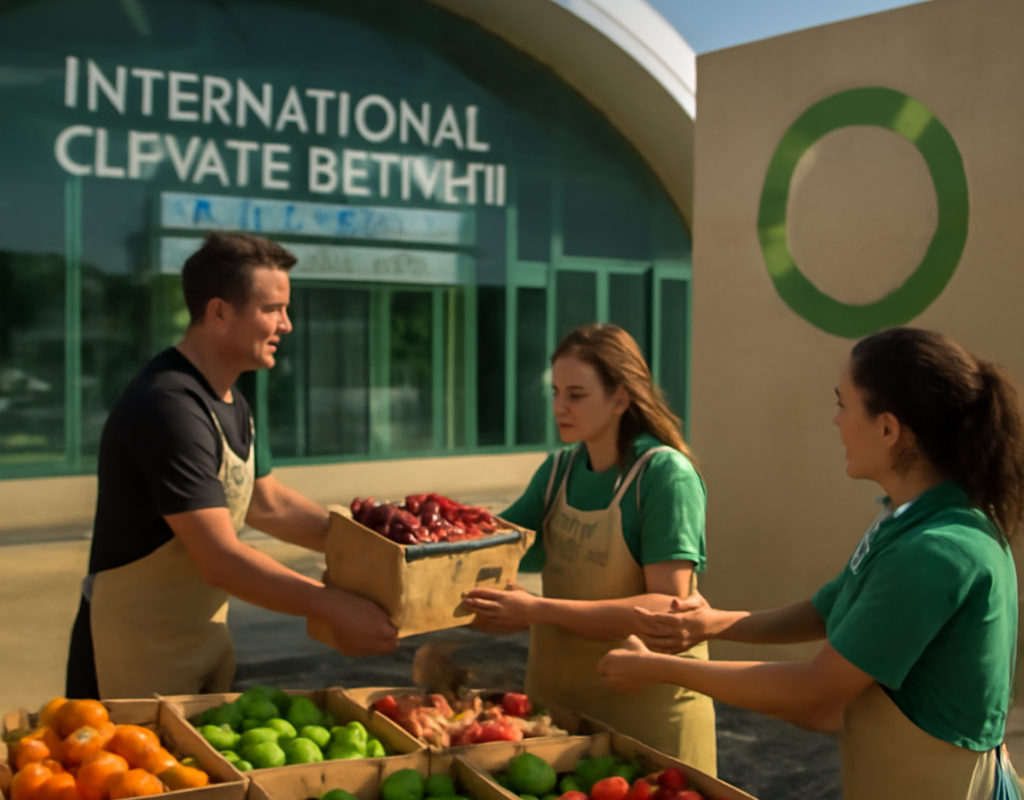
Ireland’s COP31 Declaration on Surplus Food Sharing and Redistribution has gained international support, with Germany, the Netherlands and Canada endorsing the initiative at the climate conference in Antalya, Türkiye.
The declaration, led by Ireland’s Department of Climate, Energy and the Environment, calls for edible surplus food to reach people wherever possible instead of becoming waste. It places food redistribution within wider efforts on climate action, food security, resource efficiency and the circular economy.
Ireland’s COP31 food declaration gains wider backing
The new endorsements strengthen Ireland’s attempt to make surplus food sharing a more established part of sustainable food policy. Support extends beyond national governments, with local authorities, businesses, charities, social enterprises, civil society groups and research institutions also invited to endorse the objectives.
Almost 80 organisations have signed a supporting statement to date. The initiative is intended to encourage practical cooperation between governments, food businesses and community organisations, while helping countries develop the infrastructure needed to redistribute safe, nutritious food at scale.
Why surplus food matters for climate policy
The declaration highlights the close links between food waste, emissions and hunger. Around one-third of food produced globally is lost or wasted, contributing an estimated 8% to 10% of global greenhouse gas emissions. The source statement also notes that almost 26% of the global population experienced moderate or severe food insecurity in 2025, while an estimated 645 million people were affected by hunger.
A “food-first” approach means prioritising human consumption for edible surplus food before other uses or disposal. The declaration also supports stronger policies, partnerships and systems to keep food resources productive for as long as possible.
FoodCloud partnership supports Ireland’s approach
Ireland has worked with FoodCloud over the past two years on policy recommendations concerning surplus food donation and redistribution. That work is informing preparation of the next National Food Waste Prevention Roadmap.
The Department of Climate, Energy and the Environment also collaborated with the Department of Agriculture, Food and the Marine and FoodCloud on the COP31 initiative. FoodCloud’s involvement reflects the role that partnerships between industry, government and civil society can play in moving surplus food from businesses to communities.
- The declaration recognises safe surplus food redistribution as a circular economy activity.
- It encourages whole-of-government approaches to food security.
- It calls for practical, scalable redistribution systems.
- It links food waste prevention with lower emissions and stronger communities.
What Ireland is seeking from other countries
Ireland used COP31 to encourage countries to support the declaration and took part in panel discussions promoting its objectives. A further discussion hosted at the EU/Irish Pavilion focused on the role of surplus food sharing in sustainable food systems.
Minister for Climate, Energy and the Environment Darragh O’Brien described the endorsements as recognition of the contribution redistribution can make to climate action, food security and the circular economy. Minister of State Alan Dillon said the growing coalition showed increasing recognition that food should be treated as a valuable resource rather than a disposable commodity.
FoodCloud’s Head of Policy Angela Ruttledge also welcomed the declaration, pointing to the need for investment in food-sharing infrastructure and solutions capable of supporting EU food waste reduction targets.
The next step for Ireland’s COP31 food declaration
The endorsement by three major international partners gives Ireland’s COP31 food declaration greater diplomatic visibility, but its practical impact will depend on implementation. Policies, reliable collection networks and cooperation across the food sector will be needed to ensure edible surplus reaches people safely and efficiently.
Ireland’s COP31 food declaration presents surplus redistribution as more than a waste-management measure: it is a proposed tool for reducing emissions, supporting food security and building a more circular food system.