

A German engineering company has signed a reported €60 million agreement with SpaceX to supply solar cells for a planned satellite-based computing project, creating a major commercial opportunity for the medium-sized manufacturer.
The deal links Singulus Technologies, based in Kahl am Main, with Elon Musk’s space company as SpaceX develops satellites intended to process artificial-intelligence workloads in orbit. The agreement is expected to support production for the project in Texas from early 2027, although the wider satellite concept remains at the development stage.
What the SpaceX solar-cell deal involves
SpaceX has placed an initial €60 million order with Singulus Technologies for solar cells designed for use in satellites. The German company develops and assembles industrial equipment and production systems for sectors including photovoltaics, semiconductors, medical technology, packaging, glass, automotive manufacturing, batteries and hydrogen.
The partnership is expected to go beyond the first order. The companies have also outlined plans for additional facilities and production lines aimed at creating solar-production capacity of up to 100 gigawatts. The source report compares that figure with the annual output associated with ten large nuclear reactors, although the planned capacity should be understood as a production target rather than electricity generated by the satellites themselves.
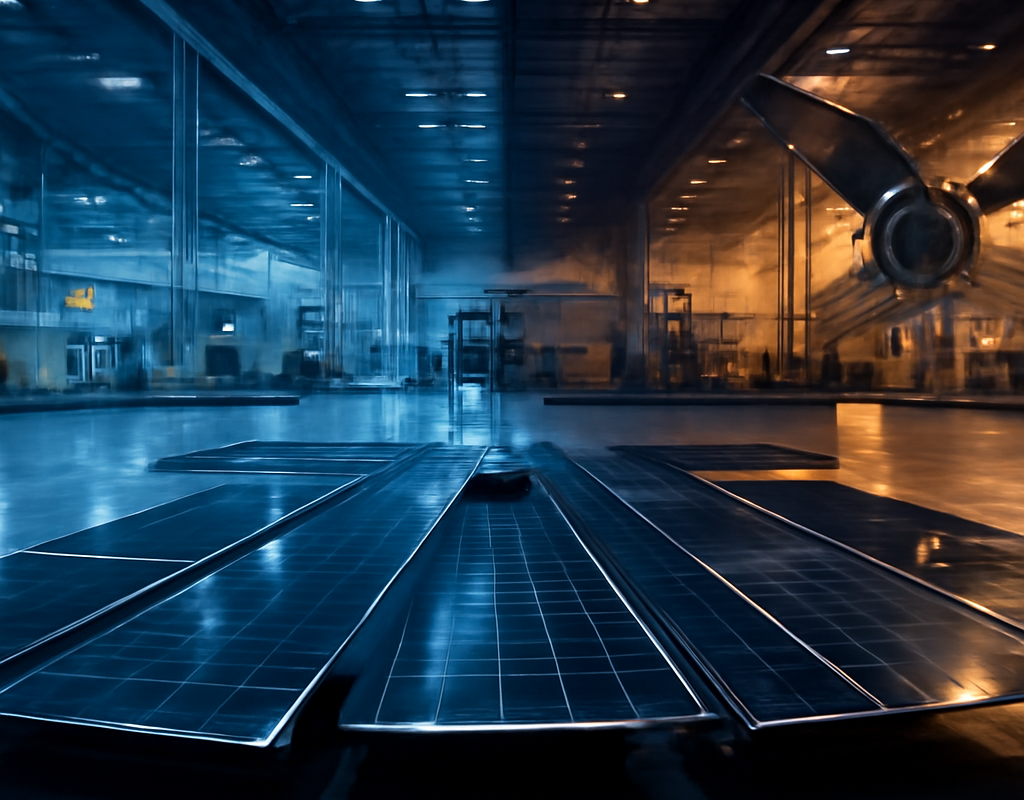
Singulus produces equipment for heterojunction solar cells, a technology that combines different semiconductor layers to improve photovoltaic performance. According to the report, those characteristics make the cells potentially suitable for demanding space applications.
A significant order for Singulus
The agreement represents a substantial commercial development for Singulus. Its reported revenue for 2025 was €48.3 million, meaning the value of the first SpaceX order is larger than the company’s annual revenue in the previous year.
Following news of the agreement, Singulus shares temporarily rose by between 65% and 80%, lifting the company’s market value to approximately €73 million. Share-price movements can change quickly, however, and do not guarantee that the full commercial value of a contract will translate into future profits.
How the satellite computing project is intended to work
The solar cells are intended for satellites associated with SpaceX’s Starmind project. The concept involves using large satellites as artificial-intelligence data centres in orbit, with solar wings providing power and laser links transmitting processed data back to Earth.
The proposed satellites would reportedly have solar arrays measuring about 75 metres in length. Their operating model is based on access to sunlight for much of their time in orbit, potentially reducing the need for some terrestrial infrastructure and the associated cooling and electricity systems used by conventional data centres.
In a filing to the US Federal Communications Commission, Musk described the idea as a way to use near-continuous solar power for computing. The report also notes that Musk has referred to the broader concept as creating a “sentient sun”. That description is a project ambition rather than evidence that the technology has been demonstrated at commercial scale.
Technology and regulatory questions remain
Space-based AI computing would face significant engineering, financial and regulatory challenges. Satellites would need to withstand launch conditions, operate reliably in orbit, communicate with ground infrastructure and manage heat generated by high-performance computing equipment.
The project would also raise questions about orbital congestion, space debris, radio-frequency coordination and the environmental impact of manufacturing and launching large numbers of satellites. Any future constellation would require the necessary authorisations and coordination with relevant regulators.
The source report says Musk has discussed a constellation of up to one million satellites. Such a figure would be an extremely ambitious upper limit, and satellite operators can seek approval for larger numbers than they ultimately deploy to preserve flexibility as designs develop. The number of satellites currently in orbit is far lower, with the report estimating roughly 15,000 worldwide and around 9,500 associated with Starlink.
Competition in orbital data centres
SpaceX is not the only technology company exploring satellite-based computing. Google has also examined concepts involving satellites as computing platforms powered by solar energy.
These proposals reflect growing interest in alternatives to traditional data centres, whose demand for electricity, land and cooling capacity is increasing alongside the expansion of artificial-intelligence services. However, orbital computing remains unproven at the scale required for widespread commercial use.
Why the agreement matters for Germany’s technology sector
For Germany, the contract highlights the potential role of specialist manufacturers in emerging space and clean-technology supply chains. Singulus is not a satellite operator; its contribution is focused on the machinery and photovoltaic production expertise needed to manufacture solar cells.
The partnership could therefore connect German industrial know-how with the expanding commercial space sector. Its success will depend on whether SpaceX proceeds with the satellite manufacturing programme, whether the required production capacity is built and whether the technology performs as intended.
There is no indication in the source material that the agreement represents an EU decision or an EU-funded programme. It is a commercial arrangement between a German company and SpaceX, with the planned satellite manufacturing activity located in the United States. Its European significance comes primarily from the industrial and technology links involved.
What happens next?
The first reported deliveries are expected to support SpaceX’s satellite manufacturing site in Texas in early 2027. Before that point, the companies would need to progress from the initial agreement to manufacturing, quality assurance and delivery at the required scale.
- Singulus is expected to supply solar cells for the proposed satellite programme.
- Further production facilities and lines may be developed under the strategic partnership.
- SpaceX’s Starmind concept remains dependent on technical development and regulatory approval.
- The final size and timing of any satellite constellation are not yet established.
The €60 million SpaceX solar-cell deal gives Singulus a potentially transformative contract and places German photovoltaic manufacturing expertise within an ambitious space-industry project. The key test will be whether the proposed orbital AI system can move from concept and regulatory filings to reliable, large-scale deployment.