

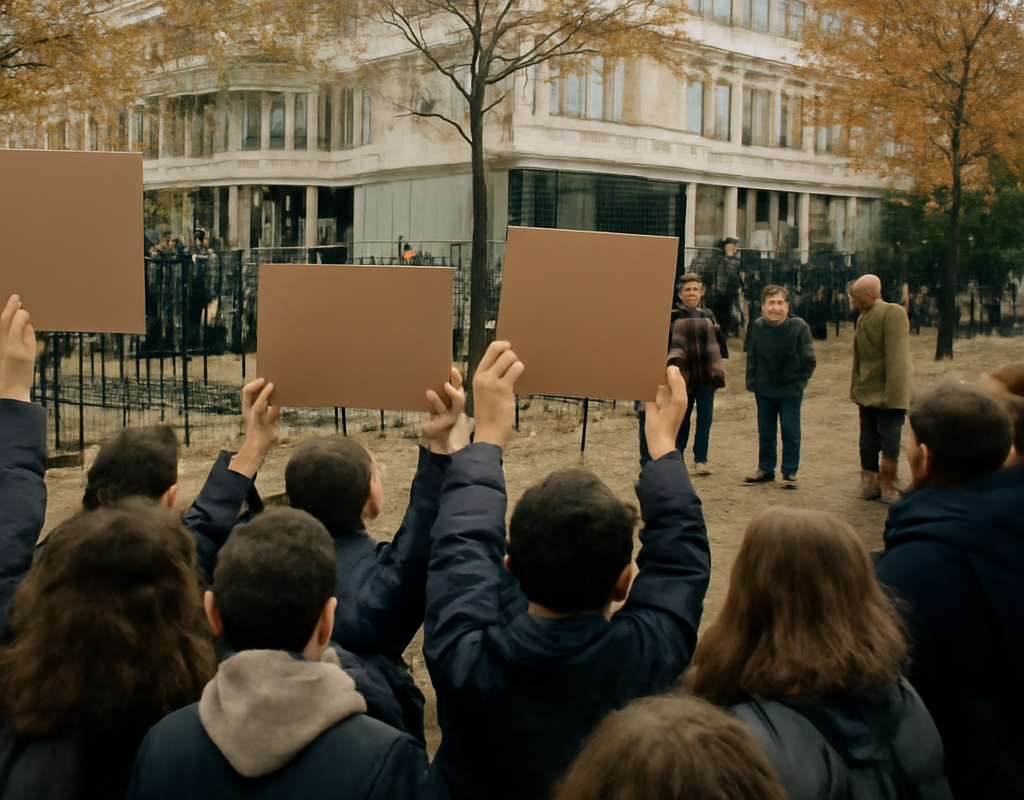
Standfirst: French secondary school pupils and their supporters are staging a nationwide day of strikes and demonstrations after government promises on university admissions and school funding failed to end a protest movement. Talks over reform of Parcoursup have also broken down amid disputes over the participation of far-right and business representatives, while several schools have reported violent incidents.
French pupils returned to the streets on Tuesday, 10 November, as a protest movement that began almost two months ago entered a more confrontational phase. Trade unions, student groups and youth organisations are backing the demonstrations, saying the government’s recent concessions do not address wider concerns about education, working conditions and access to higher education.
Why French pupils are protesting
The immediate dispute centres on Parcoursup, France’s national online platform for allocating university places. The government of Prime Minister Sébastien Lecornu has promised to overhaul the system from 2027 and replace it completely in 2028.
Officials have also pledged additional funding for school buildings and more resources for schools serving the most deprived communities. Those measures were intended to reduce pressure on the education system and persuade pupils, students and unions to suspend their campaign.
However, protest leaders say the commitments have not gone far enough. They are linking the Parcoursup dispute to broader demands concerning teachers’ working conditions, school resources and inequality between communities.
Talks collapse over attendance of far-right and business representatives
Relations deteriorated during a meeting at the prime minister’s office in Paris focused on the planned Parcoursup reforms. Most pupil and student organisations, together with education unions, left the talks after objecting to the presence of representatives from far-right and business groups.
The walkout underlined the depth of mistrust between the government and the protest coalition. Union groups said the meeting had not provided a credible basis for resolving the dispute, while youth organisations called for continued mobilisation.
The coalition includes major French labour unions, including the CGT and FO, as well as organisations representing secondary school pupils and university students. Their nationwide call has turned the education dispute into a wider labour and political challenge for the government.
What protest leaders are demanding
Although the coalition includes groups with different priorities, its concerns broadly focus on:
- Changes to the way university places are allocated through Parcoursup;
- Greater investment in school buildings and facilities;
- Additional resources for schools in disadvantaged areas;
- Improved working conditions and support for teachers; and
- A greater role for pupils, students and education workers in policy discussions.
Student and pupil leaders have indicated that they do not intend to end the campaign. They argue that continued public pressure is necessary to secure changes benefiting both young people and education staff.
Violence reported at several schools
Most demonstrations have been peaceful, but incidents around a number of secondary schools have raised concerns about safety. On Monday, firework mortars were set off inside two schools in Seine-et-Marne, east of Paris. The regional council said two pupils were injured at one school. No injuries were reported at the second site, although education officials said pupils were left shocked.
Police also arrested five people following trouble outside schools in Le Havre and Rouen in Normandy. Fireworks were reportedly set off outside a school in Angers, while further incidents were reported in the north-eastern department of Meurthe-et-Moselle.
Teachers’ representatives have said marches should be supervised and organised securely as tensions rise. The reported incidents have added a public-safety dimension to a dispute that began primarily around education policy.
A familiar pressure point in French politics
Student protests have repeatedly influenced French political debates. In 2016, mass demonstrations over labour reforms under then-President François Hollande placed significant pressure on the government. The history of youth mobilisation means that officials face a difficult balance: concessions may not satisfy protesters, while a heavy-handed response could intensify opposition.
The current movement also has consequences beyond schools. A nationwide coalition involving unions and youth organisations can affect public transport, workplaces and local services if participation expands. It may therefore become an important test of the Lecornu government’s ability to manage social unrest and negotiate with organised labour.
What happens next?
The immediate focus will be on the scale of Tuesday’s demonstrations and whether further school blockades or strikes are announced. The government has not withdrawn its commitments on Parcoursup, school infrastructure or additional support for disadvantaged schools, but the collapse of talks suggests that agreement remains distant.
Any reform of Parcoursup would also need to be developed in detail before implementation. A promised overhaul from 2027 and replacement in 2028 are political commitments described in the source material; they should not be confused with a completed reform already in force.
For pupils and families, the central issue remains how university applications will be assessed and allocated. For teachers and unions, the dispute is also about staffing, resources and the condition of school buildings. The government’s next response will determine whether concessions are expanded, negotiations are reopened or demonstrations continue.
Conclusion
The French pupils’ protests have intensified because government promises have not restored confidence in the proposed education reforms. With unions backing further action and violent incidents reported at some schools, the dispute has moved beyond Parcoursup alone. The immediate takeaway is that France’s government must rebuild dialogue with education groups while ensuring protests and school communities remain safe.