

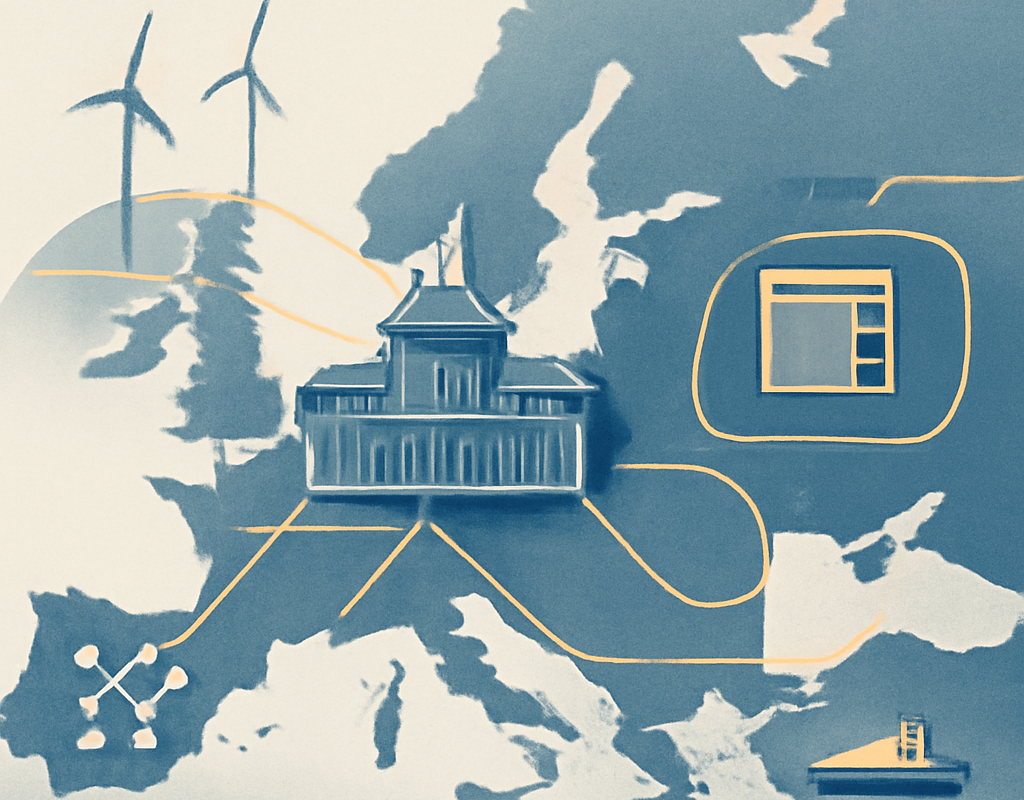
Understanding EU decisions can be difficult when policy debates unfold across several institutions, languages and legislative stages. Euronews EU.XL offers a dedicated way to explore those developments through explainers, videos, polls and an AI chatbot designed to answer questions about European affairs.
Rather than focusing on one breaking decision, EU.XL is a continuing editorial project covering the policies that shape daily life across the European Union. Its subjects range from business and inflation to migration, digital rights, energy, defence, consumer protection and enlargement.
What is Euronews EU.XL?
EU.XL is a Euronews programme focused on explaining EU policy and institutional decision-making. The project combines journalistic content with interactive features, allowing readers and viewers to approach complex topics in different ways.
Its coverage includes:
- Video explainers examining major European policy questions
- Written analysis and background pieces
- Polls inviting audiences to consider competing policy choices
- An AI chatbot that responds to questions in multiple languages
The format is intended to go beyond a single headline by showing how an issue developed, what the EU is seeking to do and what practical questions remain unresolved.
Which subjects does EU.XL cover?
Business, prices and the cost of living
Several EU.XL features examine economic pressures facing households and companies. Topics include inflation, rents, food prices, shrinkflation and the EU’s efforts to support citizens during a cost-of-living squeeze.
The programme also explores EU Inc, a proposed approach to making it easier for startups to operate across the single market. Its coverage considers whether the plan can reduce barriers for businesses while addressing concerns about workers’ rights.
Security, defence and foreign policy
EU.XL looks at Europe’s changing security environment, including maritime defence, threats to undersea cables and pipelines, hybrid attacks and the idea of a European Security Council.
These explainers distinguish between national defence responsibilities, EU initiatives and wider European security cooperation. That distinction matters because not every defence proposal is an EU law or an operational deployment.
Migration and asylum
Migration policy is another major strand of the project. EU.XL examines return procedures, detention, proposed return hubs and the debate over how to make migration systems more efficient while respecting human rights.
The coverage also asks what may happen next as European institutions and national governments work through changes to migration and asylum policy. Readers should distinguish between proposals, political agreements and rules that have formally entered into force.
Digital rights and technology
Digital regulation features prominently in the programme. EU.XL explains the proposed European Digital Identity Wallet, online child-safety measures and the debate over “Chat Control” and private messaging.
It also considers wider questions around the Digital Services Act, platform accountability and the balance between online safety, privacy and fundamental rights. These issues affect users, technology companies and public authorities across the single market.
Climate, energy and the environment
Environmental coverage includes water scarcity, wildfire prevention, clean swimming water and the challenge of storing renewable electricity. One recurring theme is the gap between European targets and the infrastructure needed to deliver them.
Energy storage, for example, is presented as a way to reduce the amount of renewable power that is wasted when generation exceeds immediate demand. Other features look at how cities restore waterways and how European rules influence environmental standards.
Why interactive EU coverage matters
EU legislation often passes through a chain of institutions, including the European Commission, the European Parliament and the Council of the European Union. A Commission proposal is not the same as a final law, while a parliamentary vote may be only one stage in the process.
Interactive journalism can help readers understand those distinctions by allowing them to:
- Compare different arguments around a policy
- Test their views through polls
- Ask follow-up questions in plain language
- Explore the possible effects on consumers, businesses and governments
This approach is particularly useful for subjects where technical language can obscure the practical consequences of a decision.
What EU.XL means for audiences in Ireland
EU policy has direct relevance for people in Ireland because the country participates in the EU single market and Eurozone. European rules can affect Irish consumers, employers, exporters, technology firms, farmers and public bodies.
However, the impact depends on the policy and its legal status. Some measures apply through directly binding regulations, while directives generally require national implementation. Ireland also has specific arrangements in areas such as Schengen, so a general European explanation should not be assumed to apply identically in every member state.
A resource for understanding EU current affairs
EU.XL is best understood as an explainer hub rather than a conventional rolling news service. Its value lies in connecting individual developments to larger questions about European governance, economic policy, security, migration and citizens’ rights.
For readers following EU news, the programme provides several entry points: a short video for a quick overview, a longer explainer for context, a poll for comparison and a chatbot for questions that arise during research.
Conclusion
Euronews EU.XL provides an accessible guide to European policy through journalism and interactive tools. Its focus on explaining institutions, choices and consequences can help audiences move beyond headlines and understand how EU decisions may affect everyday life. The clearest takeaway is that following EU news is not only about knowing what was announced, but also understanding who decided it, what stage the policy has reached and what happens next.