

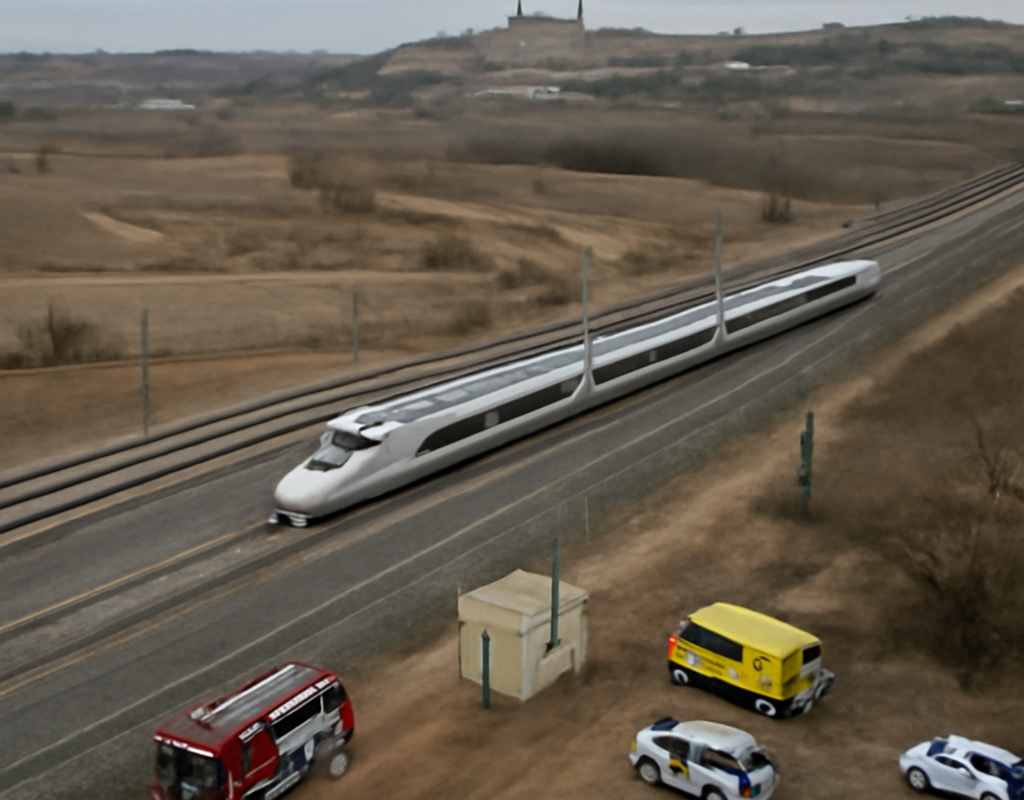
Standfirst: The European Public Prosecutor’s Office has opened an investigation into possible fraud involving EU money used to upgrade Spain’s Madrid–Seville high-speed railway. The inquiry follows a deadly crash near Urda and comes alongside compensation measures for victims and their families.
The European Public Prosecutor’s Office (EPPO) is examining whether European Union funds intended for safety, signalling and communications improvements on Spain’s Madrid–Seville high-speed rail line may have been misused. The investigation follows a crash near Urda, in Toledo province, on 28 October that killed 69 people and injured more than 100 others.
The case is an EU-level investigation into the possible misuse of European funding. It is not a finding of guilt, and Spanish authorities are continuing to gather evidence.
What the EU fraud investigation concerns
According to the EPPO, the investigation was opened on its own initiative and relates to suspected fraud involving money allocated for the renovation and safety upgrading of the Madrid–Seville line.
The bodies identified in the investigation include:
- Spain’s railway infrastructure administrator;
- the State Railway Safety Agency; and
- Spain’s Court of Auditors.
The EPPO has not announced a final conclusion or stated that any organisation or individual has committed an offence. Its role is to investigate possible crimes affecting the EU’s financial interests and, where appropriate, support prosecutions before national courts.
EU funding for the Madrid–Seville railway
The railway renovation project received €111 million from the European Regional Development Fund in 2024. The funding was intended to support work connected with the line’s renewal, including safety, signalling and communications systems.
Because the money came from the EU budget, the EPPO can investigate allegations that the funds were obtained, managed or spent improperly. The inquiry will need to establish what work was planned, how the funding was administered and whether the required upgrades were delivered in line with the relevant rules.
EU funding investigations can involve several stages, including evidence gathering, financial analysis, searches or interviews where authorised, and potential referral to national judicial authorities. Opening an investigation does not itself determine whether wrongdoing occurred.
Deadly crashes raise scrutiny of the rail line
The EPPO had already opened a similar investigation in March following a January crash on the same route that killed 46 people. Together, the two accidents have caused more than 100 deaths and intensified scrutiny of the railway’s condition, safety systems and oversight.
The latest accident involved a Renfe AVE train colliding with the rear of a stationary Iryo train near Urda. The circumstances of the crash are subject to separate safety and judicial inquiries. The EU financial investigation focuses specifically on possible fraud involving European funds, rather than automatically determining the technical cause of the collision.
Spain’s Transport Minister Óscar Puente resigned following the two accidents. The incidents may also affect the political debate ahead of Spain’s general election on 29 November, although the electoral consequences remain a matter for voters and political parties.
Compensation applications open for victims
Spain’s Ministry of Transport has opened applications for compensation linked to the Urda crash. Victims and relatives of those who died can apply until 5 February 2027.
Applications can be submitted in person or through the ministry’s online portal. The assistance includes non-repayable grants for immediate needs and advance payments against future compensation.
Support offices have also been established at regional and sub-regional level. Their role is to explain the process, help applicants prepare documentation and provide guidance on available assistance. People who cannot travel because of health or mobility difficulties may receive support at home.
What happens next in the investigation?
The investigation is expected to involve cooperation between European and Spanish authorities. Investigators will examine project documentation, funding decisions, procurement records, technical work and oversight arrangements connected with the railway upgrades.
Several outcomes remain possible. The inquiry could be closed if evidence does not support criminal proceedings, or it could lead to charges before Spanish courts if prosecutors identify sufficient evidence of offences affecting the EU budget. Any criminal liability would have to be established through the appropriate legal process.
For now, the central questions are whether the European funding was used as intended, whether required safety-related improvements were completed and whether any administrative or criminal violations contributed to the suspected loss of EU money.
Why the case matters beyond Spain
The investigation highlights the safeguards attached to EU funding for major infrastructure projects. Rail networks supported by European money must comply with financial, procurement and reporting requirements, while national authorities remain responsible for managing projects and enforcing domestic safety rules.
The case also illustrates the distinction between an EU financial investigation and a national transport-accident inquiry. The EPPO is examining possible fraud affecting the EU budget; Spanish authorities must separately establish how the crash happened and whether national responsibilities arise.
The immediate priority for families is access to compensation and practical support. For European institutions, the priority is determining whether the EU’s €111 million contribution was properly managed. The investigation’s findings will establish whether further legal action is justified.
Conclusion
The EU fraud investigation into Spain’s Madrid–Seville high-speed rail upgrades remains at an early stage. The European Public Prosecutor’s Office has not reached a final finding, but its inquiry will examine how EU funds were used on a railway affected by two fatal crashes. The next steps will be evidence gathering, cooperation with Spanish authorities and the continuation of compensation support for those affected by the Urda disaster.