

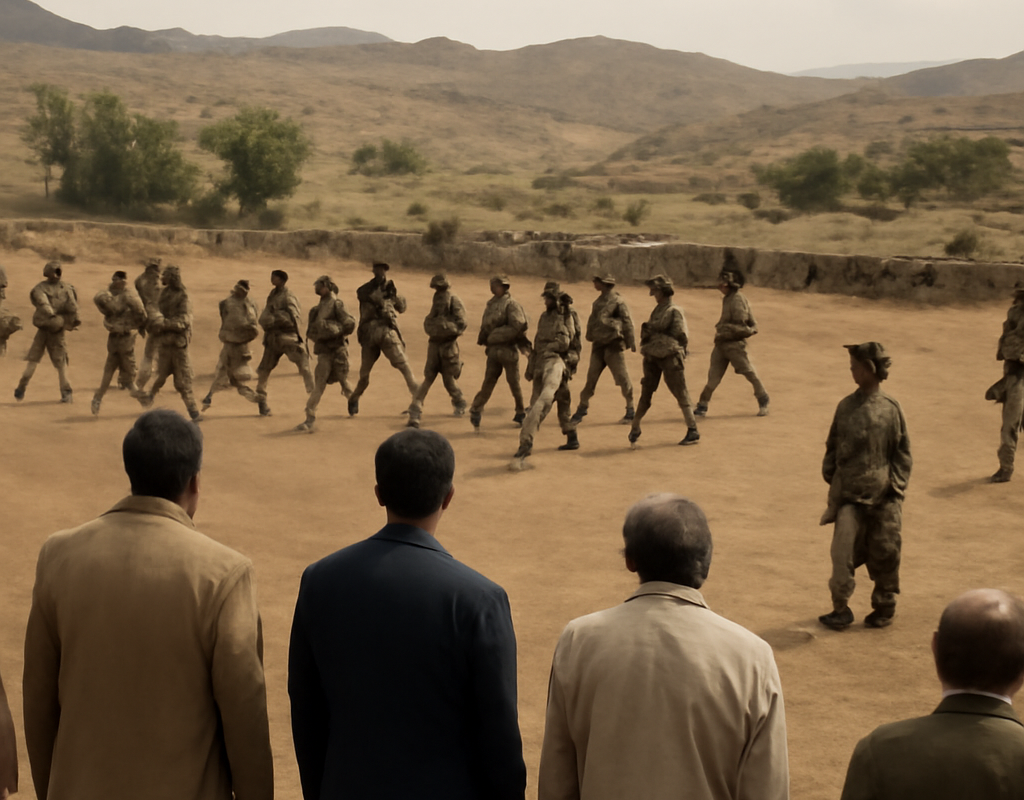
Ethiopia military training has brought Prime Minister Abiy Ahmed together with cabinet ministers and senior officials at a time when the country faces several serious security challenges. Images shared by the prime minister show government leaders taking part in exercises at the Hurso military training centre.
The unusual programme has drawn attention because Ethiopia’s senior civilian officials are rarely publicly seen undergoing military instruction. Abiy said the training was intended to strengthen discipline, teamwork, accountability and leadership, rather than signal a move away from civilian government.
Ethiopia military training brings ministers together
Photographs released on social media show Abiy participating alongside ministers, deputy ministers and heads of government institutions. Among those identified as taking part were Speaker of the House of Federation Muferiat Kamil, Finance Minister Fitsum Assefa and Health Minister Mekdes Daba.
The government has not stated when the programme began or how long it will continue. Details about the exercises have also been limited, although the prime minister described military institutions as places where officials could learn lessons relevant to public administration and national development.
According to Abiy, Ethiopia’s goal of achieving universal prosperity requires leaders who are physically prepared, morally resilient and intellectually capable. He argued that combining civilian responsibilities with military-style discipline could help officials work towards shared national objectives.
What the prime minister said
Abiy presented the programme as a leadership exercise focused on purpose and responsibility. He contrasted the targets pursued by soldiers with the goals of civilians, saying that both ultimately depend on achieving results.
His message reflects a broader emphasis on national discipline and preparedness that has featured prominently in his government’s approach to development and security. The initiative also places the conduct of senior officials under closer public scrutiny as Ethiopia navigates political and military pressures.
Security pressures facing Ethiopia
The Ethiopia military training programme comes against a backdrop of continuing instability in several parts of the country. Fighting has continued in areas of the northern Tigray region, while conflict and insecurity have also affected Amhara and Oromia.
The situation remains particularly sensitive because of tensions with neighbouring Eritrea. Concerns about a possible renewal of conflict between the two countries have added to regional uncertainty and increased attention on Ethiopia’s military preparedness.
The developments follow years of conflict and political strain. Although the government has promoted national development as a central objective, insecurity continues to create significant challenges for public services, economic activity and efforts to build lasting stability.
Why the training is attracting attention
- It is unusual: Ethiopia’s senior civilian officials are not commonly seen taking part in military training.
- It comes during insecurity: Conflict continues in Tigray, Amhara and Oromia.
- Regional tensions remain: Relations with Eritrea are being closely watched.
- It sends a leadership message: Abiy is linking discipline and preparedness with national development.
Read more: latest international and Ireland news
For readers following major developments at home and abroad, explore Ireland breaking news and the latest Irish news, including key updates affecting communities across the country.
Explore more: world affairs and global developments
Stay informed about international politics, conflict and diplomacy with global news and world affairs coverage. For lifestyle, culture and international perspectives, visit Luxedigest’s latest features.
What happens next?
It remains unclear whether the military training will become a recurring feature of Ethiopia’s government or remain a one-off initiative. Much will depend on how officials and the public interpret the programme, particularly while fighting and regional tensions continue.
The exercises may be intended to demonstrate unity and readiness, but they also highlight the difficult environment in which Ethiopia’s leadership is operating. The government must balance security concerns with civilian administration, economic priorities and the need to restore confidence in areas affected by conflict.
Frequently asked questions
Who took part in the training?
Prime Minister Abiy Ahmed participated alongside cabinet ministers, deputy ministers and heads of government institutions. Officials identified as attending included Muferiat Kamil, Fitsum Assefa and Mekdes Daba.
Where did the training take place?
The exercises were held at the Hurso military training centre in Ethiopia.
Why is the programme significant?
It is unusual for senior civilian officials in Ethiopia to be publicly shown taking part in military training. It also comes as the country faces conflict in several regions and heightened tensions with Eritrea.
How long will the training last?
The Ethiopian government has not said when the programme began or how long it is expected to continue.
Conclusion
Ethiopia military training has placed the country’s senior civilian leadership at the centre of a debate about discipline, national preparedness and the relationship between military institutions and government. Abiy Ahmed says the initiative will help build stronger leaders, but its wider significance will be judged against Ethiopia’s continuing conflicts and regional tensions. For now, the programme is both a leadership exercise and a visible statement about the priorities of Ethiopia’s government.