




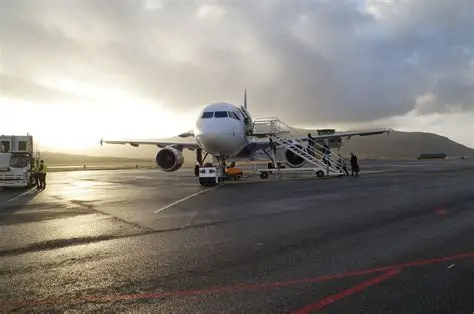
An easyJet flight travelling from Copenhagen to Amsterdam was forced to divert to Hamburg after the pilots declared a mid-air emergency over Germany.
Flight U27938 landed safely at Hamburg Airport after transmitting the aviation emergency code Squawk 7700 and making a rapid descent from its cruising altitude.
Emergency vehicles were sent to meet the Airbus A319 following its arrival, but the aircraft was able to leave the runway and move to a remote parking stand under its own power.
Flight U27938 diverted during Copenhagen-Amsterdam journey
The easyJet service departed Copenhagen Airport shortly after 1pm local time on Monday, July 6, and was scheduled to travel directly to Amsterdam Schiphol Airport.
The aircraft, an Airbus A319 registered as OE-LQP, had climbed to approximately 34,000 feet when an unexpected incident developed while it was flying through German airspace.
Flight tracking reports indicated that the pilots began descending rapidly before setting the aircraft’s transponder to Squawk 7700.
This code informs air traffic controllers that an aircraft is experiencing a general emergency and may require priority handling or assistance on arrival.
Air traffic control directed the plane towards Hamburg Airport, where airport emergency teams prepared for an unscheduled landing.
Aircraft landed safely in Hamburg
Flight U27938 touched down on runway 23 at Hamburg Airport at approximately 1.53pm Central European Summer Time.
Emergency vehicles immediately approached the aircraft after it landed.
The plane subsequently vacated the runway and was moved to a remote stand at the airport. No injuries were reported in the initial updates surrounding the incident.
The exact number of passengers and crew on board had not been officially confirmed at the time of publication.
What caused the easyJet emergency?
The precise reason for the emergency has not yet been publicly confirmed.
easyJet initially described the disruption as resulting from circumstances outside the airline’s control. However, later operational updates indicated that the Airbus required additional maintenance before it could return to service.
The airline began making alternative arrangements for the affected passengers, including plans to send a replacement aircraft from Paris to Hamburg so the journey to Amsterdam could continue.
Until easyJet or the relevant aviation authorities issue a detailed statement, it would be premature to describe the incident as an engine failure, medical emergency or any other specific technical problem.
Passengers face extended delay
Passengers originally travelling to Amsterdam were left waiting in Hamburg while easyJet worked on a plan to complete the journey.
Initial suggestions that the aircraft might be checked, refuelled and allowed to continue were later replaced by plans to use another plane after further maintenance was found to be necessary.
Passengers affected by the diversion were advised to monitor information from easyJet, airport departure screens and the airline’s flight-tracking service.
Flight information can change quickly following a diversion, particularly when engineers need to inspect an aircraft before determining whether it is safe to fly again.
What does Squawk 7700 mean?
Squawk 7700 is a universal transponder code used by pilots to signal a general emergency.
When entered into the aircraft’s transponder, the code makes the flight highly visible to air traffic controllers and indicates that it may require immediate assistance or priority clearance.
The code does not reveal what type of emergency has occurred. It may be used in situations involving:
- A technical problem
- Smoke or an unusual smell
- A medical emergency
- Cabin pressurisation concerns
- A passenger-related incident
- Another safety issue requiring a rapid diversion
Declaring an emergency is a precautionary safety measure and does not necessarily mean that the aircraft is in immediate danger.
Diversions are part of standard aviation safety procedures
Commercial pilots are trained to divert when they believe continuing to the intended destination may create an unnecessary safety risk.
Hamburg was a suitable diversion airport because it has runways capable of accommodating commercial aircraft, engineering facilities and emergency services able to respond to an Airbus A319.
The safe landing demonstrates how airline crews, air traffic controllers and airport emergency teams coordinate when an unexpected event occurs during a flight.
Further details about the cause of the incident may emerge after the aircraft has been inspected and easyJet completes its internal operational review.