

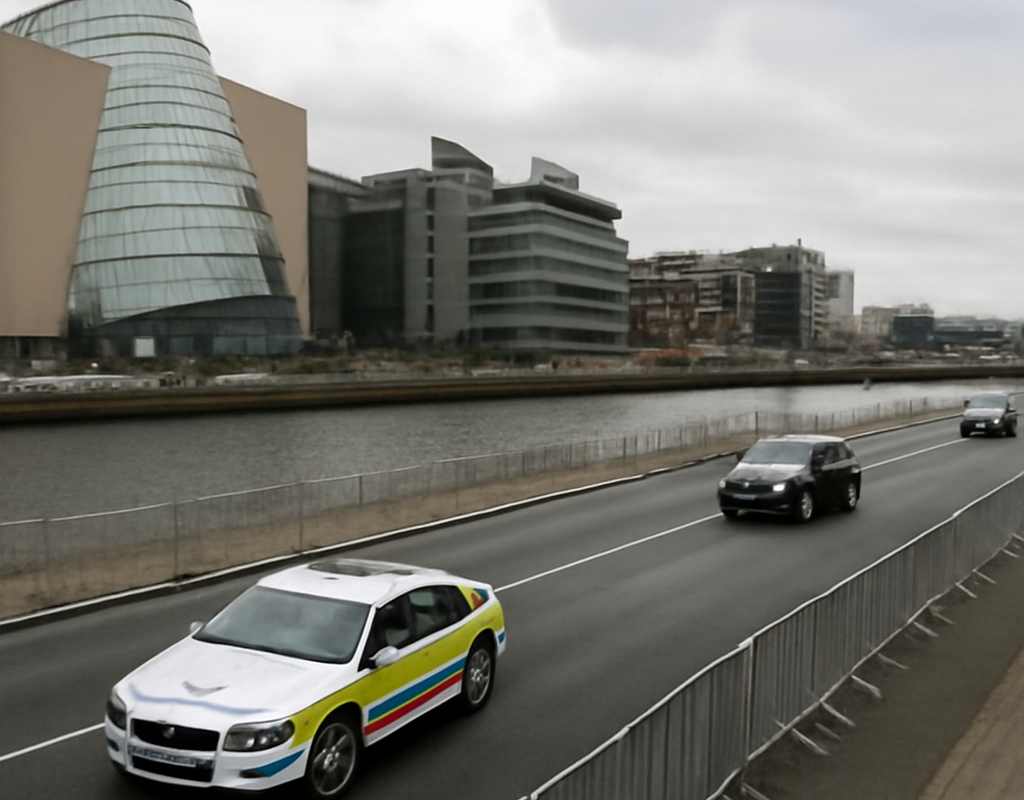
Dublin is preparing for the largest policing operation in the history of the State as European leaders arrive for key events linked to Ireland’s EU presidency. Garda Commissioner Justin Kelly has warned that there will be “absolutely no toleration” for roadblocks or protests that seriously obstruct public roads.
The warning comes as up to 50 heads of state, government leaders and senior European officials gather in the capital this week. More than 5,000 Gardaí will be involved in the security operation, with public order units, armed officers, specialist search teams and traffic resources placed on standby.
What is happening in Dublin this week?
The main events will take place at Dublin’s Convention Centre in the International Financial Services Centre. A European Political Community meeting is scheduled for Thursday, followed by an informal meeting of EU heads of state or government on Friday.
The gatherings are among the most significant events of Ireland’s six-month presidency of the Council of the European Union. They will bring large international delegations, security teams and motorcades into Dublin, creating expected disruption around the north quays, the Convention Centre and Dublin Airport.
Gardaí have acknowledged a significant safety and security risk because of the scale of the events. However, Assistant Commissioner Jonathan Roberts said there was no current evidence that an anti-Government demonstration planned for Friday would be anything other than peaceful.
- More than 5,000 Garda members will support the operation.
- Over 500 public order officers are on standby.
- Two water cannons and heavy-duty towing vehicles are available.
- The Convention Centre and surrounding Dublin cordon are the main security focus.
- Road obstructions will be dealt with swiftly, according to Gardaí.
Gardaí issue warning over protests and roadblocks
Commissioner Kelly said peaceful protest remains distinct from activity designed to block roads or create serious public safety risks. Gardaí are preparing for the possibility of robust demonstrations, particularly following fuel-related protests in April and disturbances seen in Dublin in recent years.
Assistant Commissioner Roberts said any obstruction affecting the road network would be addressed quickly. Heavy-duty towing vehicles and specialist barriers have been made available to remove or prevent obstructions involving large vehicles.
The deployment does not mean Gardaí believe violence is inevitable. Instead, it reflects the need to protect visiting leaders, emergency access routes and members of the public during a highly concentrated international event.
Why is the security operation so large?
The operation covers more than street protests. Gardaí must protect the Convention Centre, secure accommodation and transport routes, monitor airport perimeters and escort international leaders between locations.
More than 15,000 12-hour tours of duty are expected during the operation. The plan includes more than 100 Garda motorcycle riders trained for advanced escorts and approximately 200 motorcycle security escorts.
More than 500 armed personnel will also be involved. They include members of specialist emergency response, armed support, counterterrorism and close-protection units.
Search teams have already been working along the River Liffey and around important sites. More than 200 trained Garda search personnel, supported by dog and water units and Defence Forces staff, have carried out patrols and security checks.
For further Ireland News and Dublin News coverage, visit DailyDigest Ireland for developing updates on public services, transport and national events.
International support and specialist measures
Officers from Latvia, Portugal and Northern Ireland are assisting with specialist duties. They will not be deployed on the front line of public-order policing but will support anti-drone measures and bomb-detection operations.
Security scanning equipment will be used at controlled access points to check for weapons or explosives. Heavy vehicle barriers will also be visible on Dublin streets. Their primary purpose is to reduce the risk of large vehicles being used in an attack, although they may also limit attempts to block roads.
Additional attention is being paid to airspace and drone activity. Gardaí and Defence Forces personnel are working together on anti-drone measures, particularly around airport approaches and protected venues.
Security concerns include hoaxes and cyber threats
Gardaí said Ireland had experienced bomb hoaxes during the previous week, while false bomb threats had also affected airlines across Europe. Authorities had anticipated an increase in hoaxes and other disruptive activity before the summit.
Commissioner Kelly linked the wider threat environment to the continuing Russia-Ukraine war and the use of so-called grey-zone tactics, including cyber activity, deception and disruption. He stressed that the recent threats were European in nature rather than focused exclusively on Ireland.
The presence of senior international figures adds to the security demands. British prime minister Andy Burnham and Ukrainian president Volodymyr Zelenskiy are among those expected to attend, with previous drone activity near the flight path used by the Ukrainian president during a visit to Dublin also noted by authorities.
What happens next for Dublin residents and visitors?
People travelling through central Dublin should expect visible Garda deployments, security cordons, escorted convoys and possible delays. The effects may be most noticeable around the Convention Centre, the north quays, airport routes and roads used by visiting delegations.
Travellers should allow extra time and check official transport and road information before setting out. Delays may change at short notice because motorcades and security measures are assessed continuously.
Practical advice
- Check Dublin traffic and public transport information before travelling.
- Allow additional time for airport journeys and city-centre appointments.
- Follow directions from Gardaí and event security staff.
- Do not attempt to enter restricted areas or obstruct emergency routes.
- Use official Garda and transport updates for changes during the events.
Frequently asked questions
Where are the EU presidency events taking place?
The main meetings are being held at Dublin’s Convention Centre in the IFSC area on Thursday and Friday.
How many Gardaí are involved?
More than 5,000 Garda members are expected to support the operation, with over 500 public-order officers and more than 500 armed personnel included in the wider security plan.
Will peaceful protests be allowed?
Gardaí have said there is currently no evidence that Friday’s planned anti-Government protest will be anything other than peaceful. The strongest warnings are aimed at serious road obstruction and activity that creates public-safety risks.
Could Dublin traffic be affected?
Yes. Security cordons, vehicle barriers, escorted convoys and temporary road restrictions are likely to cause disruption around the Convention Centre, airport routes and other parts of the city.
Conclusion
This week’s Breaking News Ireland story is the unprecedented Garda security operation surrounding the EU presidency meetings in Dublin. Authorities say peaceful protest is not the focus of the warning, but roadblocks and serious obstructions will be addressed firmly.
For residents, commuters and visitors, the clearest takeaway is to plan ahead, follow official instructions and expect changing traffic conditions. Gardaí say they are prepared for all eventualities as Ireland hosts one of the most important diplomatic gatherings in the State’s history.