

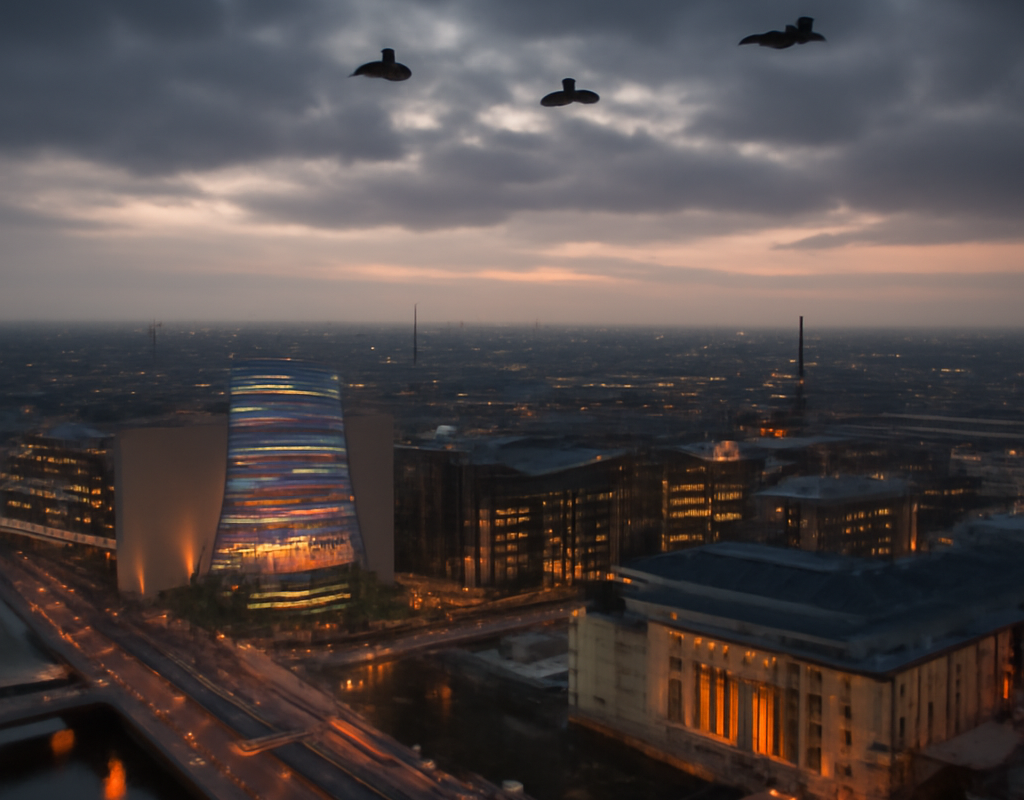
Dublin’s no-fly zone has been significantly expanded ahead of two major European summits taking place in the capital this week, with authorities preparing for the largest security operation in the history of the State.
The temporary restrictions will affect civilian aircraft from Wednesday through Saturday as European leaders gather at Convention Centre Dublin and the National Gallery of Ireland. The measures form part of a wide-ranging security operation involving An Garda Síochána and the Defence Forces.
What is happening in Dublin?
A no-fly zone covering approximately 3,200 square kilometres will extend from Newbridge in Co Kildare across Dublin and out over the Irish Sea. Civilian aircraft will be prohibited from entering the restricted area during the summit period.
State aircraft and scheduled commercial flights using Dublin Airport will be exempt from the restriction. The arrangement is intended to protect the venues, visiting delegations and surrounding transport routes while allowing essential aviation services to continue.
The enlarged exclusion area is considerably bigger than those used during previous EU presidency events. Its introduction follows heightened security concerns and a series of hoax threats made against airlines and Irish media organisations last week.
European leaders arriving for two Dublin summits
Dublin will host back-to-back high-level meetings on Thursday and Friday, attended by about 45 European prime ministers and presidents. Among the leaders expected are French President Emmanuel Macron, Ukrainian President Volodymyr Zelenskiy, UK Prime Minister Andy Burnham and German Chancellor Friedrich Merz.
The events are being held as part of Ireland’s EU presidency programme and are expected to bring extensive diplomatic, policing and transport arrangements to the capital.
- The restricted airspace will operate from Wednesday to Saturday.
- The no-fly zone covers about 3,200 square kilometres.
- Scheduled commercial flights using Dublin Airport are exempt.
- Defence Forces aircraft have practised drone interception drills.
- Major road and public transport disruption is expected in Dublin.
Defence Forces practise drone interception
Defence Forces PC9 aircraft carried out drone interception exercises over Leinster on Monday evening, using an Air Corps helicopter as a training target. The drills were designed to test the State’s ability to identify and respond to potential airborne threats during the summits.
The exercises follow a drone-related incident during Ukrainian President Volodymyr Zelenskiy’s State visit last December, when an Irish Naval Service vessel reported seeing five drones near the flight path of his aircraft as it arrived in Ireland.
Authorities have not said that a specific credible threat is linked to this week’s meetings. The expanded restrictions are described as precautionary security measures for an event involving a large number of senior international figures.
Largest policing operation in the history of the State
An Garda Síochána has described the operation as unprecedented in scale. Parts of Dublin are expected to experience significant disruption as security cordons, road closures and controlled access arrangements come into effect ahead of the leaders’ arrival.
The Garda had planned to hire coaches at a cost of at least €2 million to transport officers into Dublin. That plan was linked to a work-to-rule by members of the Garda Representative Association, who had been refusing to use their own vehicles during the summit operation.
However, the work-to-rule was stood down on Monday night after the association reported significant progress in discussions with Garda Commissioner Justin Kelly.
Minister says Ireland is prepared for security threats
Minister for Justice Jim O’Callaghan said Dublin remained the appropriate location for the meetings and rejected suggestions that security concerns should have led to a change of venue.
He said Gardaí had secured key locations and carried out searches for potential threats. The Minister also warned that individuals responsible for hoax threats would be pursued under the law.
O’Callaghan said authorities could not halt major events every time an unsubstantiated threat was reported, while stressing that the Garda and Defence Forces were prepared to respond to credible risks.
Taoiseach Micheál Martin also said on Tuesday that the State was prepared for all eventualities. He said Irish authorities were sharing intelligence with international partners and monitoring security trends across Europe.
- Temporary road closures and traffic restrictions around summit venues.
- Delays affecting commuters, businesses and visitors.
- Visible Garda and Defence Forces activity.
- Temporary restrictions on private aviation across the designated airspace.
- Possible changes to access near the Convention Centre and National Gallery.
Why the no-fly zone matters
Temporary airspace restrictions are used to reduce the risk posed by unauthorised aircraft, drones and other airborne activity around sensitive locations. They also give security agencies clearer control over the airspace during high-profile events.
For most travellers, scheduled flights through Dublin Airport are expected to continue under the exemption. Private pilots, drone operators and other civilian aviation users should follow official notices and avoid entering the restricted area.
What happens next?
The security operation will intensify from Tuesday, with further traffic controls and protective measures introduced before the summits begin. The no-fly zone will remain in place until Saturday, subject to official aviation instructions.
People travelling through Dublin should allow additional time, check transport information before setting out and follow directions from Gardaí and event security staff. Details of individual road closures may change as the operation develops.
Frequently asked questions
When will Dublin’s no-fly zone operate?
The restriction is scheduled to operate from Wednesday through Saturday during the European summits.
How large is the restricted area?
It covers about 3,200 square kilometres, extending from Newbridge in Co Kildare across Dublin and out over the Irish Sea.
Will Dublin Airport flights be cancelled?
Scheduled commercial aircraft using Dublin Airport are exempt from the restriction. Passengers should still check directly with their airline for travel updates.
Why has the zone been expanded?
The larger zone reflects the security requirements of major international meetings and follows recent hoax threats and previous concerns involving drones.
Conclusion
This Breaking News development means Dublin will face heightened security and disruption while Ireland hosts some of Europe’s most senior political leaders. The expanded no-fly zone, airspace exercises and extensive Garda operation are precautionary measures designed to protect the summits. Residents, commuters and visitors should plan ahead, follow official guidance and rely on verified updates as the week progresses.