

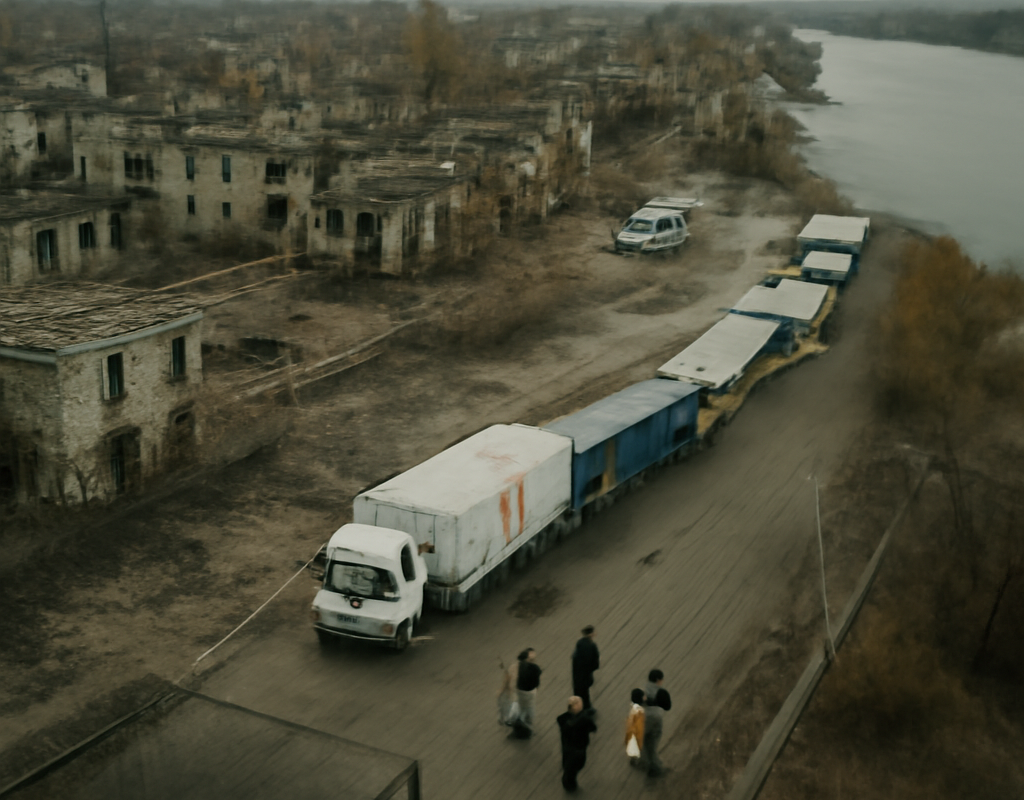
A rare humanitarian operation is under way in Oleshky, a Russian-held town in southern Ukraine, where civilians are receiving essential supplies and being offered the chance to evacuate. The development is significant international Irish news because it represents one of the clearest instances of practical co-operation between Russia and Ukraine since the full-scale invasion began.
A locally negotiated ceasefire allowed an aid convoy to enter the badly damaged town on Friday. Residents were able to choose whether to travel to Russia, Ukraine or remain where they were, while food, fuel, medical equipment and hygiene products were distributed. Despite the operation, fighting continued in other parts of Ukraine.
Humanitarian operation brings limited relief to Oleshky
Russian and Ukrainian officials appeared together as the relief effort began, describing the arrangement as a co-ordinated response to the urgent needs of civilians. The operation included evacuation buses, medical staff and transport for people who were bedridden.
Officials said 25 buses had been prepared, with additional arrangements made for residents travelling with pets. The number of people who left, and how many chose to stay, was not immediately clear.
Residents have faced severe shortages after years of conflict. Oleshky was captured by Russian forces during the early stages of the invasion in February 2022 and later suffered extensive flooding after the destruction of the Kakhovka dam in 2023.
Reports from the town have described residents taking dangerous routes through mined areas in search of food and water. Some people are understood to have survived on extremely limited diets, relying on rice, buckwheat, vegetables and wild plants.
Ceasefire enabled aid convoy and evacuations
The local ceasefire began earlier in the week and covered Oleshky and parts of the Kherson region. Ukrainian officials said it was the first ceasefire since 2022 to remain in place across such a substantial section of the front for an extended period.
Demining work took place before the convoy arrived. Officials reported that a soldier and another person were killed during those operations, underlining the danger facing relief workers and civilians.
The evacuation route for people travelling to Ukraine was expected to pass through Russia and Belarus before reaching the Kyiv and Chernihiv regions. Those choosing Russia were also offered assistance.
Attacks continue as diplomatic efforts resume
The humanitarian arrangement did not signal an end to hostilities. Russian strikes were reported across seven Ukrainian regions, including Kyiv and Dnipro. A previous drone attack on a crowded railway platform in Dnipro reportedly killed at least 15 people.
Russia also claimed that more than 1,000 Ukrainian drones had been intercepted over Russian territory overnight. The competing claims could not be independently verified from the information available.
US-mediated peace talks are expected to resume in Abu Dhabi next month, following a pause since February. Moscow continues to seek a settlement that would include control over Ukraine’s Donbas region and restrictions on Ukrainian membership of Nato.
Kyiv, meanwhile, wants continued intelligence support from Washington, access to battlefield communications and the ongoing delivery of European-funded US military equipment, including Patriot air-defence systems.
Washington urges European allies to moderate rhetoric
Against this backdrop, US officials have reportedly asked several Nato governments to moderate public comments about the Russian threat. Lithuania, Latvia and Estonia were among the countries said to have received the message during bilateral meetings.
The Pentagon declined to comment, saying private conversations among allies would remain private. The reported advice reflects a wider debate within Nato over how governments should communicate the danger posed by Moscow.
Some western officials believe strongly worded statements may increase public fear or serve Russia’s efforts to undermine support for Ukraine. Others argue that voters need clear explanations of the security risks and the financial and military commitments required to deter further aggression.
The disagreement has become more pronounced as European governments investigate allegations of sabotage and other covert activity linked to Russia. Moscow has denied pursuing such a campaign.
Why the Oleshky operation matters
The joint relief effort remains limited and fragile, but it demonstrates that communication between opposing sides is still possible when civilian survival is at stake. It may also offer a narrow model for future evacuation corridors, prisoner exchanges or emergency aid deliveries.
- Civilians were offered evacuation options to Russia or Ukraine.
- Medical supplies, fuel, food and hygiene products reached the town.
- Demining was required before buses and aid workers could enter safely.
- Attacks continued elsewhere despite the local ceasefire.
- Peace talks are expected to resume in Abu Dhabi.
Read more: Ireland and international affairs
For more coverage of international developments and their impact on Ireland, follow the latest Ireland breaking news and Irish news today from DailyDigest.ie.
Explore more: European and global developments
Readers can also explore wider analysis through European security news and world affairs coverage at MediaDigest.ie, alongside lifestyle and current-affairs features at Luxedigest.org.
Frequently asked questions
Where is Oleshky?
Oleshky is in southern Ukraine, on the Dnipro River opposite the city of Kherson.
What happened during the relief operation?
An aid convoy entered the Russian-held town during a local ceasefire, delivering supplies and helping residents who wished to leave.
Could residents choose where to go?
Officials said residents could seek assistance travelling to Russia or Ukraine, while others could remain in Oleshky.
Does the operation mean the war has ended?
No. Fighting and air strikes continued in other regions, and the ceasefire was local rather than nationwide.
For now, the Oleshky operation offers a rare but cautious sign that humanitarian co-operation remains possible amid the war. Its success will depend on continued communication, safe routes and protection for civilians. The key takeaway from this developing Irish news story is that even limited ceasefires can save lives, but they cannot replace a durable political settlement.
Image Courtesy: The Irish Times