

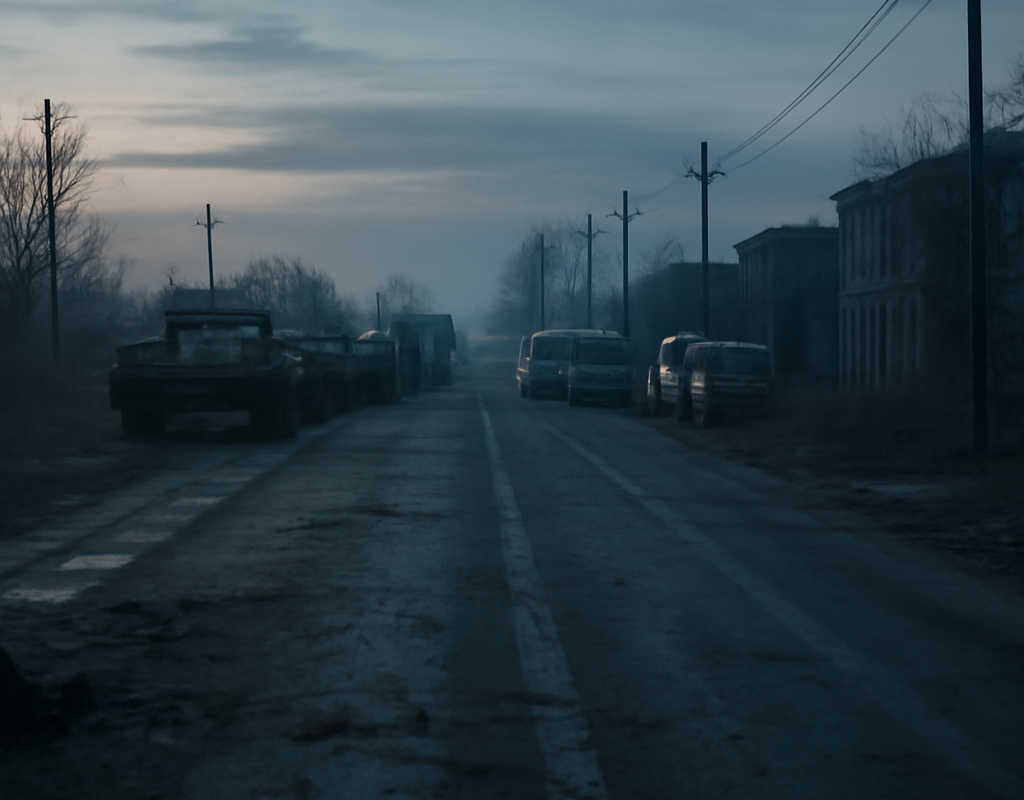
Ireland breaking news readers following major international developments are watching an evacuation from Oleshky, a Russian-occupied city in Ukraine’s Kherson region. A temporary ceasefire has created a narrow opportunity for residents to leave after a road was cleared of mines.
Russian and Ukrainian authorities confirmed that the evacuation was under way, with buses and ambulances arranged for people who want to depart. The operation highlights the continuing humanitarian consequences of the war in Ukraine, where civilians remain trapped between damaged infrastructure, unexploded mines and competing military control.
Ukraine evacuation begins from Oleshky
Up to 750 residents were expected to travel in a convoy of 25 buses during a four-hour departure window. Ambulances were included for people with limited mobility, while officials said the route had been made safer after Russian demining teams worked on the road leading out of the city.
Although Ukrainian-controlled territory is only about 5km from Oleshky, evacuees must first pass through Russian-occupied areas. The planned route takes them to Anapa in southern Russia, where they are due to board a Russian government aircraft to Gomel in Belarus before continuing by road into Ukraine’s Chernihiv region.
The complicated journey reflects the divided geography of the conflict. For civilians, reaching safety may require crossing several administrative and military zones before arriving in territory controlled by Ukraine.
Residents face an agonising choice
Not everyone wants, or is able, to leave. Several hundred people were understood to have remained in Oleshky despite extensive destruction and shortages of gas, electricity and running water.
Some residents reportedly refused evacuation because they could not take their animals with them. Others, particularly older people, were reluctant to abandon homes and communities where they had spent most of their lives. Officials have said humanitarian assistance will be provided to those who stay, including food, medicine, hygiene supplies and fuel for generators.
The decision is particularly difficult in a city where mines and damaged services have made ordinary life dangerous. Accounts from families describe residents struggling to transport injured and deceased people to medical facilities, underlining the severe pressure on local healthcare and emergency services.
Ceasefire creates rare pause in Kherson
The ceasefire was reported to cover the frontline area of Kherson and was due to continue until the end of Sunday, 1 November. It has offered one of the first sustained periods of calm in the region since Russia launched its full-scale invasion of Ukraine in February 2022.
The arrangement allowed demining work to take place and gave authorities time to coordinate the evacuation. Ukraine’s human rights ombudsman Dmytro Lubinets and Russia’s counterpart Yana Lantratova travelled to Oleshky as part of efforts to organise safe movement for civilians.
Residents were reportedly divided into groups according to whether they wanted to travel towards Ukrainian-controlled territory or remain in areas controlled by Russia. The process demonstrates how humanitarian operations in the conflict depend on cooperation between officials who normally represent opposing sides.
Read more: Ireland and international headlines
Humanitarian concerns remain after evacuation
Leaving Oleshky does not provide an immediate or simple route to normality. Evacuees face a long journey through occupied territory and neighbouring countries before reaching Ukrainian-controlled regions. Families may also be separated when some members leave while others stay behind.
Those remaining require reliable access to water, food, medicine and power. The promised aid deliveries will therefore be closely watched, particularly because damaged roads and mined areas can make distribution difficult. Local residents may also need support to repair homes and restore basic services if fighting does not resume.
The evacuation also carries emotional consequences. People who depart must leave behind homes, relatives, pets and graves, while those who stay face uncertainty over security and future access to assistance. For families living elsewhere in Ukraine, decisions about elderly relatives can be especially painful.
Why the Oleshky operation matters
- Civilian safety: A temporary truce can create a vital route out of a dangerous frontline city.
- Mine clearance: Demining is essential before buses, ambulances and aid vehicles can move safely.
- Humanitarian access: Residents who remain need dependable supplies and medical support.
- Regional diplomacy: Cooperation between Ukrainian and Russian officials enabled the evacuation effort.
Explore more: national news and public-interest coverage
What happens next in Oleshky?
The immediate priority is completing the evacuation window safely and ensuring that people who remain receive humanitarian aid. The future of the ceasefire will determine whether further departures are possible and whether aid routes can stay open.
For Oleshky’s residents, the pause is both an opportunity and a reminder of the conflict’s continuing danger. Some have found a path towards safety, while others remain in a city without dependable utilities and surrounded by the risks of war.
Frequently asked questions
Where is Oleshky?
Oleshky is a city in Ukraine’s Kherson region, near Ukrainian-controlled territory and the Dnipro River area. It is currently under Russian occupation, according to the supplied report.
How many people could leave?
A convoy of 25 buses was expected to carry up to 750 residents, with ambulances available for people with limited mobility.
Why did some residents stay?
Reasons included age, attachment to homes, concerns about family members and the inability to take animals. Officials said assistance would be provided to those who remained.
How long was the ceasefire expected to last?
The reported ceasefire was due to remain in force until the end of Sunday, 1 November, creating time for demining and civilian movement.
Conclusion
The Oleshky evacuation shows how even a short ceasefire can offer a lifeline to civilians trapped by war. As Ireland breaking news audiences follow the wider international picture, the central takeaway is clear: safe evacuation depends not only on transport, but also on mine clearance, humanitarian access and continued protection for those who cannot leave.