

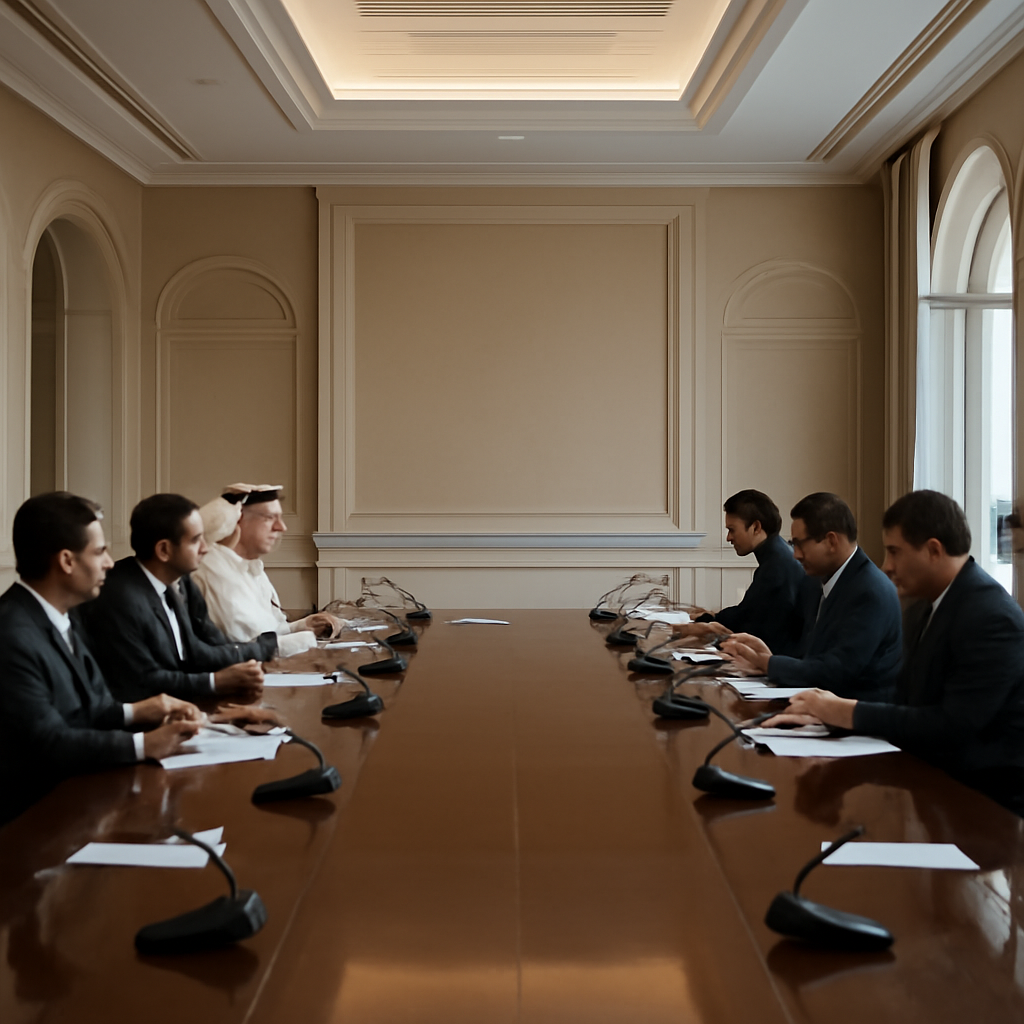
Standfirst: The United Arab Emirates and Iran have discussed ways to reduce tensions at a BRICS summit, following Abu Dhabi’s suspension of trade and financial dealings with Tehran after missile attacks in the Gulf. The talks come as regional security concerns continue to affect energy markets and international diplomacy.
The United Arab Emirates and Iran held talks on easing tensions during a BRICS summit, according to the supplied report. The meeting follows the UAE’s decision in August to suspend trade and financial dealings with Iran after two ballistic missiles were fired towards the country.
The development is primarily a regional diplomatic story rather than an EU decision. However, it has wider significance for Europe because instability in the Gulf can affect energy security, shipping routes and international trade through the Strait of Hormuz.
What happened between the UAE and Iran?
The talks took place after relations deteriorated sharply. Abu Dhabi had described trust with Tehran as difficult to rebuild following attacks on Gulf countries, while also taking the significant step of suspending commercial and financial ties with Iran.
The discussions at the BRICS summit indicate that diplomatic channels remain open despite the escalation. The supplied information does not confirm a formal agreement, a restoration of trade or a new ceasefire. The status of the talks should therefore be understood as diplomatic engagement, not a completed settlement.
Key points include:
- The UAE and Iran discussed reducing tensions at a BRICS summit.
- The UAE had suspended trade and financial dealings with Iran in August.
- The suspension followed the firing of two ballistic missiles towards the UAE.
- No formal restoration of economic ties has been confirmed in the supplied report.
Why the talks matter beyond the Gulf
The Strait of Hormuz is a major maritime route for energy shipments. Disruption in or around the waterway can increase uncertainty for oil traders, shipping companies and governments that depend on imported energy.
The supplied report says crude flows through the strait had fallen to less than a quarter of pre-war levels. That figure highlights the scale of the disruption described in the source, although the report does not provide a separate official dataset or a precise comparison period.
For European governments, the issue connects regional security with energy policy. Any prolonged disruption could affect transport costs, insurance premiums, supply planning and wider market confidence. It does not automatically mean that European countries face shortages, but it can make energy markets more vulnerable to further shocks.
Diplomacy follows a period of escalation
The UAE’s suspension of trade and financial dealings came after a series of reported security incidents involving Iran and Gulf states. The source also describes earlier missile alerts and attacks affecting the wider region.
Those developments explain why the meeting carries diplomatic importance. The immediate objective appears to be preventing further escalation and creating space for communication. Whether that produces practical measures will depend on subsequent statements and actions by both governments.
Several issues are likely to determine whether the contact leads to a broader de-escalation:
- Whether missile and drone attacks stop or decline.
- Whether the UAE restores commercial and financial channels.
- Whether Iran offers assurances to Gulf states.
- Whether regional and international mediators support further talks.
- Whether shipping and energy flows through the Strait of Hormuz recover.
What does this mean for Europe?
The meeting is not an announcement from the European Union, the European Commission or the European Council. No EU sanctions decision, trade measure or common foreign-policy action is identified in the supplied material.
Its European relevance lies instead in the possible consequences of Gulf instability. EU member states monitor developments around the Strait of Hormuz because the route is linked to global energy and freight markets. European businesses may also be exposed through higher shipping costs, disrupted supply chains or increased insurance charges.
The talks could be viewed cautiously as a diplomatic opening, but their economic effect cannot yet be measured. Markets and governments would need evidence of sustained de-escalation before assuming that trade and energy conditions have stabilised.
What happens next?
The next step will be to establish whether the summit discussion leads to further official contact or concrete confidence-building measures. The supplied report does not give a timetable for renewed trade, financial cooperation or a wider agreement.
Further statements from the UAE and Iran will be important, particularly on security guarantees, border incidents and commercial restrictions. International attention is also likely to remain focused on shipping activity and crude flows through the Strait of Hormuz.
Conclusion
The UAE-Iran talks at the BRICS summit show that diplomatic communication continues despite a serious deterioration in relations. For Europe, the significance lies in the connection between Gulf security, energy supplies and global trade. The immediate outcome is not a formal agreement, but the opening of discussions that could either support de-escalation or expose continuing divisions if no practical follow-up emerges.