

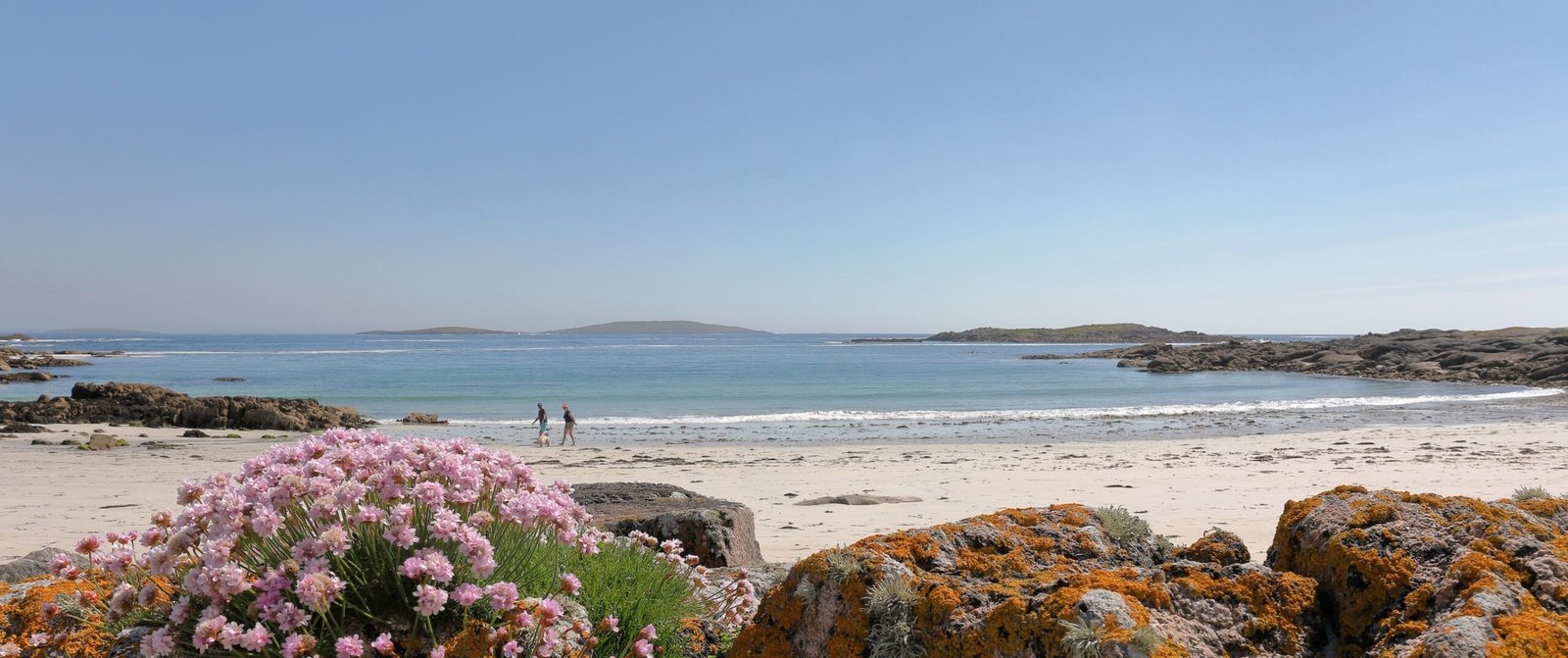
Connemara’s Renvyle Beach curves beneath open skies, with walkers moving along pale sand as Atlantic waves roll in. It is an ideal introduction to travel Ireland by following the Wild Atlantic Way, a spectacular coastal route stretching for approximately 2,500 kilometres from Inishowen in Donegal to Kinsale in Cork.
More than a scenic drive, the Wild Atlantic Way brings together dramatic sea cliffs, mountain landscapes, sandy beaches, islands, heritage sites, traditional music, local food and welcoming coastal communities. Whether you are planning an Ireland road trip, a family escape, a solo adventure or a longer Ireland travel itinerary, this route offers plenty of ways to experience the country at your own pace.
Why the Wild Atlantic Way belongs on your Ireland travel itinerary
The route is shaped by the land and sea. Around every bend, you may find a quiet harbour, a panoramic viewpoint, a village pub or a walking trail leading towards the Atlantic. Its famous Discovery Points make it easier to plan stops, while regional highlights allow travellers to combine well-known attractions with Ireland hidden gems.
Outdoor enthusiasts can hike mountain trails, cycle greenways, swim in sheltered coves, kayak along the coast or try surfing at one of the route’s popular beaches. Travellers seeking a slower pace can explore local craft, visit heritage sites, join food tours or simply settle into a coastal town for a few days.
- Connemara: Expect rugged mountains, quiet beaches, colourful villages and wide-open landscapes around County Galway.
- The Burren: This distinctive limestone region combines unusual geology, archaeological heritage and dramatic Atlantic views.
- The Aran Islands: Reach the islands by ferry and experience traditional culture, stone walls and exposed coastal scenery.
- The Ring of Kerry: One of Ireland’s best-known scenic drives, with mountain passes, coastal viewpoints and historic villages.
- Galway City: Add live music, independent cafés, traditional pubs and cultural experiences to your coastal journey.
- Kinsale: Finish or begin in a colourful harbour town known for maritime character and excellent food.
For travellers comparing Ireland holiday destinations, the Wild Atlantic Way is especially flexible. You can focus on one county, connect several regions over a week or build a longer trip around the coast. It also works well for Ireland weekend getaways, provided you choose a compact section rather than attempting the full route.
Choose activities that suit your travel style
There is no single way to experience the route. Families can look for beaches, short walks and accessible attractions. Couples may prefer scenic drives, seafood restaurants and romantic coastal accommodation. Solo travellers can join walking tours, local events or group activities in towns along the way. Cyclists can plan sections of the route around greenways and quieter roads, while hikers can seek out Ireland hiking trails in Connemara, Kerry, Donegal and Clare.
Accommodation ranges from hotels and guesthouses to thatched cottages, camping pods, glamping sites and self-catering stays. Booking ahead is wise during summer, festivals and holiday weekends, particularly in small coastal communities where rooms can be limited.
Planning practical Wild Atlantic Way trips
A successful Ireland travel plan depends on allowing time for unplanned stops. Distances can look manageable on a map, but narrow roads, viewpoints, weather and ferry schedules can make journeys slower than expected. Aim to explore fewer places properly rather than rushing between every major attraction.
- Pick a region first: Consider Donegal, Mayo, Galway, Clare, Kerry or Cork for a manageable first visit.
- Build in flexibility: Keep space for beach walks, viewpoints, cafés and changing Atlantic weather.
- Check transport details: Confirm ferry times for islands and look at seasonal access before travelling.
- Book popular stays early: Coastal hotels, B&Bs, cottages and glamping accommodation can fill quickly.
- Support local businesses: Eat in independent restaurants, visit craft studios and spend time in village communities.
Public transport can work for selected sections, especially around Galway, Cork and larger towns, but a car provides more freedom for remote beaches and scenic drives. Travellers without a vehicle can also consider guided group tours, train travel between cities and local day trips.
Read more: Plan more Ireland travel ideas with Ireland travel inspiration and local destination guides from DailyDigest.ie.
Explore more: Discover Ireland events, culture and travel updates at MediaDigest.ie, or browse luxury Ireland stays and premium holiday ideas at LuxeDigest.org.
Frequently asked questions
How long do you need for the Wild Atlantic Way?
There is no required duration. A long weekend suits one small section, while a week or more allows a broader regional journey. Driving the entire route requires considerably longer if you want time for walks and attractions.
What are the best places to visit on the route?
Popular highlights include Connemara, the Burren, the Cliffs of Moher, the Aran Islands, the Ring of Kerry, Galway City, Achill Island and Kinsale.
Is the Wild Atlantic Way suitable for families?
Yes. Families can choose beaches, short trails, wildlife experiences, islands and attractions with manageable driving distances. Always check conditions and accessibility locally.
When is the best time to go?
Late spring through early autumn generally offers longer daylight and more seasonal services, although every season has its own character. Reserve accommodation and ferries in advance during busy periods.
Before setting off, check local weather and road conditions, especially for exposed coastal viewpoints and mountain routes. A useful reason to go now is the chance to experience the route beyond its famous landmarks: quieter beaches, village cafés and local walks often become the most memorable parts of an Ireland holiday.
From Donegal’s northern headlands to Cork’s harbour towns, the Wild Atlantic Way makes travel Ireland feel wonderfully personal. Choose a stretch, slow down and let the coast shape your journey—the best Ireland trips are often the ones that leave room for discovery.