

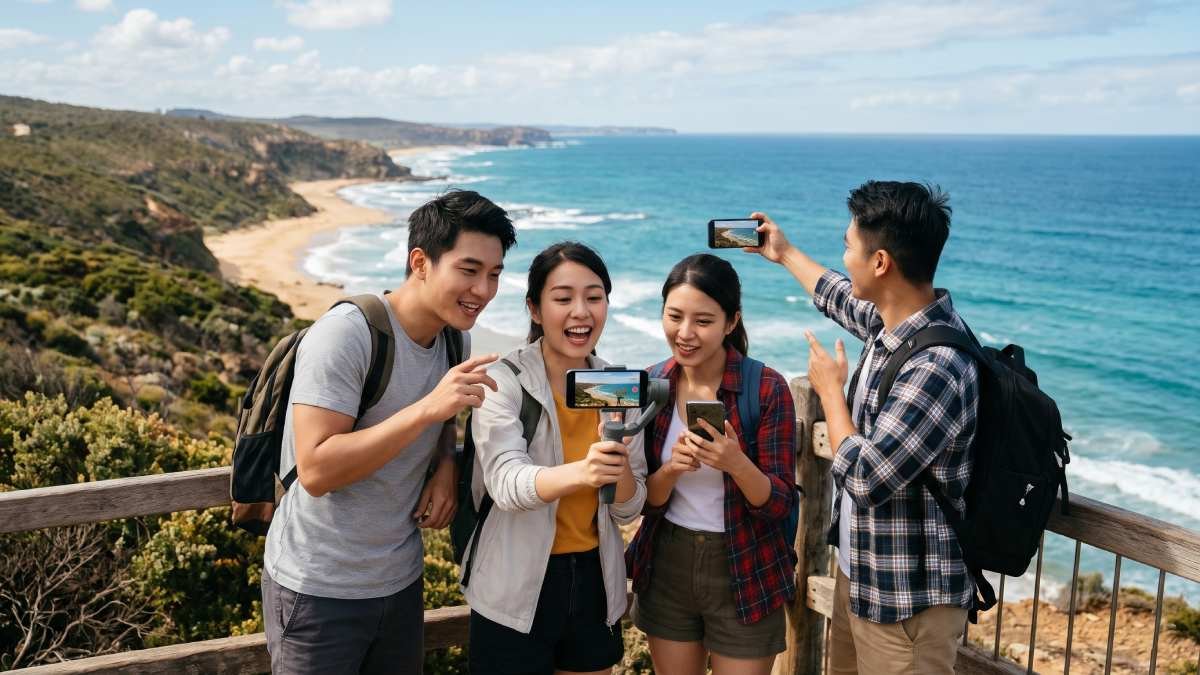
Tasmania is using livestream shopping and partnerships with major Asian travel platforms to attract longer-staying, higher-spending visitors. The strategy is designed to strengthen regional economies, reduce seasonal pressure and steer demand away from fragile or overcrowded sites.
Tasmania is testing a new model for destination marketing that links travel inspiration directly to booking and payment. Rather than relying only on traditional advertising or trade shows, the Australian state is working with digital platforms including Alibaba, Fliggy and Trip.com to present experiences that viewers can reserve during a livestream.
The approach could become an important example of how tourism destinations respond to overtourism and seasonal volatility. For travellers, it means that regional experiences such as food, wine, wilderness stays and guided activities may increasingly be promoted as complete, bookable itineraries rather than as standalone attractions.
Why Tasmania is moving beyond visitor numbers
Tourism growth has traditionally been measured through arrival totals. However, high visitor numbers do not automatically translate into strong benefits for regional communities. Short stays, concentrated demand and low local spending can place pressure on roads, public services, natural areas and historic sites without creating enough economic value to offset those costs.
Tasmania’s new strategy places greater emphasis on:
- Longer stays in regional areas
- Spending with independent accommodation, restaurants and activity providers
- Travel during shoulder and off-peak periods
- Dispersal beyond Hobart and other major gateways
- Experiences that support local businesses and environmental protection
This shift reflects a wider debate across European holiday destinations and other popular regions about how to manage tourism without simply pursuing ever-higher arrival figures.
How live-commerce tourism works
Live-commerce combines a video broadcast with digital retail functions. A viewer can watch a destination presentation, interact with hosts or businesses, and move directly to a booking or payment page within the same digital ecosystem.
In many Asian markets, travel discovery already takes place through super-apps and online travel platforms. This allows tourism organisations to promote packages such as:
- Open-dated vouchers for shoulder-season travel
- Multi-night lodge stays combined with car hire and national park access
- Food and wine itineraries featuring local producers
- Regional touring packages with flexible or refundable booking conditions
The intended benefit is to remove some of the steps between seeing an experience and purchasing it. It also gives destination authorities more influence over where, when and how visitors travel.
What Tasmania’s China trade mission demonstrated
The strategy was showcased during Tasmania’s international trade mission to mainland China and Hong Kong in November 2026. The mission involved discussions with senior representatives from Alibaba Group and Trip.com, alongside a major digital broadcast campaign.
According to the figures cited by Tasmania’s Premier Jeremy Rockliff, the campaign received placement on the Alibaba mobile homepage and reached 70 million people within three hours. A separate Fliggy livestream attracted 538,000 active viewers.
Those figures represent exposure rather than confirmed bookings. The longer-term measure of success will be whether the campaign produces additional regional stays, higher local spending and a better spread of visitors throughout the year.
Hobart and Launceston receive different treatment
The promotional approach is based on carefully designed local stories instead of a single statewide message.
Hobart and southern Tasmania
Hobart’s waterfront, Salamanca Place and the Museum of Old and New Art provide the setting for content centred on art, food and cool-climate wine. Presentations also highlight produce such as southern rock lobster and connect visitors with boutique hotels, independent restaurants and experiences in nearby areas including the Huon and Derwent valleys.
Launceston and the Tamar Valley
Launceston’s gastronomy identity is used to promote food and wine-led travel in northern Tasmania. Content featuring Cataract Gorge, the Tamar Valley, truffle harvesting, cheesemaking and vineyard visits can be linked to bookings for agritourism accommodation, self-drive trips and cellar-door experiences.
For visitors, the practical difference is that the journey is marketed as a multi-stop regional itinerary rather than a brief visit to one city.
Using digital booking to reduce pressure on popular sites
Tourism platforms can also be used to influence the distribution of visitors. Destination authorities may offer incentives for bookings that include minimum stays, rural accommodation or activities outside the main gateway.
Examples of the wider dispersal model described in the strategy include:
- Routing visitors from Hobart towards Bruny Island, the Huon Valley and the Derwent Valley
- Promoting Queenstown and Tasmania’s western wilderness alongside adventure activities
- Encouraging travel to the Tamar Valley through food and wine packages
- Directing visitors in Tropical North Queensland towards outer reef and hinterland experiences rather than congested inner-reef sites
- Promoting lower-impact accommodation and off-peak activities in Queenstown Lakes, New Zealand
These measures do not eliminate visitor pressure, but they can help spread demand across time and geography when they are supported by transport, infrastructure and environmental monitoring.
What this means for travellers
Travellers considering Tasmania may see more bundled offers built around longer regional stays. Instead of booking a city hotel and separate day trips, visitors could be encouraged to reserve accommodation, transport and activities together.
Before booking, travellers should check:
- Whether the package includes transport between regions
- Which dates or seasons apply to any voucher
- Refund and cancellation conditions
- National park entry or activity requirements
- Whether the operator has appropriate environmental or safety credentials
- How much time is needed for driving between destinations
Visitors should also avoid assuming that a digital promotion guarantees availability. Popular wilderness activities can remain seasonal, weather-dependent or subject to capacity limits.
A possible model for more resilient tourism
Tasmania’s experiment sits within a wider movement away from mass-reach marketing towards measurable, targeted and transaction-led tourism. The objective is not simply to attract more people, but to attract visitors who stay longer, spend locally and travel at times and places that communities can better accommodate.
Its success will depend on more than livestream audiences. Regional roads, accommodation, workforce capacity, conservation rules and local community support will all influence whether digital demand can be converted into sustainable tourism.
Conclusion
Tasmania’s live-commerce tourism strategy shows how digital platforms can be used to connect travellers with regional experiences while addressing overtourism and seasonal weakness. The key test will be whether the approach delivers lasting benefits for local communities without shifting pressure from one fragile destination to another.
For travellers, the emerging model offers more integrated ways to discover Tasmania’s food, culture and wilderness. The most responsible choice is to consider longer stays, travel beyond the busiest gateways and confirm the practical conditions of every package before booking.