

Standfirst: Serbian police shot and killed an attacker after he allegedly assaulted a guard with knives outside the Israeli Embassy in Belgrade. Authorities described the incident as a suspected terrorist attack and raised the country’s security alert to its highest level.
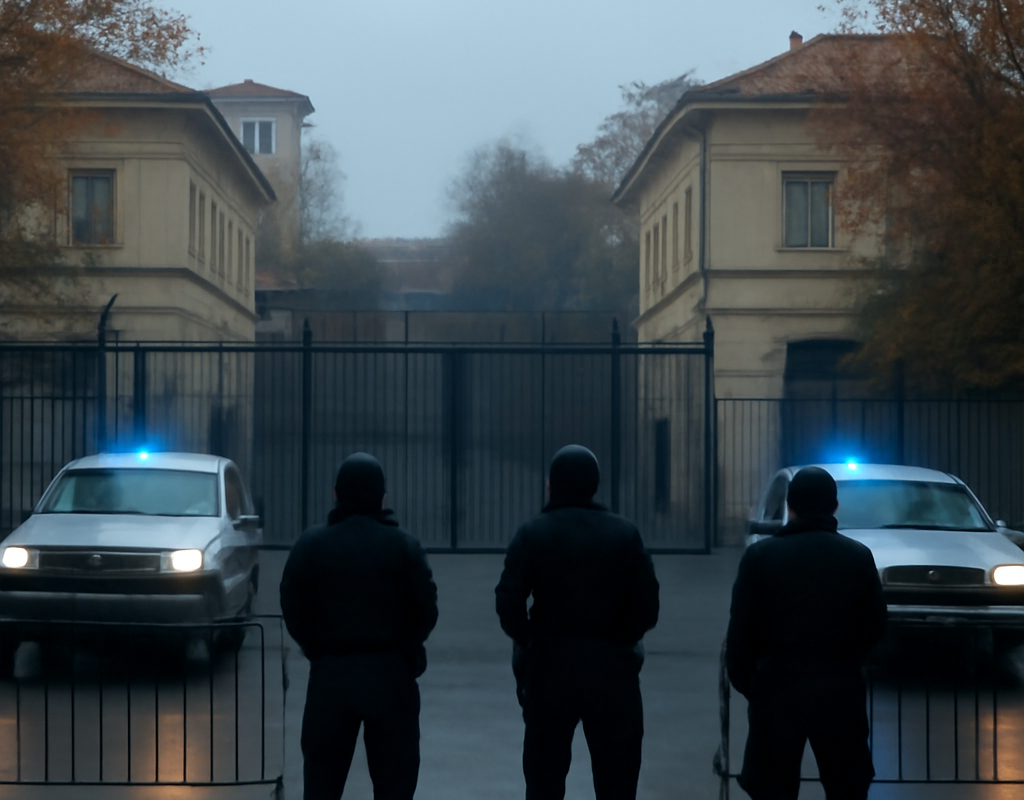
Serbian police have shot dead a suspected attacker outside the Israeli Embassy in Belgrade after a knife assault on a member of the country’s Gendarmerie. The officer suffered minor injuries, while the attacker was killed at the scene, according to Serbia’s Interior Minister Ivica Dačić.
The incident took place early on Wednesday, 28 October 2026. Serbian authorities said security had been increased at key locations following the attack, which is being investigated as suspected terrorism.
What happened outside the Israeli Embassy?
According to the Serbian Interior Ministry, the attacker approached a guard outside the embassy and assaulted him with two knives. The officer responded by shooting the assailant, which Minister Ivica Dačić described as an act of self-defence.
The injured officer was reported to have suffered light wounds. The attacker’s identity had not been publicly confirmed at the time of the initial reports.
Dačić said the suspect had allegedly shouted “Allahu Akbar” during the incident. Such claims are being treated as part of the official account of the attack and will be subject to the investigation.
Serbia raises security alert
The Serbian government raised the country’s terror alert to its highest level after the incident. Security was also strengthened around important public sites and other locations considered potentially vulnerable.
The interior minister said security services had been monitoring the suspect, who he described as a supporter of the Islamic State group. Dačić also alleged that the suspect had displayed the group’s black flag on an Instagram account.
Those claims had not been tested in court, and the investigation will need to establish the attacker’s identity, motives, contacts and any possible wider threat. No broader attack was reported in the supplied information.
A previous attack near the embassy
The incident follows a similar attack outside the Israeli Embassy in Belgrade in June 2024. In that case, a man wounded a Serbian police officer before being shot dead by a guard.
The recurrence of violence near the diplomatic site is likely to prompt scrutiny of security arrangements around embassies and other internationally sensitive locations in the Serbian capital. Diplomatic missions are protected sites, and attacks against them can carry wider regional and international implications.
Political context in Serbia
The suspected attack happened shortly after Serbia’s early parliamentary election. The election was held on Sunday, following almost two years of anti-government protests led largely by young people.
According to the supplied report, a youth-led movement defeated the political camp associated with former President Aleksandar Vučić. However, Vučić and his allies remained in control of the police while a new government had not yet been formed.
That political transition adds sensitivity to the security response, although the available information does not establish a connection between the election and the embassy attack. Authorities have not presented evidence linking the incident to political developments.
Why the incident matters beyond Serbia
Belgrade’s Israeli Embassy is a diplomatic site, meaning any serious security incident can attract attention from Israel, Serbia and European governments. The timing also coincided with a parliamentary election in Israel, although no direct relationship between the election and the attack was reported.
The incident is relevant to wider European affairs because it involves:
- an attack on a diplomatic mission in a European capital;
- the use of counter-terrorism powers and heightened security measures;
- possible links to an internationally designated extremist organisation; and
- security concerns during a period of political change in Serbia.
Serbia is not a member of the European Union, but it is an EU candidate country. Developments involving public security, political stability and the rule of law in Serbia are therefore closely watched in the context of its long-term accession process.
What happens next?
Serbian authorities are expected to focus on confirming the attacker’s identity, reconstructing the assault and examining any alleged links to extremist networks. Investigators will also need to determine how the suspect was monitored before the attack and whether any warning signs were missed.
The heightened security alert may remain in place while officials assess whether the incident was isolated. Further information from Serbian authorities, the Israeli Embassy and relevant security services could clarify the investigation’s findings and the duration of the additional security measures.
At this stage, the incident should be described as a suspected terrorist attack rather than a conclusively established act of terrorism. The available account confirms the shooting and the police response, but it does not provide a final judicial finding on the attacker’s motive or affiliations.
Conclusion
The Belgrade embassy attack has led to one death, minor injuries to a Serbian officer and the highest terror alert in Serbia. The immediate focus will be on the investigation and the protection of diplomatic sites, while the political consequences will depend on whether authorities uncover evidence of a wider extremist network or threat.