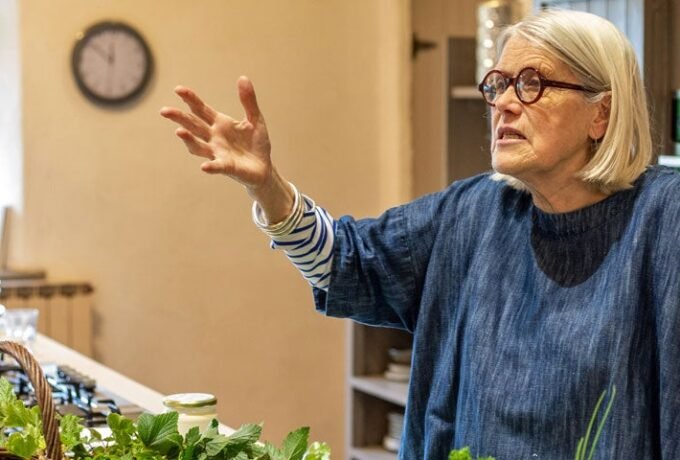
Margaret Jeffares, founder and CEO of Good Food Ireland, has been appointed to the national group guiding Ireland’s new Culinary Tourism Strategy. The move places food provenance, local producers and sustainable tourism at the centre of plans to strengthen Ireland’s reputation as a leading food destination.
Margaret Jeffares joins Culinary Delivery Stream
Jeffares was appointed by Minister for Enterprise, Tourism and Employment Peter Burke to the Culinary Delivery Stream, a national group responsible for strategic guidance and oversight as the new strategy is developed.
Led by Fáilte Ireland, the strategy is intended to connect Ireland’s food production, hospitality and tourism sectors more effectively. It also aims to support sustainable, year-round visitor growth across the country by showcasing the people, products and places behind Irish food experiences.
The group includes representatives from Ireland’s food, drink, hospitality and tourism industries. It is chaired by former Tourism Ireland chief executive Paul O’Toole, with chef Anna Haugh and Pat Rigney serving as vice-chairs.
Why the appointment matters for food tourism in Ireland
Jeffares has spent more than 20 years promoting an integrated approach to food tourism through Good Food Ireland. Its work brings together farmers, fishermen, growers, producers, chefs and hospitality businesses through an all-island framework.
Her appointment reflects the growing importance of linking what visitors eat with the wider story of Irish agriculture, fishing, regional enterprise and hospitality. Rather than treating culinary tourism as a standalone restaurant experience, the strategy is expected to consider the complete food chain.
In a statement, Jeffares said Ireland needed to recognise the value of the entire food chain and build stronger connections between primary production, hospitality and tourism. She added that culinary tourism should create opportunities for producers, support local food communities and strengthen regional economies.
Key principles highlighted by Good Food Ireland
- Provenance and traceability of ingredients
- Authentic food and drink experiences
- Stronger links between producers and hospitality businesses
- Sustainability across the food and tourism sectors
- Greater support for regional economies and local communities
Good Food Ireland marks 20th anniversary
The appointment coincided with Good Food Ireland’s 20th Anniversary Celebration and Gala Awards Ceremony, held at the InterContinental Dublin on Monday, 16 November 2026.
The event recognised businesses, producers and individuals working across Ireland’s food, drink, hospitality and culinary tourism sectors. Its focus included Irish produce, provenance, sustainability and authentic visitor experiences.
The anniversary provides a significant backdrop to Jeffares joining the national strategy group. Good Food Ireland’s long-standing focus on connecting local food with hospitality aligns closely with the broader aims of the Culinary Tourism Strategy.
What the strategy could mean for Ireland’s food scene
A national approach to culinary tourism could help regions present more connected food experiences, from farms and fisheries to markets, cafés, pubs, restaurants and food-led attractions. It may also give visitors clearer reasons to explore food businesses outside the main tourism centres.
For producers and hospitality operators, stronger coordination could help turn Ireland’s high-quality ingredients and distinctive food traditions into sustainable visitor opportunities. The emphasis on year-round tourism is particularly relevant to businesses seeking demand beyond the busiest travel periods.
The Culinary Delivery Stream will now contribute to the development of Ireland’s next phase of culinary tourism policy, with industry experience forming part of the process.
The outlook for Irish food tourism
Margaret Jeffares’ appointment underlines the importance of collaboration between food producers, chefs, hospitality providers and tourism agencies. The central challenge will be ensuring that growth benefits the communities and businesses responsible for creating Ireland’s food identity.
With provenance, sustainability and regional enterprise identified as key themes, Ireland’s culinary tourism strategy has the potential to make the food journey behind each dish as important as the dish itself. For Ireland’s food sector, that is the clearest takeaway from this latest development.