

Standfirst: Israel’s military says West Bank land crossings will close on Tuesday during Israel’s legislative election, while restrictions on Palestinian workers have already begun. The measures follow the killing of two Israeli soldiers in Hebron and a wider security operation that Palestinian sources say has displaced hundreds of families.
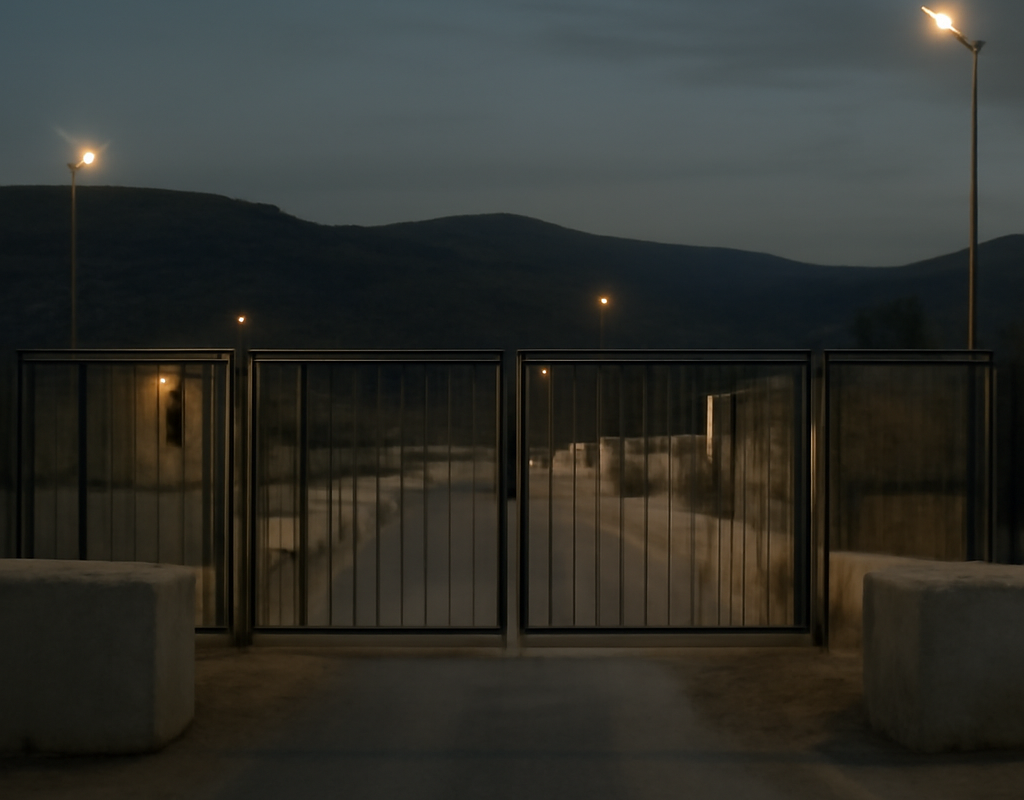
Israel has announced the closure of all West Bank land crossings on election day after two Israeli soldiers were killed by Palestinian gunmen in Hebron earlier this week. The Israel Defense Forces said the restrictions are part of heightened security measures in the occupied West Bank.
The decision will affect movement between the West Bank and Israel, as well as Palestinian workers travelling to workplaces in areas covered by the order. It comes as Israel prepares for legislative elections on Tuesday, 27 October, according to the source report.
What Israel’s military has announced
In a statement, the IDF said Palestinian workers would be barred from entering or leaving areas it referred to as Judea, Samaria and the Jordan Valley during the election period. The order includes industrial zones and the closure of all land crossings throughout election day.
The military said additional restrictions would apply from Sunday through Monday, with workers generally prevented from entering the area except for industrial zones and other approved locations.
- All West Bank land crossings are scheduled to close on election day.
- Palestinian workers face restrictions on entry and exit during the security period.
- Limited exceptions are expected for certain industrial zones and approved areas.
- The measures follow a deadly shooting in Hebron involving two Israeli soldiers.
Security operation expands around Hebron
Following the shooting, Israeli forces surrounded Hebron and began search operations, according to the report. Prime Minister Benjamin Netanyahu said he had directed the military to cordon off the city and introduce additional security measures.
The IDF described its activity as a targeted operation intended to dismantle what it called terrorist infrastructure and prevent further attacks. The military also confirmed that several structures in the area had been demolished, arguing that they represented security threats or had been built illegally.
The IDF said civilians were allowed to leave temporarily through designated screening points and denied that residents had been forced to evacuate. It said demolitions were carried out in accordance with international law.
Palestinian displacement claims and criticism
The Palestinian News Agency, Wafa, reported that more than 200 families had been displaced in Hebron over three days, involving approximately 2,500 people in the al-Jilda and Ain Deir Baha areas. Wafa also reported that Israeli forces detained 20 people in the wider Hebron Governorate on Sunday.
Those figures and accounts differ sharply from the military’s description of the operation. The IDF said its measures were designed to address security threats, while Palestinian reporting described removals and demolitions as forced displacement.
Israeli human rights organisation B’Tselem condemned what it described as plans to forcibly displace Palestinian residents and carry out extensive destruction in Hebron. The group called for international action to halt the campaign.
The competing accounts could not be independently reconciled in the source report. The dispute highlights the wider humanitarian and legal concerns surrounding military operations, demolitions and movement restrictions in the occupied West Bank.
Protests take place before Israel’s election
The security measures come as thousands of people demonstrated in Tel Aviv ahead of Tuesday’s election. Protesters reportedly marched from Rabin Square towards Hostages Square, a location renamed after Hamas’s attacks on Israel on 7 October 2023 and the subsequent hostage crisis.
The demonstration was organised by the October Council, a group established by families of people killed or taken hostage during the attacks. In a social media message cited in the report, the organisation said the protest had strengthened its campaign but urged supporters to turn that energy into voting on election day.
The protests and heightened security operation form separate but connected parts of the election backdrop: public pressure over the government’s handling of the conflict and hostage crisis, alongside concerns about renewed violence in the West Bank.
What happens next
The immediate next step is the implementation of the crossing restrictions during election day. The practical impact will depend on which exceptions remain available and how long the closures last after voting concludes.
The Hebron operation is also continuing, with searches, arrests and demolitions likely to remain under scrutiny from Palestinian authorities, Israeli rights groups and international organisations. Further information from the Israeli military and Palestinian officials will be needed to establish the full scale of displacement, detentions and property damage.
For Palestinians who work in Israel or travel through West Bank crossings, the restrictions may disrupt employment, family movement and access to essential services. The measures also carry wider implications for the security situation and for international debate about Israel’s obligations toward Palestinian civilians under international law.
Conclusion
Israel’s planned West Bank crossing closures on election day are a national security measure introduced after the Hebron shooting, not an EU decision or European policy. The central issues to watch are the duration of the restrictions, the humanitarian effects on Palestinian residents and workers, and whether the military operation around Hebron leads to further displacement or international pressure.