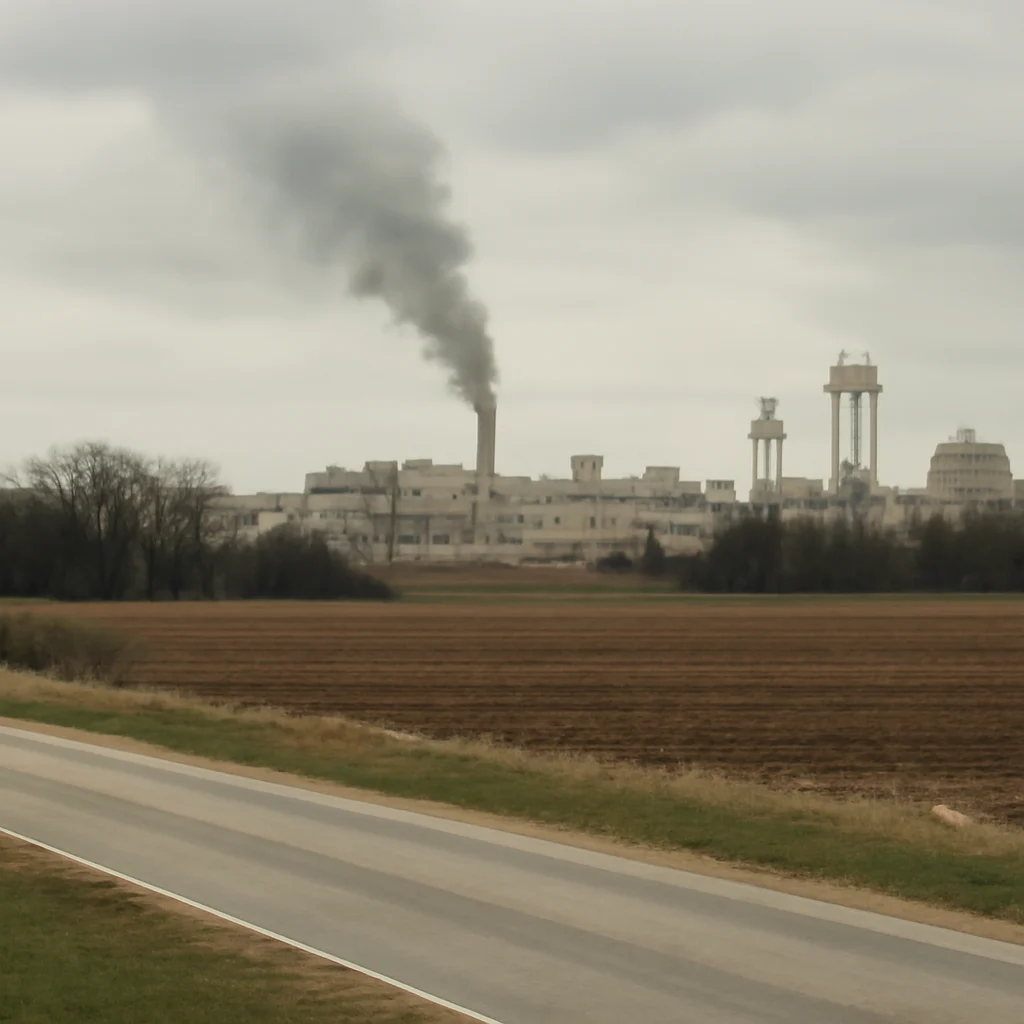
The US government has carried out a controlled detonation of an ageing stockpile of lead-based explosives at the Iowa Army Ammunition Plant, prompting residents in the nearby town of Middletown to shelter indoors because of concerns about toxic dust.
The operation took place shortly after 9am local time on Wednesday, following days of public opposition and legal disputes over how to dispose of the deteriorating material. Officials said destroying the explosives in a controlled blast was intended to reduce the danger of the chemical containers exploding unexpectedly.
Iowa explosives detonation prompts shelter-in-place warning
The Federal Emergency Management Agency confirmed on X that the detonation had taken place and advised people within 20 miles of the site who had not evacuated to remain indoors. Residents were told to follow safety instructions from the US Environmental Protection Agency until officials issued an all-clear.
FEMA also said it had arranged safe accommodation for people who left the area before the blast. The warning reflected concerns that the explosion could send a plume containing lead dust over nearby homes, farmland, crops and livestock.
What was destroyed at the army facility?
The US Army had planned to destroy almost 4,500kg of degraded lead azide stored in 68 plastic barrels at the Iowa Army Ammunition Plant. The chemical had become highly unstable as the containers deteriorated, according to the information reported about the disposal operation.
Lead azide is used as an explosive initiator, meaning it can trigger a larger explosive reaction. Its unstable condition made long-term storage increasingly difficult, while moving the material could also create risks. Authorities therefore faced a choice between a planned detonation and the possibility of an accidental explosion.
Residents prepared for toxic dust from the blast
Public concern in Middletown centred on the potential health and environmental effects of airborne lead. A blast at the ammunition plant was expected to produce a visible plume, with nearby communities worried about exposure inside homes and contamination affecting agricultural land and animals.
People who remained in the area were urged to shelter in place rather than travel through any dust cloud. The precautionary advice applied to residents within a 20-mile radius who had not evacuated.
- Residents were advised to remain indoors after the detonation.
- People were told to follow EPA safety guidance.
- Those who evacuated were offered accommodation by FEMA.
- Officials had not immediately announced whether the disposal had been fully successful.
The Iowa Army Ammunition Plant is in Middletown, around 240km south-west of Des Moines, the state capital. The surrounding area includes homes and farmland, making possible fallout from the explosion a particular concern for local residents.
Smoke seen after scheduled explosion
A live television feed from the site captured the apparent sound of an explosion at the scheduled time. A small amount of grey smoke appeared to rise beyond a line of trees before quickly fading.
However, there was no immediate official assessment of the blast’s outcome or confirmation that all of the unstable material had been destroyed. Further instructions for residents were expected to depend on monitoring and advice from the relevant authorities.
Why the disposal plan proved controversial
The planned destruction had generated opposition in the days before the operation. Critics focused on the possibility that lead particles could spread beyond the military site, while officials emphasised the hazards posed by keeping ageing explosives in deteriorating containers.
The dispute illustrates the difficult choices involved in managing obsolete military chemicals. A controlled explosion can be planned around evacuation zones and emergency procedures, but it may still create short-term risks for nearby communities. Leaving unstable explosives untouched, meanwhile, could allow the material to degrade further.
For now, the immediate priority is the official safety assessment: whether the detonation completed the disposal, whether airborne contamination was detected and when residents can safely leave their homes.
What happens next in Middletown?
Residents should continue following instructions from local officials, FEMA and the EPA rather than relying on unverified reports. The agencies’ guidance will determine when the shelter-in-place warning ends and whether additional measures are needed for homes, farmland, livestock or crops.
The Iowa operation is also likely to renew scrutiny of how ageing explosive stockpiles are stored and removed from service. Until monitoring results are made public, the full environmental impact of the detonation remains unclear.
The key takeaway: the US Army has carried out the planned Iowa explosives detonation, but residents near Middletown remain under precautionary shelter guidance while authorities assess the effects of the blast and any lead dust released.