
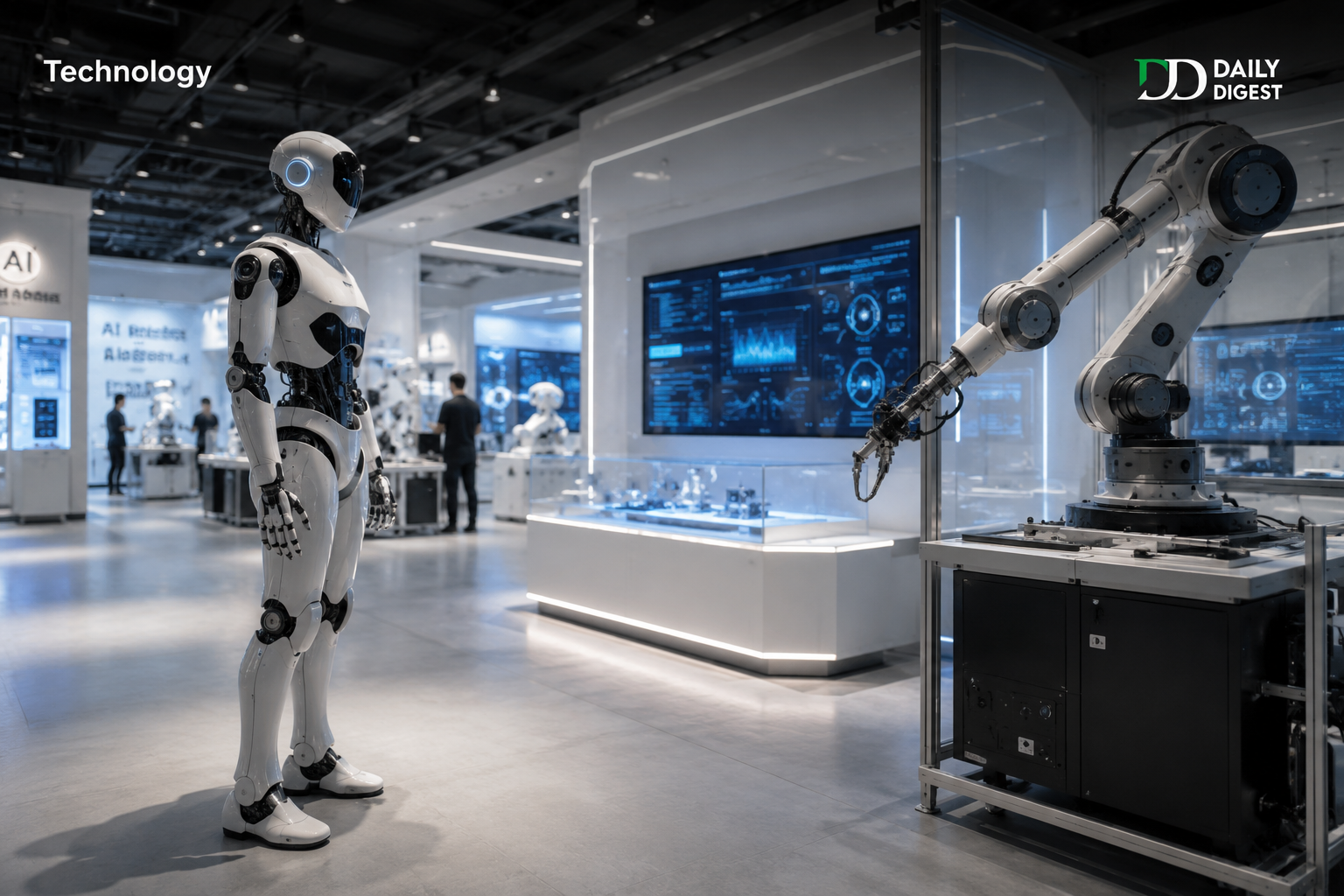
AI agents are changing how new businesses are built, allowing founders to create software, test products and manage complex tasks with remarkably small teams. The development offers a striking new direction for the tech industry, but it also raises questions about quality, oversight and the future role of employees.
AI agents take on core start-up roles
Entrepreneurs are increasingly using AI agents for work that once required developers, marketers, researchers and operations staff. These systems can write code, analyse information, design early products, produce marketing material and help coordinate suppliers or contractors.
In one example, Helsinki-based founders Claudio Reiter and Leon Busch are using an agent to coordinate the construction of a biotech laboratory. The system is managing a budget of approximately $500,000 (€455,000), including equipment procurement and instructions for contractors. Other agents are carrying out basic laboratory experiments under human supervision.
The founders’ ambition is to develop laboratories capable of conducting increasingly sophisticated scientific work. Their approach illustrates how AI can extend beyond digital tasks and help organise activity involving physical equipment, specialist facilities and regulated research environments.
Why AI is accelerating product development
New coding systems have lowered the technical barrier for people who do not have formal programming backgrounds. Rather than writing every line of software, founders can describe an idea in ordinary language and ask an AI agent to produce a working prototype.
Helena Gagern, who runs a European start-up hub and investment fund, described meeting an entrepreneur whose company had already reached animal testing without any employees. She said AI agents had supported decisions about the disease area, research and trial design.
Other founders report similar gains in speed. Isabel Greenslade of Structured AI said her team recorded a customer discussion, supplied it to Claude Code and produced a prototype based on the proposed idea within two days. Rapid prototyping can help companies test demand before committing significant funding or hiring a large workforce.
The benefits for founders
- Lower initial costs for software development and administration
- Faster testing of ideas with customers
- Access to specialist capabilities without building a large team
- Greater flexibility for founders outside established technology hubs
AI start-ups still face human limitations
Automation does not remove the need for judgement. AI-generated products, websites and marketing campaigns can be generic or unreliable, creating what Malt co-founder Vincent Huguet calls “slop companies”. Once basic software becomes easy to produce, differentiation depends more heavily on product insight, trust, design, sales and the quality of the people involved.
There is also a workload problem. Agents can continue producing tasks overnight, but founders must still review their output, correct mistakes and decide what happens next. More automation can therefore increase the number of decisions a small team must make rather than reducing pressure altogether.
Customer acquisition may become particularly important. As more businesses use agents to send messages and create content, potential customers could face a flood of low-quality outreach. Human salespeople may become more valuable because they can build credibility and understand nuanced customer needs.
What the shift means for technology Ireland
For Irish startups and the wider technology sector Ireland, cheaper development tools could make it easier to launch products from Dublin, Cork, Galway and smaller communities. Founders may be able to validate ideas with less capital and compete internationally before assembling a conventional workforce.
That opportunity will depend on responsible use. Companies still need appropriate human oversight, secure handling of sensitive information and clear accountability for decisions made with AI. In sectors such as healthcare, finance and biotech, a prototype is not the same as a safe or approved product.
The next phase of AI-led entrepreneurship
AI agents are making company formation faster and lowering some traditional barriers to entry. Yet speed alone will not create durable businesses. As similar tools become widely available, the strongest start-ups are likely to be those that combine automation with distinctive expertise, trusted relationships and careful human decision-making.
For readers following tech news Ireland and the broader Irish tech industry, the central lesson is clear: AI can help a tiny team do more, but it cannot remove the need to decide what is worth building—and why customers should believe in it.