

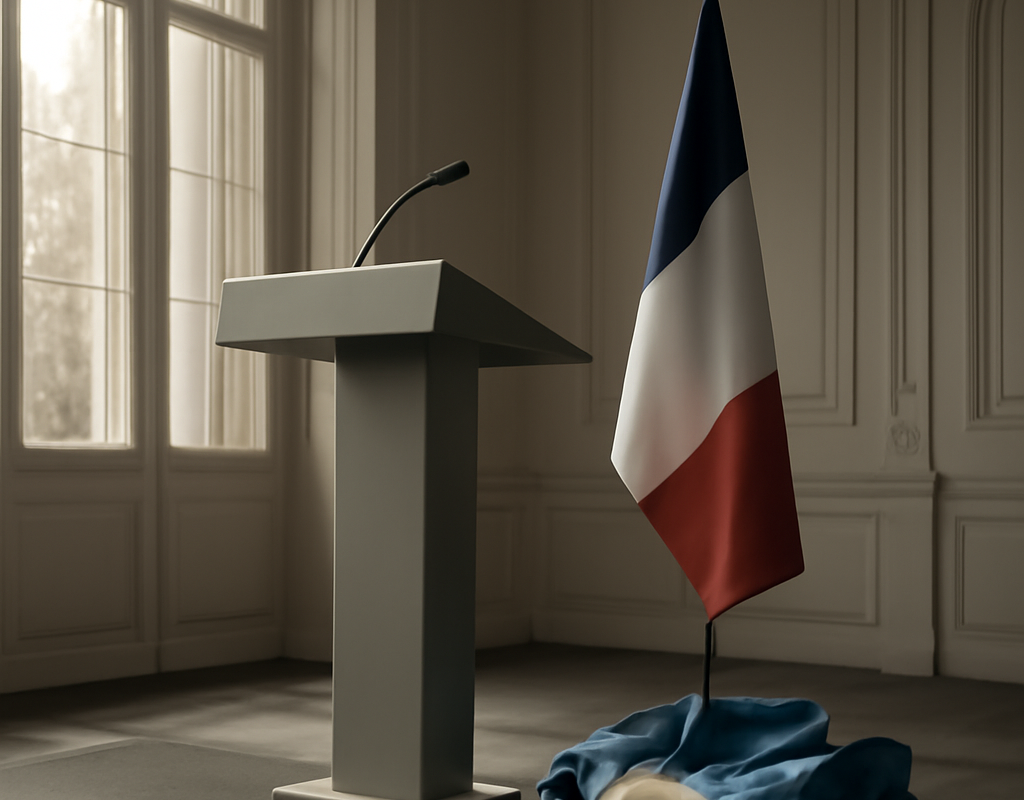
French judo champion Teddy Riner has announced his candidacy for France’s presidential election, presenting himself as an independent figure who could appeal beyond the traditional left-right divide. The declaration comes less than six months before voters are due to choose the country’s next president.
Riner, a five-time French Olympic gold medallist, confirmed his intention in an interview with Le Parisien and a video published on X. The 37-year-old athlete said France needed unity, practical leadership and what he described as common sense rather than another professional politician.
Teddy Riner enters French presidential race
The sportsman said he was neither left-wing nor right-wing and wanted to represent a politics of unity. His announcement places a highly recognisable public figure into an already competitive French political landscape, although he has no previous career in elected office.
Riner acknowledged that some people would consider the decision unusual because he lacks political experience and established connections. He nevertheless argued that his background had prepared him to deal with pressure, setbacks and demanding public challenges.
In his video statement, Riner said France did not need a politician who spent his time lecturing and arguing. Instead, he called for a state capable of restoring order and addressing problems directly.
A bid framed around unity
The central message of Riner’s campaign announcement is an attempt to move beyond the conventional political blocs. By describing himself as a candidate of unity, he appears to be seeking support from voters who feel disconnected from established parties.
That positioning may also create challenges. Presidential campaigns require detailed programmes, party organisation, funding and the ability to build support across France. The source material does not specify Riner’s policy platform, campaign structure or whether he has secured the endorsements required to proceed.
What Riner said about politics and sport
Riner indicated that entering politics would not necessarily end his sporting ambitions. He said he hoped to continue competing and potentially take part in the 2028 Olympic Games in Los Angeles, subject to public support.
His comments underline the unusual nature of the candidacy: Riner is seeking the country’s highest political office while keeping open the possibility of continuing his elite sporting career. Whether both paths can be combined would depend on the development of his campaign and his future sporting plans.
The judoka also drew on his experience in competition, presenting struggle, failure and recovery as important parts of his personal identity. His message is likely to appeal to voters who value resilience and public figures from outside traditional political circles, though its impact will depend on whether it can be translated into a detailed political programme.
How the announcement fits France’s political landscape
Riner’s declaration comes as France’s next presidential election approaches. According to an IFOP poll for broadcaster LCI cited in the source article, Marine Le Pen of the National Rally was estimated to have 36% support in voting intentions. Jean-Luc Mélenchon of France Unbowed was listed at 17.6%.
The figures relate to a poll conducted from 27 to 29 October and should not be treated as an election result. Polling can change during a campaign, particularly when candidates have not yet published full programmes or built nationwide organisations.
Riner’s entry could attract attention because of his sporting achievements and national profile. However, visibility alone does not establish electoral strength. He would need to demonstrate support beyond his reputation as an Olympic champion and explain his positions on the major issues facing France.
Questions over campaign organisation
Among the practical issues facing any new presidential candidate are:
- building a nationwide campaign team;
- setting out clear positions on domestic and foreign policy;
- securing the necessary institutional endorsements;
- raising funds and organising campaign operations; and
- convincing voters that an outsider can govern effectively.
The source material does not confirm how Riner intends to address these requirements. Further announcements will be needed before the scale and viability of his candidacy can be assessed.
Why the presidential bid matters
Riner’s announcement is significant because it introduces a prominent non-politician into France’s presidential contest at a late stage before voting. It reflects the continuing appeal of candidates who present themselves as alternatives to established parties and ideological divisions.
At the same time, the announcement should be understood as the start of a political campaign rather than evidence of an established electoral breakthrough. No vote has taken place, and the available polling cited in the source does not include a confirmed measure of Riner’s support.
For France, the next stage will be to see whether the Olympic champion can turn a message of unity into a credible programme and an organised national campaign. His candidacy may broaden the debate, but its long-term importance will depend on what follows the announcement.
What happens next?
Riner is expected to face scrutiny over his policy positions, campaign organisation and route to the ballot. French voters will also assess whether his appeal as a sporting figure can transfer to the responsibilities of national leadership.
The presidential race remains fluid, and polling figures are not a substitute for an official result. The significance of Riner’s bid will become clearer as more candidates set out their platforms and the formal election process advances.
Conclusion
Teddy Riner’s presidential bid adds an unexpected independent voice to France’s approaching election. His message focuses on unity, resilience and practical government, but he must now show how those themes would become concrete policies and a viable national campaign. For readers following European politics, the key question is whether his public profile can develop into sustained electoral support.