

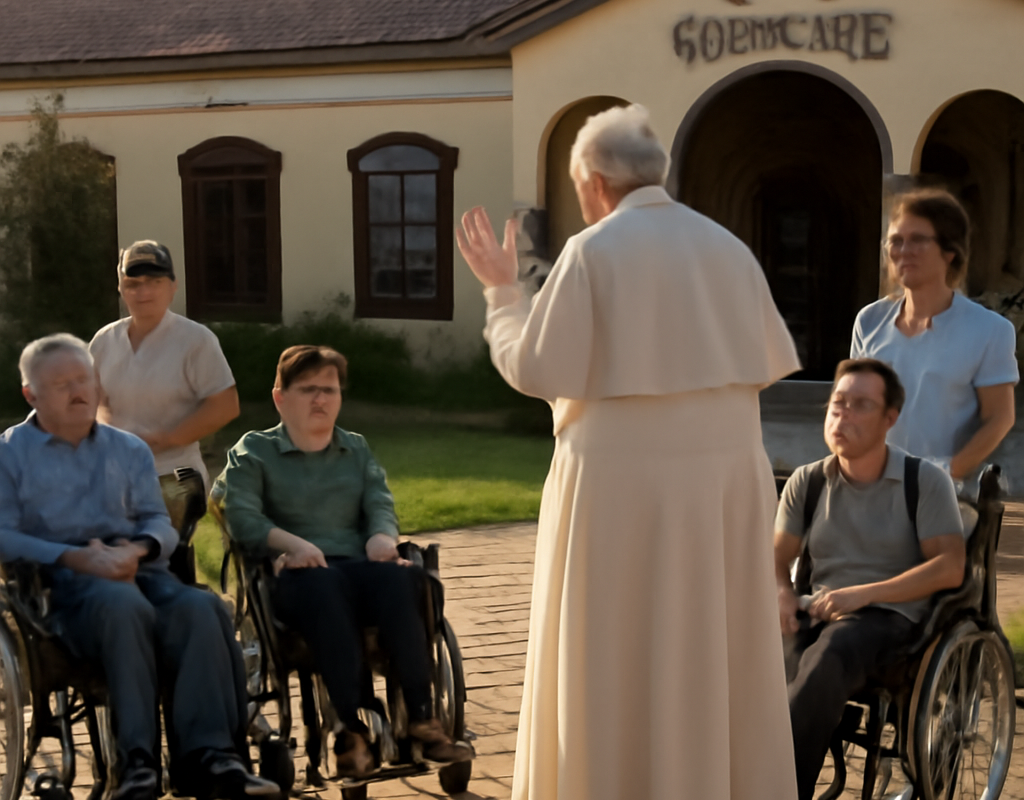
Pope Leo XIV used his first full day in Argentina to call for stronger protection of vulnerable people, highlighting the dignity of those with disabilities during a visit to a care centre affected by government austerity measures. His message places social protection, specialised care and solidarity at the centre of discussions surrounding Argentina’s economic policies.
The pontiff visited Cottolengo Don Orione in Claypole, south of Buenos Aires, an institution that provides accommodation and support for more than 400 people with disabilities. The centre has faced financial difficulties linked to cuts affecting health and social services, as well as pressure on therapy and specialised-care programmes.
Pope Leo XIV focuses on disability and social dignity
During the visit, Pope Leo XIV spoke with residents, embraced people in wheelchairs and offered a blessing in the centre’s chapel. He described the lives of people cared for there as a blessing rather than a burden to society.
He also argued that a country’s progress should be judged partly by the way it welcomes people with disabilities and others with particular needs. The appeal reflects a central theme of Catholic social teaching: economic decisions should be assessed not only by fiscal results, but also by their effect on people who depend on public support.
Cottolengo Don Orione, founded in 1935 by an Italian priest, operates across a large site known as a “city of charity”. Its work includes residential care, therapy and support for people whose needs require long-term assistance.
Argentina’s austerity programme creates tensions over disability funding
The visit took place amid an ongoing dispute between President Javier Milei’s government and organisations working with people with disabilities. Argentina’s authorities have defended reductions in public spending as part of a wider effort to improve the country’s fiscal position and address alleged fraud or unnecessary expenditure.
Care providers, however, say the financial pressure has made it more difficult to maintain services. According to the source report, some centres have accumulated debts worth hundreds of thousands of euros, while therapy programmes have also been affected by the adjustment measures.
The dispute concerns a law providing for increased funding for the disability sector. Congress overturned Milei’s veto of the measure last year, but the executive has resisted implementing it, arguing that the additional cost could undermine the fiscal balance.
What is being debated in Argentina?
- Funding for disability benefits and specialised care.
- Support for residential centres such as Cottolengo Don Orione.
- Access to therapy and other long-term services.
- The balance between fiscal consolidation and social protection.
The source report says Argentina’s Senate is due to consider a draft measure seeking to reserve funds for disability benefits in next year’s budget. Milei opposes the initiative, meaning the issue is likely to remain politically contentious.
The Pope’s wider message on the economy
Pope Leo XIV’s visit to the care centre formed part of a broader programme focused on economic responsibility and the treatment of vulnerable groups. He was also scheduled to meet business representatives, trade union leaders and members of popular movements at the Catholic University of Argentina.
The meeting is intended to bring together groups with different interests, including manufacturers affected by increased competition from lower-priced imports after the government removed trade restrictions. Representatives of Argentina’s main trade union confederation were also expected to raise concerns about job losses and declining wages.
In earlier remarks during the trip, made in the presence of Milei, the pope recalled the principle that economic activity should serve people rather than make people serve the economy. That position echoes themes associated with Pope Francis, the Argentine-born predecessor of Leo XIV.
Why the visit matters
The papal intervention does not change Argentina’s budget policy or create a legal obligation for the government. Its significance is political and moral: it gives national visibility to people with disabilities and to care providers facing funding difficulties.
The visit also highlights a wider policy question confronting governments pursuing austerity. Reducing public expenditure can improve fiscal indicators, but decisions affecting health, disability services and social care may have immediate consequences for residents and their families.
For organisations supporting people with disabilities, the forthcoming budget debate will be important. The outcome could influence whether providers receive additional resources and whether therapy and benefit programmes can be maintained at their existing level.
What happens next?
The Senate’s consideration of the proposed disability funding measure is the next significant institutional step identified in the report. The government’s opposition means that negotiations over the budget and the implementation of disability-related funding are likely to continue.
Pope Leo XIV’s meetings with business and labour representatives will also extend his discussion of Argentina’s economic direction. While the Vatican cannot determine national spending policy, the pope’s intervention has placed the needs of vulnerable people prominently within the public debate.
Conclusion
Pope Leo XIV’s visit to Cottolengo Don Orione has brought disability rights and social protection into the centre of his message in Argentina. The immediate policy dispute remains with the government and Senate, but the central takeaway is clear: economic reform is being judged not only by its impact on public finances, but also by whether vulnerable people continue to receive the care and support they need.