



Australia’s football identity often sparks a simple question from World Cup viewers: why do the Socceroos wear green and gold when those colours do not dominate the national flag? As anticipation builds around the World Cup 2026, the answer offers a revealing look at how national sporting traditions can become more powerful on the pitch than official symbols on paper.
For fans tracking the FIFA tournament, kit colours are never just cosmetic. They carry history, culture and a sense of belonging, especially at a competition as global as the FIFA World Cup 2026. In Australia’s case, green and gold have long represented the country’s sporting image, even if the flag itself follows a different visual story.
Why Australia wears green and gold
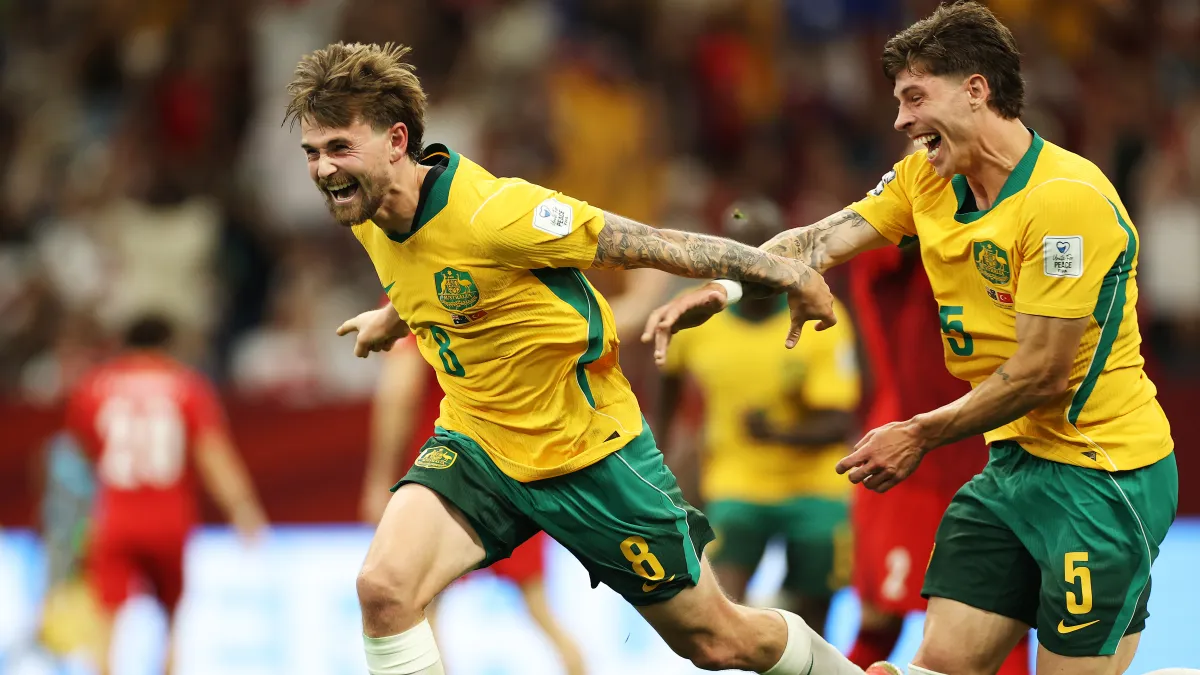
The reason is straightforward: green and gold are Australia’s official national sporting colours. They were formally adopted in 1984 and have since become the signature palette for Australian teams across major international events, from football to cricket, rugby and the Olympics.
The colours are linked to the golden wattle, Australia’s national floral emblem. Gold reflects the wattle flower, while green is associated with the country’s eucalyptus landscapes and wide pastures. Together, they offer a distinctly Australian identity that feels more rooted in the land than in colonial-era flag design.
That is why the Socceroos, including in the lead-up to the Football World Cup 2026, continue to wear green and gold with pride. On the global stage, those colours are instantly recognisable and deeply tied to the nation’s sporting culture.
Read more: How football traditions shape national identity
Why the flag looks different from the team kit
Australia’s flag features the Union Jack and a red, white and blue scheme, reflecting the country’s constitutional and historical links to Britain. But sporting representation often follows a separate path. National teams are typically designed around symbols that feel more unique, modern and emotionally resonant for supporters.
That split is not unusual in international football. Many countries use one set of colours in official emblems and another in sport, especially when athletic branding has developed its own legacy. Australia is one of the clearest examples of that distinction, and it helps explain why the green-and-gold shirt has become such an important part of the team’s image ahead of major tournaments.
- Green and gold reflect national sporting tradition
- The colours are inspired by native Australian symbols
- The flag and football kit serve different representational roles
- The Socceroos use the palette recognised across Australian sport
Explore: What major tournament branding says about football nations
What it means for the Socceroos at the next tournament
As interest grows around the World Cup 2026 schedule, World Cup 2026 teams and the evolving 48 team World Cup format, visual identity will again play a major role in how teams are remembered. Australia’s shirt is not just a uniform; it is part of the story fans associate with the nation at every major tournament.
Whether supporters are following the World Cup 2026 draw, planning around World Cup 2026 dates or looking ahead to the World Cup 2026 knockout stage, the Socceroos’ colours will remain one of the easiest ways to spot Australia on the biggest stage in football.
In a tournament where nations compete not only for results but also for recognition, tradition matters. Australia’s green and gold does exactly that: it sets the team apart while reinforcing a sporting identity built over decades.
Read more: A closer look at football culture before the next global tournament
The bigger takeaway
The story behind Australia’s kit is a reminder that football symbolism often runs deeper than official state imagery. Long before the World Cup 2026 opening match and long after the final whistle of the World Cup 2026 final, the strongest national identities are usually the ones supporters can feel instantly. For Australia, that identity lives in green and gold, and it remains one of the clearest visual traditions heading into World Cup 2026.