




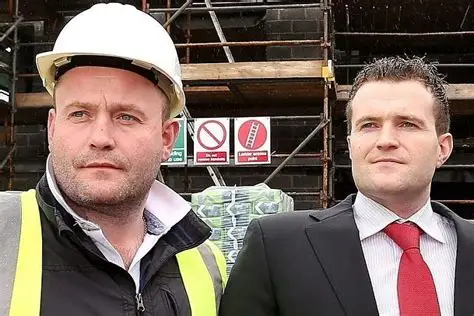
Five companies connected to Irish property developer Greg Kavanagh have been ordered to be wound up after proceedings brought by the Revenue Commissioners over unpaid tax debts totalling approximately €2.2 million.
The High Court approved Revenue’s winding-up petitions after being informed that the companies were not in a position to resolve their outstanding liabilities. Liquidators will now take control of the businesses and examine their financial affairs as part of the formal winding-up process.
The development marks the conclusion of a tax dispute that first became public in April 2026, when Revenue initiated winding-up proceedings against four companies associated with the developer over debts reported at the time to be close to €1 million.
Which companies have been wound up?
The five companies named in the latest High Court orders are:
- New Generation Construction Limited
- Fofo Investments Limited
- For Much Needed Housing Limited
- Sequana Assets Limited
- Beakonshaw Management Limited
The original proceedings involved the first four companies, with Beakonshaw Management subsequently included in the wider Revenue action.
New Generation Construction had previously been publicly identified in connection with a tax settlement valued at approximately €541,000.
Revenue sought payment before winding-up orders
The High Court was told that Revenue had issued formal demands to the companies in January 2026.
Revenue later moved forward with winding-up petitions after the liabilities remained unresolved. During subsequent hearings, proposals were put forward for dealing with the debts, but Revenue argued that the plans did not provide sufficient certainty or detail about how the outstanding amounts would be paid.
An undertaking to address the tax liabilities was ultimately not fulfilled, and lawyers representing the companies informed the court that the businesses were not able to resolve the debts.
Justice Oisín Quinn approved Revenue’s petitions and ordered that the five companies be wound up.
Tax dispute grew from nearly €1 million to €2.2 million
When the case was first reported in April, the winding-up applications related to alleged tax debts of close to €1 million involving four companies.
However, later High Court proceedings placed the overall liabilities associated with the five businesses at more than €2.2 million.
The debts were reported to involve taxes owed from earlier trading periods, including liabilities relating mainly to fiduciary taxes between 2018 and 2020. Fiduciary taxes can include VAT and payroll taxes collected or withheld by a business on behalf of the State.
Because this money is collected from customers or deducted from employees for payment to Revenue, unpaid fiduciary taxes are generally treated particularly seriously during tax enforcement proceedings.
Companies were described as no longer trading
Kavanagh previously maintained that the companies had completed their trading activities and had no remaining assets.
It was also claimed that tax repayments or overpayments were due in connection with separate matters. However, those claims did not prevent Revenue from continuing its efforts to recover the outstanding liabilities attributed to the companies.
The High Court’s decision does not necessarily mean that the developer is personally responsible for the full amount owed by each company. Irish companies normally operate as separate legal entities, and questions about personal liability depend on the circumstances, company records and any findings made during the liquidation process.
What happens after a company is wound up?
Once a winding-up order is made, the appointed liquidator takes responsibility for the company’s affairs.
The liquidator’s work generally includes:
- Securing company books, records and available assets
- Identifying creditors and outstanding liabilities
- Examining financial transactions and payments
- Determining whether assets can be sold
- Distributing available funds according to insolvency rules
- Reviewing the conduct of company directors
- Reporting relevant findings to regulatory authorities
If the companies have limited or no recoverable assets, Revenue and other creditors may receive only part of the money owed—or potentially no meaningful repayment.
Revenue itself acknowledges that full recovery is not always possible where a company enters liquidation. Unpaid amounts nevertheless remain subject to its normal collection and enforcement procedures.
Wider implications for Ireland’s construction sector
The case arrives at a sensitive time for Ireland’s property and construction industry.
The Government is attempting to accelerate housing development through new infrastructure funding, State-backed investment and financing programmes aimed at helping viable projects move from planning to construction.
However, the winding up of several property-related businesses demonstrates the financial and compliance pressures that can arise within development companies, particularly where projects are spread across different corporate structures.
While the five companies involved may no longer have active construction projects, the liquidators will be expected to establish whether they hold any assets, development interests, contractual rights or other property that could be used to repay creditors.
Revenue enforcement remains a serious risk for businesses
A Revenue winding-up petition is generally one of the most serious enforcement steps that can be taken against an Irish company.
Revenue may pursue liquidation where it considers that a company is unable or unwilling to pay its tax liabilities and where other collection efforts have not resulted in payment.
The court must then decide whether the company is insolvent and whether making a winding-up order is appropriate.
For Irish businesses experiencing tax difficulties, the case underlines the importance of engaging with Revenue early, maintaining accurate financial records and presenting realistic repayment proposals before debts reach the High Court.
The liquidation of the five Greg Kavanagh-linked companies brings the immediate proceedings to an end, but further details may emerge as the appointed liquidators review their finances, assets and historical transactions.