




Few international matchups have shifted as sharply in tone as the meetings between the United States and Belgium. What began with an American win in the earliest days of the World Cup has turned into a painful modern pattern, and that storyline matters as attention builds around World Cup 2026, the FIFA World Cup 2026, and the wider race to understand how major teams are shaping up for the tournament.
For U.S. supporters, Belgium has become more than just another European opponent. The relationship now carries the weight of knockout disappointment, missed chances, and a sense that one team has repeatedly found answers when the other has not. In the context of the Football World Cup 2026, that history adds depth to every discussion about tournament pedigree, pressure moments, and whether the United States can truly challenge elite opposition.
A rivalry defined by World Cup pain
The first meeting between the nations came in 1930, when the United States won 3-0 in its opening World Cup appearance. That result now feels distant. Since then, Belgium has taken control of the matchup, turning what was once a balanced historical note into a one-sided modern record.
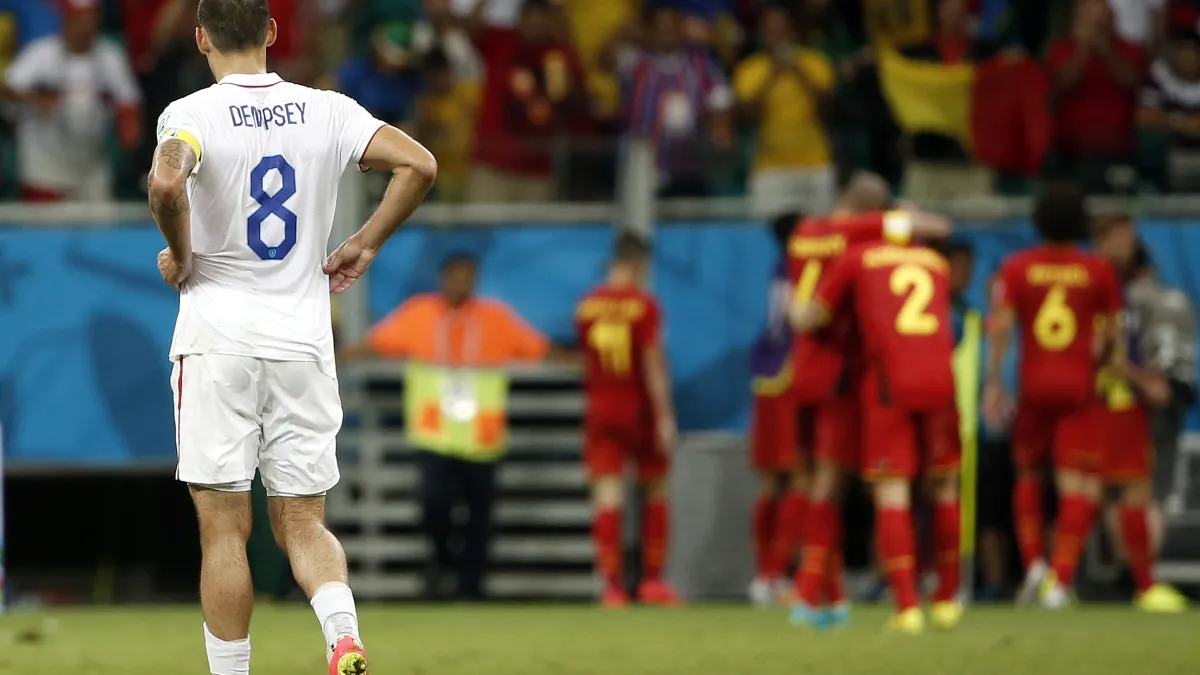
The fixture that shaped the rivalry most clearly arrived in Brazil in 2014. The United States battled bravely, with Tim Howard producing a famous goalkeeping performance, but Belgium still advanced 2-1 after extra time. It was the kind of defeat that lingered because the Americans competed hard, created drama, and still fell short.
That frustration returned again with even greater force in 2026, when Belgium defeated the United States 4-1 in the Round of 16. The scoreline was damaging, the mistakes were costly, and the result reinforced a familiar concern: when the margin for error narrows against top-level sides, the U.S. still struggles to stay in control.
Read more: Explore the latest international sports developments
Head-to-head record and what it tells us
Across seven meetings, the United States has not managed another win after that first success in 1930. The more recent trend is especially stark, with Belgium repeatedly using superior composure, attacking quality, and game management to punish American lapses.
Recent meetings between USA and Belgium
- 2026 World Cup Round of 16: Belgium 4-1 USA
- 2026 international friendly: Belgium 5-2 USA
- 2014 World Cup: Belgium 2-1 USA after extra time
- 2013 international friendly: Belgium 4-2 USA
- 2011 international friendly: Belgium 1-0 USA
Those results matter beyond nostalgia. Fans tracking the World Cup 2026 schedule, World Cup 2026 teams, and World Cup 2026 knockout stage will read this rivalry as a case study in tournament growth. Belgium has consistently looked sharper in decisive moments, while the U.S. has often been left chasing the game.
Read more: Explore more big-match analysis and tournament talking points
Why this matters in the build-up to 2026
As interest grows in the 48 team World Cup, the World Cup 2026 format, and the World Cup 2026 draw, supporters are not just looking at standings and brackets. They are judging whether teams can handle elite opposition once the group phase ends. That is where this matchup becomes revealing.
Belgium’s edge has not simply been technical. The Red Devils have shown calm under pressure and a clinical touch in transition, while the U.S. has too often paid for defensive mistakes or lacked a decisive final ball. For a nation aiming to make noise in USA World Cup 2026 conversations, those details are impossible to ignore.
This also affects broader fan interest around the World Cup 2026 fixtures, World Cup 2026 groups, and potential rematches later in the competition. If the United States wants to change its status, it must prove it can solve opponents with Belgium’s efficiency and discipline.
Read more: Explore feature coverage and major event previews
The bigger takeaway for fans
Rivalries are not always built on equal records. Sometimes they are built on emotional scars, and this is one of them. Belgium has repeatedly been the team that exposes how far the United States still has to go, which is why the matchup continues to resonate as fans follow World Cup 2026 news, possible World Cup 2026 venues, and the road toward the World Cup 2026 final.
The clear lesson is simple: history only changes when performances do. For the United States, any future meeting with Belgium will carry the same question into World Cup 2026 — can this generation finally turn frustration into progress?