

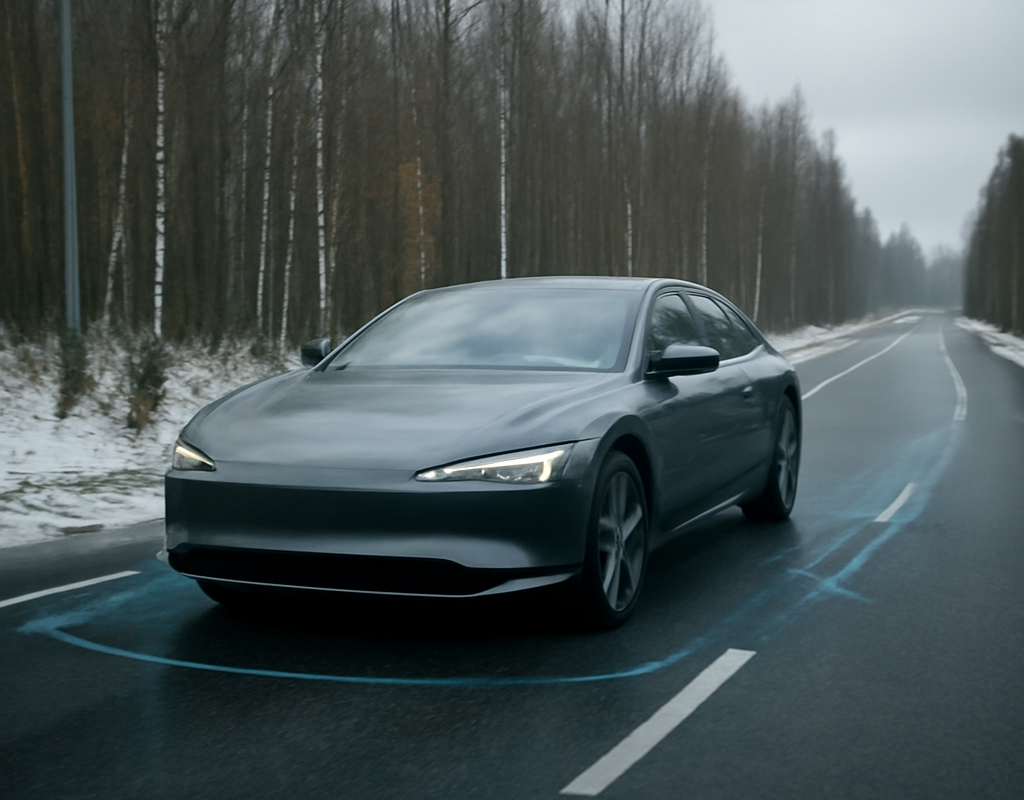
Finland has granted Tesla temporary approval to offer its assisted driving system on Finnish roads, but the technology does not yet have EU-wide authorisation. The decision allows Tesla to begin offering the updated system in Finland while European regulators continue work on rules for automated and driver-assistance vehicles.
Finland’s Transport and Communications Agency, Traficom, announced the approval on 11 November 2026. The authorisation follows changes made to Tesla’s technology and applies to a system now called Tesla Assisted Driving, rather than “Full Self-Driving (FSD) Supervised”.
What Finland has approved
The Finnish decision permits Tesla to offer the assisted driving system to customers in the country. Traficom said the system can steer, accelerate and brake automatically, but drivers must remain responsible for the vehicle and supervise its operation at all times.
The approval is therefore not permission for fully autonomous driving. Drivers remain legally and practically responsible for monitoring the road, responding to situations and taking control when required.
Traficom’s decision follows technical changes to the system. The revised name is intended to make its capabilities clearer and distinguish driver assistance from a vehicle that can operate without human supervision.
Why the name was changed
The change from Full Self-Driving (FSD) Supervised to Tesla Assisted Driving reflects the difference between automated assistance and genuine driverless operation. Although the system can perform several driving tasks, it still depends on an attentive human driver.
This distinction is important for regulators and motorists. Vehicle systems that control steering, acceleration and braking can reduce the driver’s workload, but they do not necessarily meet the legal or technical definition of autonomous driving.
Why EU-wide approval is still needed
Finland’s authorisation applies nationally. It does not automatically permit Tesla to deploy the system throughout the European Union. EU-wide approval is still required before the technology can be rolled out across the bloc under a common regulatory framework.
European regulators are continuing to face difficulties in agreeing rules for automated and driverless vehicles. The debate involves questions about safety standards, driver responsibility, vehicle certification, data, liability and the conditions under which a human may stop supervising the car.
Until a broader framework is agreed, manufacturers may need to work with national and regional authorities individually. That can make the launch of new driving technologies slower and create different requirements from one country to another.
A fragmented European market
Several European countries have already authorised Tesla’s assisted driving technology at national level. The source report identified the Netherlands, Estonia, Belgium, Lithuania and Denmark as countries where approval had previously been granted.
Finland’s decision adds another national market, but the wider regulatory picture remains unsettled. Separate national approvals can allow companies to introduce technology sooner, while also creating a patchwork of rules for motorists travelling across borders.
- National approval may permit use inside one country.
- It does not necessarily create permission to operate across the EU.
- Drivers must still comply with local road traffic and safety rules.
- The system remains driver assistance rather than fully autonomous driving.
What the decision means for Finnish drivers
Tesla customers in Finland may be able to access the system immediately under the terms of Traficom’s approval. However, drivers should not interpret the authorisation as allowing them to stop paying attention or treat the vehicle as driverless.
As with other advanced driver-assistance systems, the driver must monitor the road and remain ready to intervene. The practical benefits may include automated support with steering, braking and acceleration, but the system’s limits remain significant.
The approval also places renewed attention on how manufacturers describe automated driving products. Clear terminology can help customers understand that a vehicle may assist with driving without being capable of operating independently in all conditions.
What happens next in Europe?
The next major step is the continuing EU discussion on automated driving rules. A common European framework could make it easier for manufacturers to introduce systems across multiple member states, while giving consumers and national authorities clearer expectations about safety and responsibility.
Until that process produces EU-wide approval, Tesla’s position will continue to depend on national decisions. The company already offers the technology in markets including the United States, Australia, Canada and South Korea, according to the source report.
For the EU, the issue extends beyond one company. Other vehicle manufacturers and technology developers are also waiting for consistent rules governing increasingly automated vehicles. The outcome could influence innovation, road safety requirements and the future of the European automotive market.
Does Finland’s approval mean Tesla cars are fully autonomous?
No. The approval covers an assisted driving system that can control certain vehicle functions, including steering, acceleration and braking. Drivers must remain in control and supervise the system.
Can Tesla use the system across the European Union?
Not on the basis of Finland’s decision alone. The Finnish authorisation is national, and EU-wide approval is still required for broader deployment across the bloc.
Why does the decision matter?
Finland’s approval highlights the gap between national authorisations and a common EU framework for automated driving. It allows Tesla to move forward in another European market, while the wider debate over driverless vehicle regulation remains unresolved.
Conclusion
Finland’s approval gives Tesla a route to offer its assisted driving system to customers in the country, but it is not a licence for fully autonomous driving or an EU-wide authorisation. The immediate responsibility remains with the driver, while the next important development will be whether European regulators can agree common rules for automated vehicles. For consumers and carmakers alike, the decision shows why clear EU regulations will be important as driver-assistance technology becomes more advanced.