

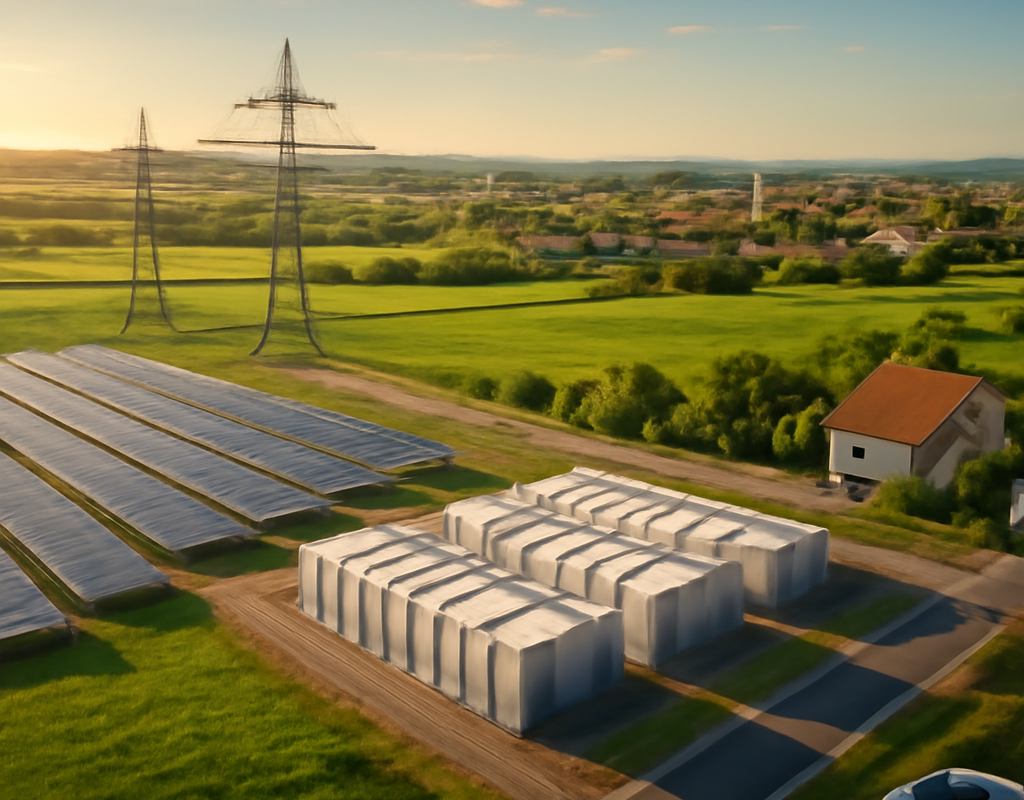
Standfirst: A new analysis suggests Europe could reduce the overall cost of running its electricity system by as much as 40% in the 2030s if solar power, battery storage and electrified demand are developed together. The findings also warn that poorly coordinated storage could increase costs rather than reduce them.
Europe’s solar expansion could deliver much larger savings when paired with battery storage and more flexible electricity demand, according to a new analysis presented during the COP31 climate summit. The report says the combination could cut total electricity-system costs by up to 40% in the 2030s, but only if the technologies are planned as part of one coordinated system.
The findings add to the growing debate over Europe’s energy transition. Solar power can reduce reliance on imported fossil fuels, but its output varies during the day and across seasons. Batteries can store surplus electricity and release it when demand rises, helping to limit waste and reduce pressure on the grid.
Solar and battery storage must work together
The analysis by the Schneider Electric Research Institute examined 40,500 scenarios involving different combinations of solar generation, battery storage and grid costs. It focused on distributed energy resources, including rooftop solar panels, batteries, electric vehicles and smart appliances.
Its central conclusion was that these technologies can lower the cost of the electricity system when their deployment is coordinated with electrification. Electrification means replacing fossil-fuel technologies with electric alternatives, such as electric vehicles, heat pumps and electric industrial equipment.
Solar generation provides low-carbon electricity when sunlight is available. Battery storage can then shift part of that supply to periods when production falls or demand increases. This can reduce the need for expensive peak-time generation and make better use of existing grid infrastructure.
- Solar panels generate electricity during periods of sunlight.
- Batteries store some surplus power for later use.
- Flexible demand allows consumers and businesses to use electricity when supply is more plentiful.
- Grid coordination helps prevent bottlenecks and limits unnecessary investment.
Why battery deployment matters for Europe’s electricity costs
The report identifies battery deployment as one of the most important factors affecting total system costs. Storage can ease pressure during peak periods and help integrate larger quantities of variable renewable energy.
However, more batteries alone will not guarantee lower bills or a cheaper electricity system. The analysis warns that an unsuitable mix of battery durations across different assets could push total system costs as much as 35% above the current benchmark.
That risk reflects the need to match storage technology with the job it is expected to perform. Short-duration batteries may help manage daily peaks, while longer-duration systems can support the grid over extended periods of low renewable generation. Investment decisions that overlook these differences could create capacity that is expensive but poorly suited to actual demand.
Electrification is the missing part of the equation
The report argues that Europe must increase electricity demand from clean sources alongside expanding renewable generation and storage. Simply adding solar panels without creating enough flexible demand could leave more power unused at times of high production.
Flexible consumption can include charging electric vehicles when solar output is high, operating industrial equipment at suitable times and using smart appliances to adjust demand. These changes can help flatten the load curve, reducing sharp peaks in electricity use.
The wider case for electrification is also linked to energy efficiency. A separate study cited in the report found that an electrified energy system could use 61% less energy to provide the same services, partly because fossil-fuel combustion loses substantial energy as waste heat.
Electrification is also a focus of discussions at COP31. Türkiye has proposed increasing the global share of energy demand met by electricity to 35% by 2035, compared with around 23% today. Debate has centred on whether such targets should explicitly require clean electricity, with critics warning that additional gas-fired generation could otherwise be counted as progress.
Potential implications for households and businesses
If implemented effectively, a coordinated solar-and-storage system could improve energy security while reducing exposure to volatile oil and gas prices. Solar Power Europe estimates that solar power has already helped the European Union avoid €43.7 billion in gas imports since the start of what the source describes as the 2026 US-led war on Iran.
Lower system costs could eventually support more affordable electricity, although the report does not mean that household bills will automatically fall by 40%. Retail prices also depend on network charges, taxes, levies, supplier costs, market design and national policies.
Businesses could benefit from more predictable access to electricity and lower exposure to periods of high wholesale prices. At the same time, they may face new investment requirements as transport, heating and industrial processes become more dependent on electricity.
What Europe needs to do next
The findings point to several priorities for policymakers and energy companies:
- Build solar generation alongside suitable battery capacity rather than treating storage as an afterthought.
- Expand electricity networks and improve planning for connection capacity.
- Encourage flexible demand through smart tariffs, vehicle charging and industrial demand management.
- Ensure electrification targets are linked to clean power generation.
- Use market rules that reward storage and consumers for helping balance the grid.
The precise effect will vary between countries because Europe’s electricity markets, grids, renewable resources and national policies differ. The analysis presents scenarios rather than a guaranteed outcome, and it does not establish a single policy pathway for every European Union member state.
The outlook for Europe’s energy transition
Europe’s solar and battery expansion could become a major source of savings, but the benefits depend on coordination. Renewable generation, storage, networks and electricity demand must grow together rather than in isolation.
The main takeaway from the report is that batteries are not simply an accessory to solar power. They are part of the wider electricity system needed to make variable renewable energy useful when and where consumers need it. If Europe combines storage with flexible electrified demand, it could reduce system costs and strengthen energy security; if deployment is poorly matched, the transition could become more expensive.