

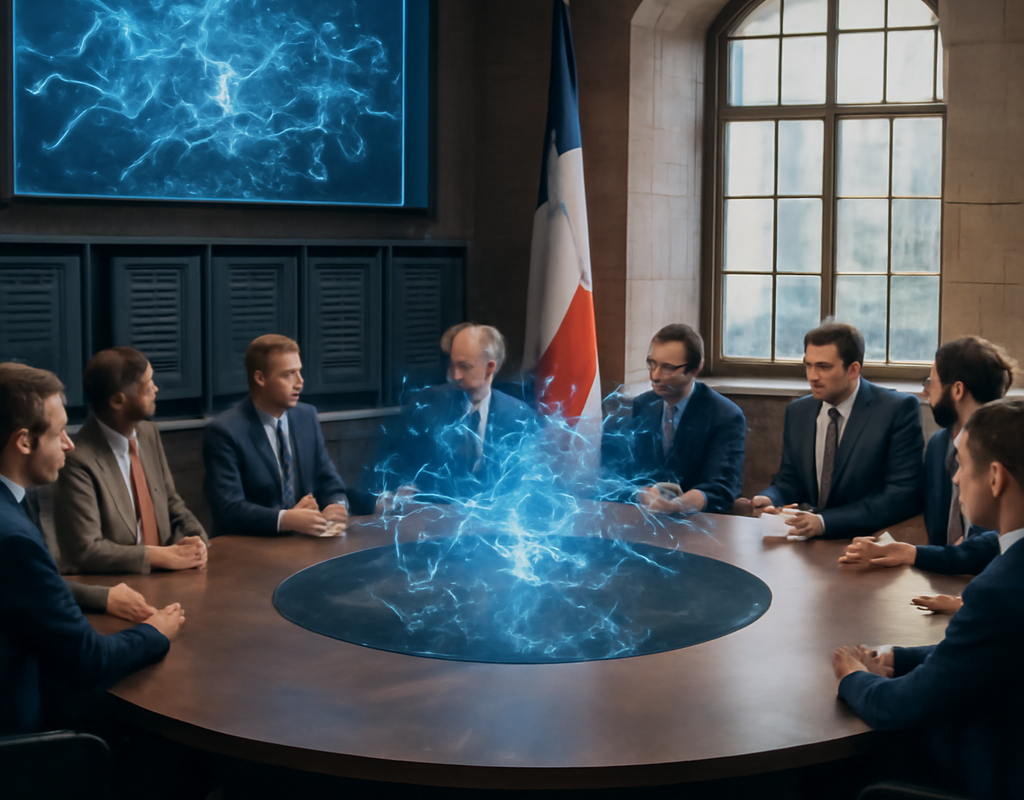
EU leaders met in Dublin on 13 November 2026 for the bloc’s first summit focused specifically on artificial intelligence, examining how Europe can strengthen its AI industry without weakening protections for citizens, workers and national security.
The informal meeting brought together European leaders, Mistral chief executive Arthur Mensch and AI pioneer Geoffrey Hinton. Discussions centred on Europe’s technological competitiveness, dependence on foreign suppliers, responsible innovation and the security risks linked to rapidly advancing AI systems.
EU leaders seek balance between innovation and safeguards
The Dublin summit was not a formal legislative session and did not produce a new EU law. Instead, it offered national leaders an opportunity to discuss the strategic direction of European AI policy and the steps needed to support an industry capable of competing with companies in the United States and China.
Irish Prime Minister Micheál Martin said before the meeting that leaders would consider the relationship between regulation and innovation, Europe’s technological sovereignty and how the bloc should respond to international developments in AI.
The debate reflects a central challenge for the European Union. Tough safeguards may help protect fundamental rights and public trust, but policymakers also want to avoid rules that make it harder for European companies to develop and deploy new systems.
Reducing reliance on foreign technology
Strengthening Europe’s position in AI is also linked to economic and strategic autonomy. EU countries rely heavily on technology, cloud infrastructure, chips and digital services developed outside the bloc. Leaders have therefore been considering how investment, research capacity and access to computing resources can help European firms grow.
Roberta Metsola, president of the European Parliament, rejected the idea that Europe had already lost the AI race. She pointed to the bloc’s scientific talent and technology ecosystem as assets that could support further development.
The presence of Arthur Mensch, whose company Mistral is one of Europe’s prominent AI firms, highlighted the push to build home-grown alternatives in a market dominated by large US companies and increasingly competitive Chinese developers.
AI risks include jobs, rights and security
Alongside industrial policy, leaders examined the potential harms associated with artificial intelligence. Geoffrey Hinton, a computer scientist and prominent critic of unchecked AI development, was expected to discuss the effect of the technology on employment, individual rights and security.
The summit took place against a wider debate about whether governments and companies should accelerate AI development or impose additional safeguards. European policymakers are already implementing the EU AI Act, the bloc’s risk-based framework for artificial intelligence. The Dublin discussion was broader, covering economic strategy and security as well as regulation.
Several concerns were identified as particularly important:
- Protecting workers and citizens from harmful or discriminatory uses of AI.
- Maintaining human oversight in high-risk applications.
- Preparing for serious incidents involving advanced AI systems.
- Supporting European research, start-ups and infrastructure.
- Limiting excessive dependence on non-European technology suppliers.
Ukraine highlights military implications
EU foreign policy chief Kaja Kallas warned that AI already has consequences for European security. She pointed to the war in Ukraine, where artificial intelligence is being used in connection with drones and battlefield operations.
Her comments underlined why AI policy is no longer limited to consumer technology or business competitiveness. Advanced systems can affect defence, intelligence, disinformation, cyber security and the conduct of armed conflict.
Estonia and Finland called in a letter for EU-level arrangements to respond to serious AI incidents. Their proposal reflects concern that a major failure or misuse of advanced technology could cross national borders and require a coordinated European response.
Why technological sovereignty matters for Europe
European officials have increasingly linked AI policy to lessons from earlier dependence on overseas suppliers of energy and critical raw materials. Estonia’s Prime Minister Kristen Michal argued that Europe should avoid repeating those vulnerabilities as it develops new technologies.
Technological sovereignty does not necessarily mean producing every component within the EU. It can also involve ensuring reliable access to computing power, data, semiconductor supply chains, research talent and trusted international partnerships.
For European businesses, the outcome of this debate could influence future funding, procurement rules, research programmes and compliance obligations. For citizens, it could shape how AI is used in public services, workplaces, healthcare, policing and online platforms.
What happens after the Dublin summit?
Because the gathering was informal, its discussions do not automatically change EU regulations. Any new binding measure would require the appropriate institutional process, potentially involving the European Commission, the European Parliament and the Council of the European Union.
Further work could focus on coordinating responses to serious AI incidents, supporting European companies, improving access to advanced computing and clarifying how existing rules apply to emerging technologies. The EU’s current regulatory framework will also continue to be implemented and reviewed.
The summit’s significance therefore lies less in a single announcement than in the political direction it establishes. European leaders are trying to pursue stronger AI capacity while insisting that safety, rights and security remain part of the same strategy.
Conclusion
The Dublin meeting placed AI at the centre of Europe’s economic and security agenda. EU leaders want European companies to compete globally, but they also recognise that artificial intelligence can affect jobs, rights, public safety and warfare. The key test will be whether the bloc can turn the summit’s broad priorities into investment, coordinated safeguards and practical policies without slowing responsible innovation.