

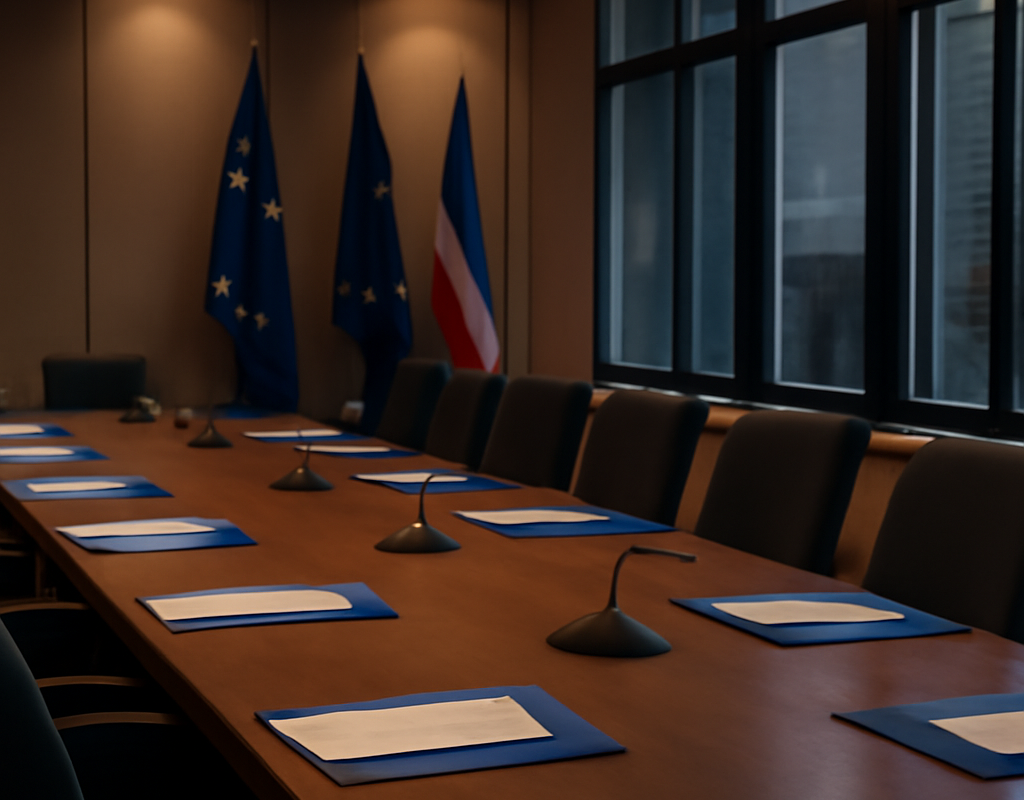
António Costa has responded to Friedrich Merz’s proposal to link agreement on the European Union’s long-term budget with additional support for Ukraine, exposing divisions among member states ahead of a key summit. The dispute places EU budget negotiations and Ukraine funding at the centre of current Brussels politics, with several countries opposing the German chancellor’s approach.
The disagreement is developing as European leaders prepare for further discussions on the EU budget and the bloc’s response to Russia’s war against Ukraine. The available information indicates that no final agreement has yet been reached on either issue.
What is at stake in the EU budget dispute?
Merz has argued that decisions on the next EU budget should be connected to an additional €45 billion for Kyiv. In a letter to European Council President António Costa, he described support for Ukraine as a matter of shared European security.
The proposal would raise the political stakes of the budget talks. EU multiannual budgets require agreement among member states, and linking the financial framework to Ukraine aid could make negotiations more difficult if governments disagree over priorities, funding levels or the legal structure of assistance.
Costa has replied to Merz, seeking to address the controversy and reassure the German leader. The response comes after four countries reportedly pushed back against the ultimatum, showing that the proposal does not have automatic support across the bloc.
Why the disagreement matters
The EU budget finances programmes covering areas such as regional development, agriculture, research and external action. Ukraine support, meanwhile, has become a central part of European foreign policy and security discussions.
Combining the two questions could create pressure for governments to reach a wider political compromise. It could also make the negotiations more sensitive because a delay in the budget process may affect other EU priorities, while uncertainty over Ukraine funding would have implications for Kyiv and European security planning.
- Budget negotiations: Member states must work towards a common position on the EU’s future spending framework.
- Ukraine support: Leaders are considering how to provide additional financial backing for Kyiv.
- Political unity: Governments remain divided over whether the two decisions should be treated as one package.
- Next summit: The issue is expected to remain prominent as leaders prepare for further talks.
What has António Costa said?
The source material confirms that Costa responded to Merz’s letter, but it does not provide the full text of the Council president’s reply. The response should therefore be understood as part of an ongoing political exchange rather than evidence of a settled EU position.
As president of the European Council, Costa chairs meetings of EU heads of state or government and helps broker compromises between national leaders. He does not unilaterally approve the EU budget or Ukraine funding. Any agreement would require the appropriate institutional and national procedures.
Is there an EU decision yet?
No final EU decision is identified in the available material. Merz’s proposal is a political position, not a new EU law or formally adopted budget measure. The European Council may provide political direction, but summit conclusions are not the same as legislation.
Further work would be required before any financial package could be implemented. Depending on its design, the agreement could involve member-state contributions, EU borrowing, existing budget instruments or other mechanisms. The precise legal and financial route has not been confirmed in the supplied information.
What does the dispute mean for Ukraine?
Ukraine remains dependent on international military, financial and humanitarian support as the war continues. The debate in Brussels concerns the European Union’s role in sustaining that assistance, but the source does not confirm whether the proposed €45 billion would be approved, when it would be available or how it would be distributed.
For Kyiv, the central concern is likely to be predictability. A clear, multi-year commitment can help a government plan public finances and essential services, while uncertainty may complicate longer-term planning. However, the terms and timetable of any future EU package remain subject to negotiation.
What does it mean for Ireland?
Ireland, as an EU member state, would be part of discussions affecting the Union’s budget and common support for Ukraine. The country could therefore be affected by the eventual funding arrangements and by any changes to EU spending priorities.
There is no indication in the supplied material of a separate Irish position or of a measure specifically targeting Ireland. The practical impact for Irish public bodies, businesses or communities would depend on the final agreement, its financing method and the programmes included in the next budget.
What happens next?
The immediate next step is further discussion among EU leaders ahead of the forthcoming summit. Governments will need to decide whether Ukraine funding and the EU budget should advance as a linked package or through separate negotiations.
Key questions still to be resolved include:
- Whether member states can agree on the proposed scale of additional support for Ukraine.
- Whether the budget process can proceed without being formally tied to the aid package.
- How any funding would be financed and legally approved.
- Whether the summit produces agreement, political conclusions or merely a mandate for further negotiations.
The disagreement illustrates how EU budget negotiations increasingly overlap with foreign policy and security. For now, the main development is political pressure rather than a completed EU decision: Costa is working to contain the dispute, while member states weigh the consequences of linking the Union’s long-term finances to Ukraine aid.