

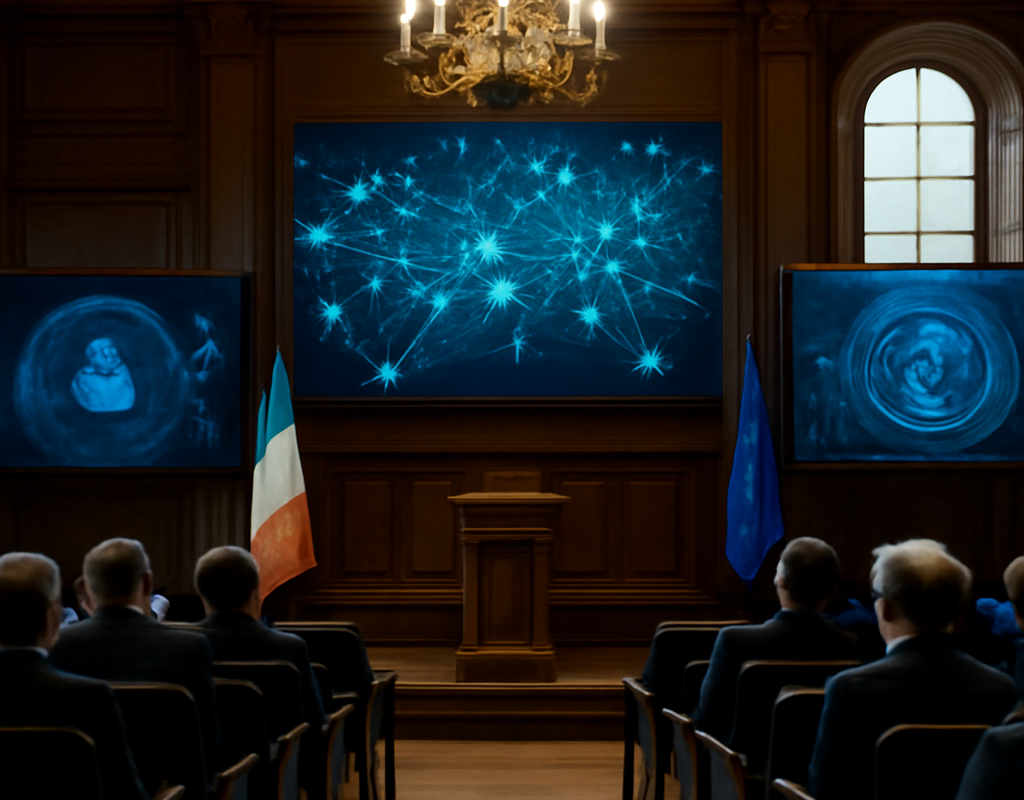
Ireland’s role in shaping the future of European justice took centre stage on 29 October 2026, as Minister for Justice, Home Affairs and Migration Jim O’Callaghan opened a major Digitalisation of Justice Conference at Dublin Castle.
The event, held during Ireland’s Presidency of the Council of the European Union, brought together European policymakers, justice professionals, legal practitioners and representatives from EU Member States to examine how technology and artificial intelligence can improve justice systems.
Digital Justice Conference focuses on practical innovation
Jointly organised by the Irish Presidency and the European Commission, the conference focused on practical cooperation and digital solutions designed to support the Digital Justice@2030 Strategy adopted by the European Commission in 2025.
Participants discussed how emerging technologies can make justice services more efficient, accessible and connected across Europe. Key themes included interoperability between national systems, faster case processing and the responsible development of AI tools for justice.
European Commissioner for Democracy, Justice, the Rule of Law and Consumer Protection Michael McGrath also attended, alongside officials and stakeholders involved in justice policy and legal services.
Why digitalisation matters for justice services
Digital transformation is increasingly viewed as a way to reduce administrative pressure while improving the experience of citizens, legal professionals and public bodies. Properly designed systems can help streamline document management, information sharing and case administration.
- Reduced administrative workloads for justice professionals
- Faster case turnaround times
- Improved access to justice for citizens
- Greater cooperation between European justice systems
- More resilient and connected public services
However, conference discussions also highlighted the need for coordinated implementation. Digital tools must operate securely, respect fundamental rights and complement—not replace—the professional judgment required within justice systems.
Read more
Ireland supports coordinated European justice technology
Opening the conference, Minister O’Callaghan said the benefits of modern technology in justice systems could no longer be ignored. He pointed to lower administrative burdens, quicker case outcomes and improved public access as important advantages.
He also stressed that the growing range of available tools makes cooperation between the EU and its Member States essential. A shared approach can help ensure that systems are compatible, secure and developed around the needs of citizens.
The Department of Justice, Home Affairs and Migration is among the Irish public bodies contributing to national justice policy, alongside organisations such as An Garda Síochána, the Courts Service, the Office of the Director of Public Prosecutions, the Legal Aid Board and the Data Protection Commission.
Explore more
What happens next for digital justice?
The Dublin conference provided a platform for exchanging best practices, identifying barriers and encouraging further commitments from justice stakeholders. Its wider objective is to support a more accessible and effective European area of justice.
For citizens, the success of digital justice will ultimately be measured by whether services become easier to use, cases move more efficiently and legal rights remain protected. Ireland’s Presidency has used the conference to reinforce the importance of practical cooperation as Europe develops the next generation of justice services.
Takeaway: Digital justice can deliver faster and more accessible services, but its success depends on secure technology, strong safeguards and coordinated action across Europe.
Article/Image Courtesy: gov.ie