

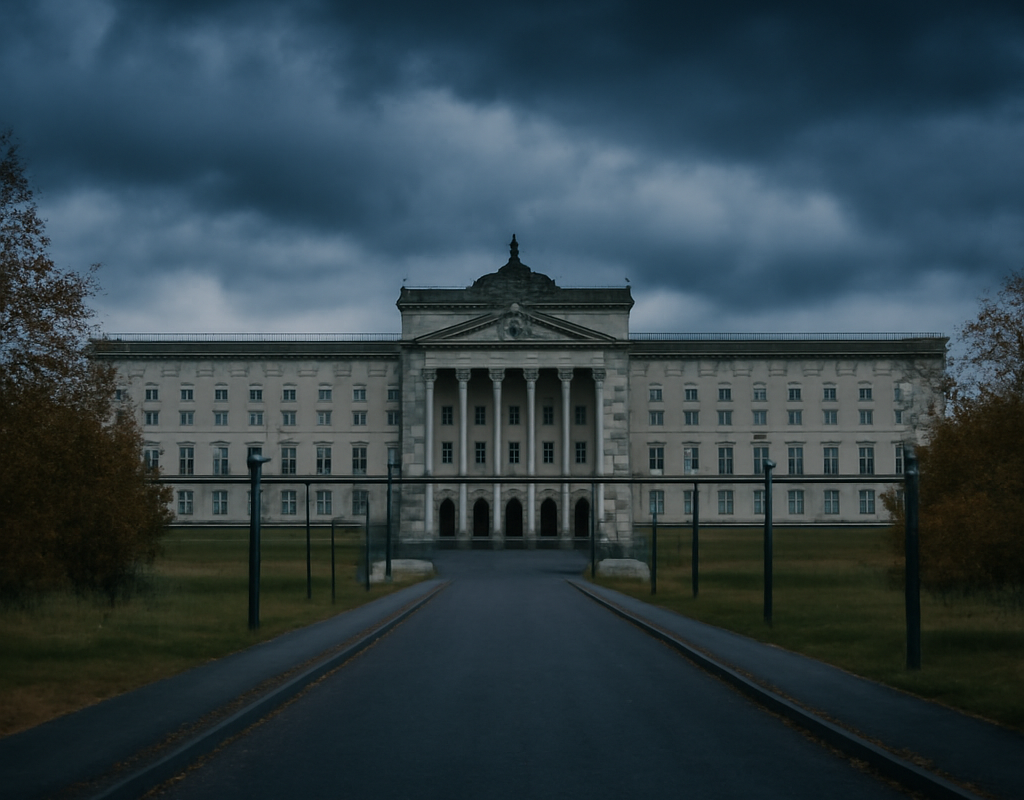
Stormont has been described as “useless” more often than any other single response in a new discussion about how people view Northern Ireland’s political institutions. The finding offers a sharp snapshot of public frustration, although the available information does not establish how widely the response was collected or what prompted it.
What the Stormont response reveals
The word “useless” is striking because it reduces a complex political institution to a single judgement about performance. It suggests that, for some people, Stormont is associated less with legislation and public administration than with political delay, disagreement or a perceived failure to deliver practical results.
That reaction should not be treated as a complete measure of public opinion. A one-word response can reflect personal experience, political frustration or a broader mood, but it cannot explain why someone feels that way. It also does not distinguish between criticism of the Assembly, the Executive, individual parties or Northern Ireland’s wider political system.
Why Stormont matters in Northern Ireland
The Northern Ireland Assembly is the devolved legislature at Stormont, while the Executive is responsible for governing departments and implementing policy. Together, they play a central role in decisions affecting public services, including health, education, infrastructure and local government.
When the institutions operate effectively, devolved government allows decisions to be made closer to the people affected by them. When political disagreement prevents an Executive from functioning, or when decisions are delayed, residents can experience the consequences through pressure on public services and uncertainty over policy.
That background helps explain why Stormont can become a focus for anger. People often judge political institutions through visible outcomes: waiting times, school funding, transport, housing, public-sector pay and the availability of local services. Those issues are wider than any one party or Assembly debate.
Public frustration and the wider political context
Stormont has long been shaped by the need for power-sharing between unionist and nationalist parties, alongside representation from other political groups. That structure is intended to ensure that major communities participate in government, but it can also make compromise essential and decision-making difficult.
For residents, institutional disputes may feel remote until they affect everyday life. Political negotiations can influence whether budgets are agreed, whether departments can make major decisions and how quickly public services respond to pressure. This creates a direct link between constitutional politics and household concerns.
The response also reflects a familiar challenge for devolved government: explaining what decisions are being made, which responsibilities sit with Stormont and which remain with the UK Government or local authorities. Without that clarity, frustration can be directed at the institution as a whole.
What is confirmed and what remains unclear
The confirmed point from the source material is that “useless” was presented as the most common answer when people were asked to describe Stormont. The available details do not show:
- How many people took part.
- When the responses were gathered.
- Whether the exercise was a formal poll, survey or informal question.
- How other answers compared.
- Whether respondents were asked about the Assembly, the Executive or Stormont as a broader political symbol.
Those limitations matter. Reliable polling normally explains how participants were selected, how questions were worded and how the results were assessed. Without that information, the response is best understood as an indicator of political sentiment rather than a definitive measure of public confidence.
Why the wording matters
Political language can influence how institutions are understood. A blunt description such as “useless” is memorable and easy to repeat, but it can hide important distinctions. Stormont may be criticised for one issue while still carrying out routine legislative, budgetary and oversight work in other areas.
It is also possible for public sentiment to change quickly. A successful agreement, an improvement in services or a visible policy decision may affect how people view the institution. The reverse is also true: renewed deadlock or worsening services can deepen distrust.
For journalists, politicians and public bodies, the response presents a communication challenge. Addressing that frustration requires more than defending the institution. It means showing what decisions have been taken, what outcomes have followed and where responsibility lies when progress is blocked.
Frequently asked questions
What does Stormont refer to?
Stormont commonly refers to the Northern Ireland Assembly and Executive, based at the Stormont Estate in Belfast. The Assembly makes laws in devolved areas, while the Executive oversees government departments and public administration.
Was “useless” the result of an official poll?
The supplied source material identifies it as the most common response in a discussion, but does not provide enough information to confirm that it came from a formal opinion poll.
Does the response prove that people in Northern Ireland reject Stormont?
No. A single common response cannot represent every resident or explain the reasons behind individual views. More detailed polling would be needed to assess public confidence accurately.
Why does public confidence matter?
Confidence affects whether people believe devolved institutions can deliver services, resolve disputes and represent their interests. Low trust can make it harder for political leaders to build support for difficult decisions.
What happens next?
The significance of the response will depend on whether it forms part of a broader pattern in polling, public commentary or political debate. Further information about the question, participants and context would help establish whether it reflects a temporary mood or a deeper concern about Stormont’s performance.
For now, the finding is a concise expression of dissatisfaction rather than a complete verdict. Stormont’s reputation will ultimately be shaped by its ability to make decisions, deliver public services and demonstrate clear accountability to people across Northern Ireland.
Conclusion
The description of Stormont as “useless” captures the intensity of public frustration surrounding Northern Ireland’s political institutions. It should not be treated as conclusive polling, but it highlights the gap between political structures and the practical results residents expect. The clearest way for Stormont to change that perception is through visible, accountable action on the issues that affect daily life.