

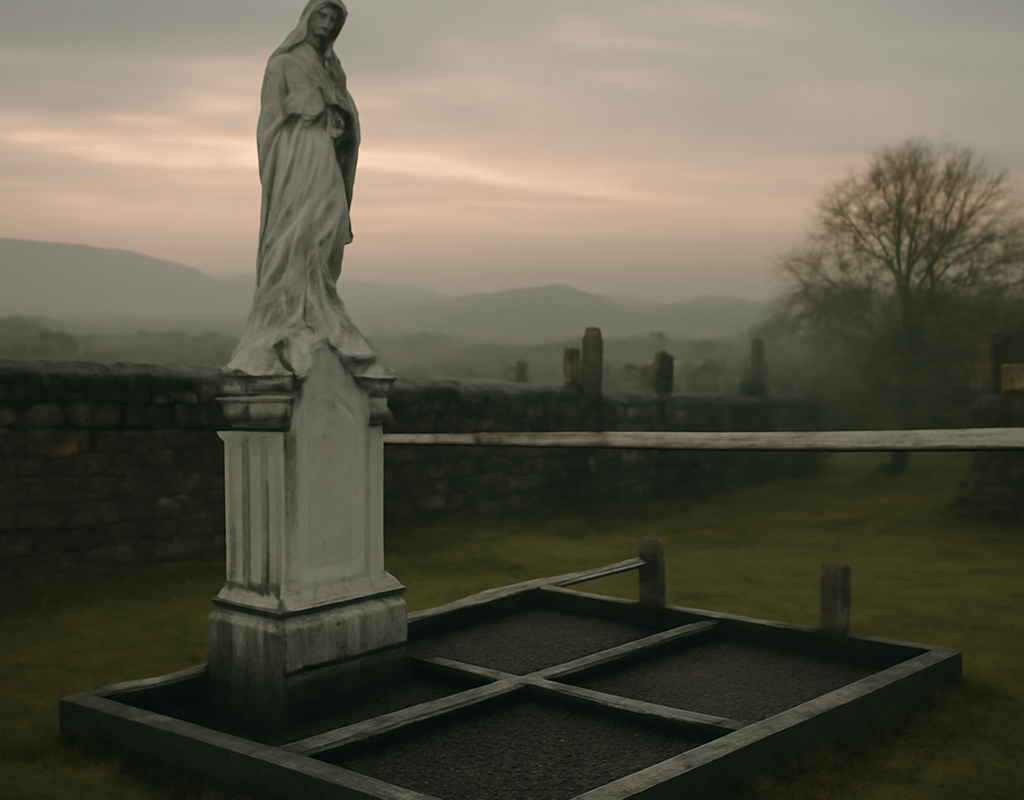
Traveller rights groups have called for an independent investigation after a 4.5-metre memorial at Sligo Cemetery was dismantled, with the family saying it received no written warning or explanation beforehand. The case has raised questions about cemetery enforcement, due process and the protection of cultural identity in Ireland.
What happened at Sligo Cemetery?
The memorial marked the grave of Willie McGinley, who died aged 23. The structure, which stood over a triple plot, included three white marble statues depicting the Holy Family, St Michael and St Gabriel, along with a supporting plinth.
It was removed last week by a private contractor after Sligo County Council became concerned about its size and the circumstances in which it had been erected. Gardaí reportedly closed the cemetery to members of the public while the work took place.
The removal damaged the primary headstone and also affected the grave of another person buried behind the McGinley family plot. Two members of the McGinley family are buried beneath the memorial.
- The memorial stood approximately 4.5 metres high.
- It was erected on October 22nd, according to the available information.
- The family disputes organising or funding the monument.
- Rights groups are seeking an independent investigation and an explanation from Sligo County Council.
Why are Traveller rights groups demanding an investigation?
The National Traveller Men’s Forum and Minceirs Whiden described the dismantling as deeply distressing. They said the family should have received clear communication, an explanation of the council’s concerns and an opportunity to respond before the memorial was removed.
The groups acknowledge that local authorities are responsible for managing public cemeteries and enforcing relevant rules. However, they argue that those powers must be used fairly, proportionately and transparently, particularly where a family memorial and place of burial are involved.
They also questioned why the McGinley memorial was selected for removal when the family believes other structures of a similar size remain in the cemetery. That point is among the issues they want examined independently rather than settled solely through the council’s internal review.
What did the council investigation concern?
Sligo County Council is investigating how the memorial was erected despite planning permission reportedly being limited to a five-foot memorial. The authority’s concerns appear to relate to the structure’s height and compliance with cemetery or planning requirements.
The available information does not establish who commissioned or paid for the larger monument. The McGinley family has denied organising or funding it, and the circumstances surrounding its construction remain part of the developing investigation.
At this stage, the council’s full findings have not been published. That means claims about the decision-making process, the legal authority used and the timing of the removal remain matters requiring clarification.
For more Ireland News and developing stories, visit DailyDigest.ie.
What are the rights groups asking Sligo County Council to explain?
The organisations have called on the council to provide a detailed account of the operation and preserve all relevant evidence. Their requests include:
- The legal authority relied upon to remove the memorial.
- The reasons the family allegedly received no prior written notification.
- The circumstances surrounding the damage to the memorial and nearby grave.
- The basis for choosing this memorial if comparable structures remain.
- A meaningful discussion about restoring or replacing the damaged monument.
They said the issue extends beyond the physical headstone. In their view, the memorial represents a family’s ability to mourn, remember relatives and express cultural identity through burial traditions.
Why the Sligo memorial dispute matters
Cemetery regulation can involve practical concerns, including safety, access, planning compliance and the preservation of burial spaces. Local authorities must be able to address breaches of those rules. At the same time, enforcement decisions can have profound emotional consequences when graves and memorials are involved.
The dispute highlights the importance of written notice, consistent enforcement and clear appeal or resolution procedures. Those safeguards can help families understand what is required and give councils an opportunity to resolve problems without avoidable damage or confrontation.
It also raises wider questions about how Traveller burial customs and memorial practices are understood within public services. Any review will need to distinguish between confirmed facts, the family’s account and the council’s eventual findings.
What happens next?
Sligo County Council is conducting an investigation into the erection and removal of the structure. The Traveller rights groups want that process supplemented by an independent examination of the circumstances surrounding the dismantling.
The family is also seeking answers about the alleged lack of prior communication and the damage caused during the operation. A further issue will be whether the memorial can be restored or replaced, and who would be responsible for that work.
Until the council publishes its findings, the legal basis for the removal, the full sequence of communications and the precise cause of the damage remain unresolved.
Frequently asked questions
Where was the memorial removed?
It was removed from Sligo Cemetery in County Sligo.
Who was the memorial for?
The memorial marked the grave of Willie McGinley, who died aged 23. Two members of the McGinley family are buried beneath the structure.
How tall was it?
The memorial stood approximately 4.5 metres high and extended across a triple plot.
What are the rights groups seeking?
They are seeking an independent investigation, preservation of evidence, a full explanation from Sligo County Council and meaningful engagement about restoration or replacement.
Conclusion
This Breaking News story remains developing, with Sligo County Council’s investigation expected to clarify how the memorial was erected, why it was removed and how damage occurred. The central issue is not only compliance with cemetery rules, but whether those rules were applied through a process that respected the family’s dignity, cultural identity and right to be heard.