




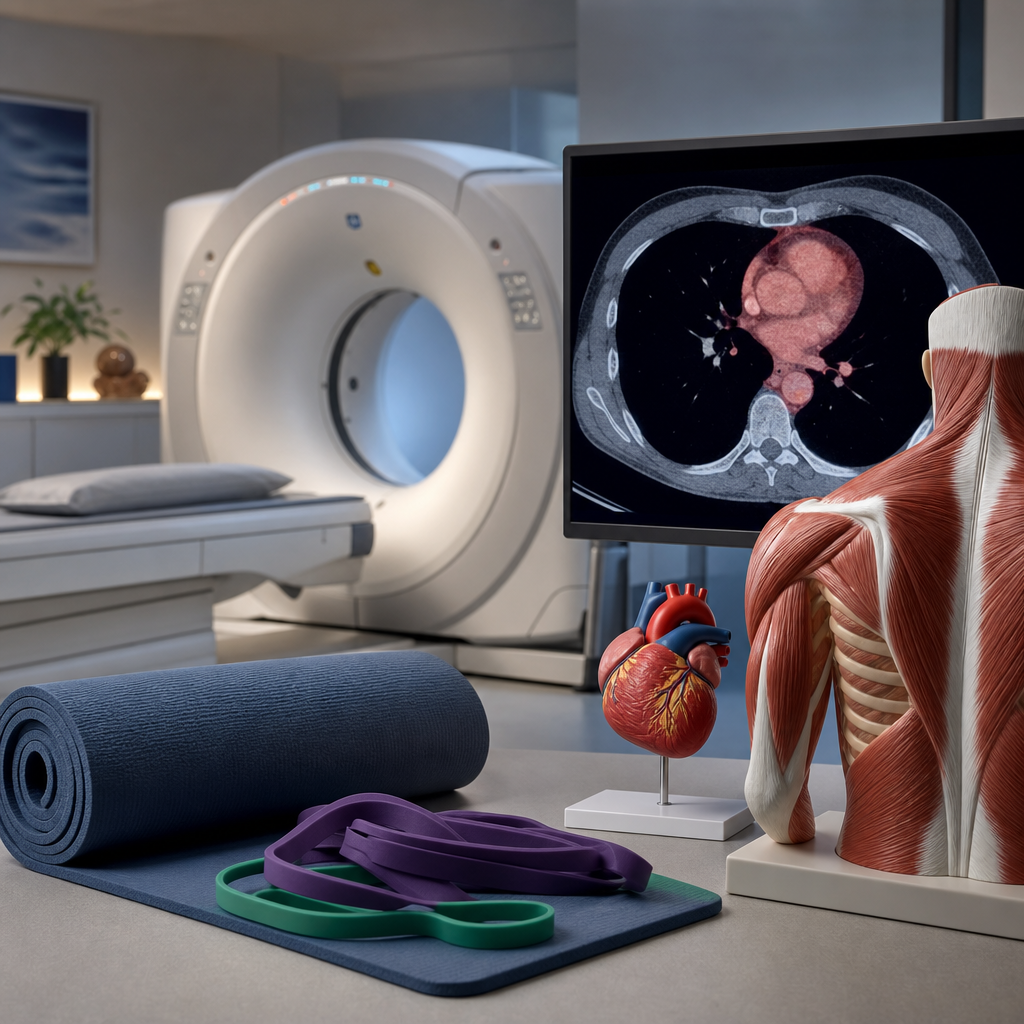
A new study is drawing attention in breaking news ireland for a simple reason: muscle quality in the chest and back may say more about heart health than many people realise. Researchers found that people with denser skeletal muscle in these areas were less likely to suffer a heart attack or die over the following decade, adding a fresh angle to the conversation around prevention and ireland health news.
The findings come from a study published in Radiology, where scientists used artificial intelligence to analyse heart scan images from 1,722 patients in Scotland. These participants, with an average age of 58, had undergone scans for chest pain between 2010 and 2014. Researchers then followed them for 10 years to track outcomes including heart attacks and deaths.
What the study found about muscle and heart health
During the follow-up period, 133 people died and 106 experienced a heart attack. According to the research team, those with lower-than-average muscle density were more likely to face poor outcomes. Specifically, below-median muscle attenuation was associated with an 85% higher risk of death and a 58% greater likelihood of a heart attack.
The muscles visible in these scans were mainly:
- Back muscles
- Parts of the pectoral or chest muscles
- Intercostal muscles between the ribs
Researchers said this suggests muscle quality, not simply body size, could be an important marker in future risk assessment. That makes this study relevant not only to clinicians, but also to readers following latest news ireland around healthy ageing, exercise and preventive medicine.
Why AI mattered in this research
Artificial intelligence helped scientists examine hidden patterns in routine scan results that may otherwise go unnoticed. Instead of relying only on traditional cardiovascular markers, the system identified differences in skeletal muscle density that appeared to correlate with long-term outcomes.
This is one reason the study is resonating beyond medical journals and into broader irish breaking news coverage. AI is increasingly being used to extract more clinical value from existing imaging, potentially improving how doctors assess future risk.
Experts say it is not just about being muscular
Heart experts were careful not to oversimplify the message. The British Heart Foundation stressed that this is not about building big muscles for appearance. Instead, the more likely explanation is that people with better muscle density tend to be more physically active overall, which supports healthier blood vessels, metabolism and cardiovascular function.
That distinction matters. Muscle size alone was not linked to lower risk. In other words, being visibly muscular is not automatically protective. The study points more toward fitness, movement and body composition than aesthetics.
Regular exercise of many kinds can improve muscle density, including:
- Walking and cycling
- Pilates and planks
- Resistance training
- Swimming and rowing
- Everyday physical activity done consistently
What this means for everyday health
For readers following ireland news today, the practical takeaway is straightforward: staying active remains one of the best tools for protecting the heart. This study does not prove that strengthening the chest and back alone will prevent a heart attack, but it does reinforce the wider link between physical activity and long-term cardiovascular health.
It also opens the door to future screening methods. If AI can detect risk clues from scans people are already having, doctors may eventually gain another useful tool to identify patients who need closer monitoring or earlier lifestyle support.
Explore more:
FAQ: key questions readers may ask
Does this mean strength training prevents heart attacks?
Not directly. The study found an association, not proof of cause and effect. But regular exercise is already known to reduce cardiovascular risk.
Which muscles were linked to lower risk?
Mainly the back, chest and muscles between the ribs that were visible on heart CT scans.
Should people change their workouts?
Experts say the best approach is balanced, regular movement. Strength work can help, but so can walking, cycling and other forms of activity.
Why is this relevant in health reporting?
Because it adds new evidence to the growing understanding of how fitness, body composition and AI-assisted imaging may shape future prevention strategies.
In summary, this study offers an important update for anyone following breaking news ireland and wider health developments. Stronger, denser chest and back muscles were linked with a lower risk of heart attack and death, but the bigger message is clear: consistent physical activity remains one of the most reliable ways to support long-term heart health.