

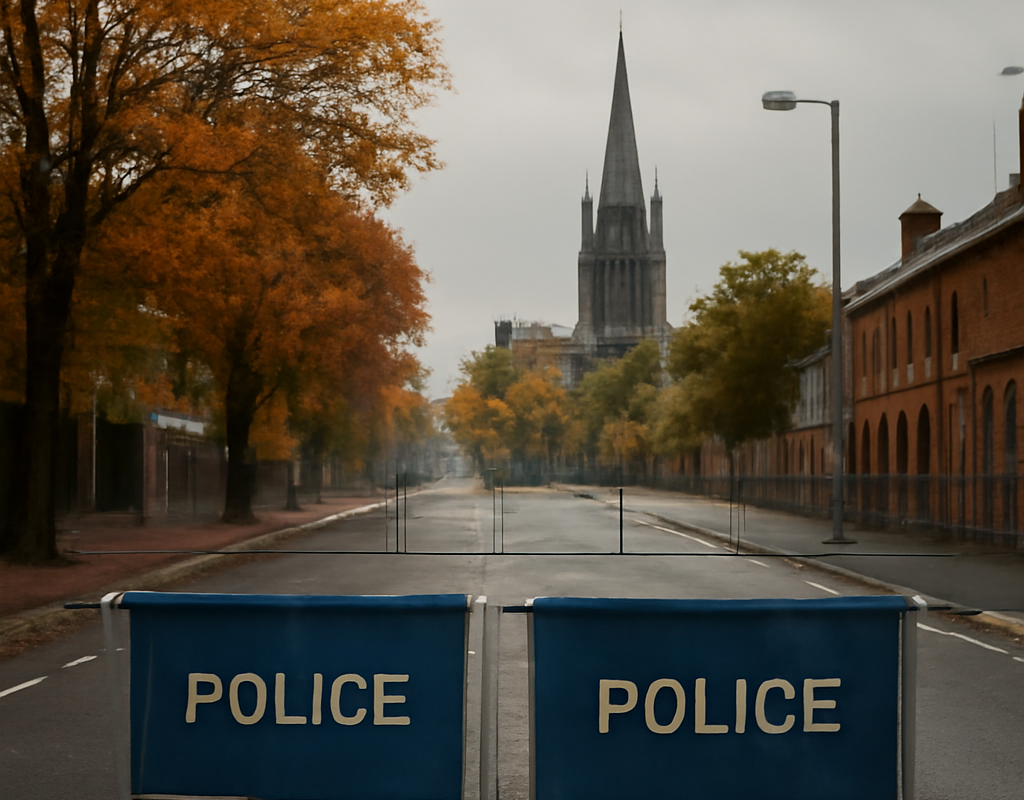
A court judgment is expected today in a major Northern Ireland parade dispute involving the Drumcree Orange Order march in Portadown. The legal challenge centres on the decision by Northern Ireland Secretary of State Chris Bryant to stop the parade from travelling along its traditional route beside the mainly nationalist Garvaghy Road.
What is happening in this Breaking News story?
The case concerns the Secretary of State’s decision to halt the Drumcree parade after the Parades Commission had earlier granted permission for the march to complete its historic route. That authorisation would have allowed the parade to pass down Garvaghy Road for the first time in almost three decades.
A judgment is now expected on whether the decision to ban the route was lawful. The outcome could have consequences for future contentious parades and for how decisions are made when competing rights, public order concerns and community sensitivities are involved.
- The dispute concerns the Drumcree Orange Order parade in Portadown.
- The Parades Commission had approved the traditional route earlier this year.
- The Northern Ireland Secretary of State subsequently ordered that the march be halted.
- A court judgment is expected on the legal challenge to that decision.
Why the Drumcree parade matters
Drumcree has been one of the most sensitive parade disputes in Northern Ireland. The route through Garvaghy Road has long been opposed by nationalist residents, while members and supporters of the Orange Order regard the march as an important part of their tradition and identity.
The disagreement is rooted in Northern Ireland’s wider history of contested public demonstrations. Parade decisions can affect residents, businesses, police planning and relations between communities. Because of that, the Drumcree case has attracted attention beyond Portadown and is being followed closely as part of the latest Northern Ireland News.
The legal challenge explained
The challenge is directed at the decision taken by Chris Bryant in his role as Northern Ireland Secretary of State. Counsel representing the Secretary of State argued that he could have taken “no other decision” than to halt the parade, according to the source material.
The court’s task is to examine the lawfulness of that decision. It is not simply being asked to decide whether the parade is politically popular or unpopular. Instead, the judgment is expected to consider whether the decision-maker acted within his powers and followed the required legal process.
The ruling may clarify the relationship between the Parades Commission’s decisions and the authority available to the Secretary of State in exceptional circumstances. It may also shape how similar disputes are handled in future.
Background to the parade dispute
The traditional Drumcree route has been blocked from reaching Garvaghy Road for almost 30 years. That long-running restriction reflects the depth of opposition to the march in the area, as well as the continued importance attached to the route by the Orange Order.
The Parades Commission’s decision earlier this year marked a significant change. Its approval created the possibility that the march could return to the route, but the subsequent intervention by the Secretary of State prevented that from happening.
The case therefore raises a central question: how should public authorities balance the right to parade with the potential for disruption, intimidation or conflict in a contested area? The judgment could provide an answer that is relevant to Irish Headlines and Northern Ireland News coverage for years to come.
Follow wider public affairs coverage and developing Ireland News stories at DailyDigest.
What happens next?
The immediate next step is the publication or delivery of the court’s judgment. Once it is handed down, the ruling should establish whether the Secretary of State’s decision stands or whether it must be reconsidered.
Depending on the court’s findings, the parties may consider whether there are grounds for a further appeal. The judgment may also influence future decisions by the Parades Commission, government ministers and other public bodies responsible for managing contentious marches.
Any practical consequences will depend on the wording of the ruling and the timing of any related proceedings. At this stage, the confirmed issue is the legal challenge itself; the source material does not provide the court’s final decision.
Frequently asked questions
What is the Drumcree parade?
It is an Orange Order parade in Portadown, County Armagh, associated with a traditional route that includes the mainly nationalist Garvaghy Road.
Why was the parade banned?
The Northern Ireland Secretary of State, Chris Bryant, decided to halt the march after the Parades Commission had granted permission for it to complete the traditional route.
What is the court being asked to decide?
The legal challenge asks the court to assess whether the Secretary of State acted lawfully when he stopped the parade.
Why is the judgment important?
The ruling could clarify the limits of ministerial powers and the relationship between government intervention and Parades Commission decisions in sensitive parade disputes.
Conclusion
The expected judgment on the Drumcree Orange Order parade ban is an important development in Northern Ireland public affairs. It will determine whether the decision to halt the march can stand and may influence how future contested parades are assessed. For readers following Breaking News Ireland and the latest Irish News, the court’s findings will be the key development to watch as the dispute moves into its next stage.